

A gas station and convenience store can look like a simple business from the road. Pumps, traffic, cold drinks, maybe a hot-food counter. But when you search buy gas station Georgia South Carolina opportunities, you are buying a set of moving parts that all have to work together.
The right location can create dependable cash flow for years. The wrong fuel contract, lease, tank issue, or inflated sales number can turn a promising deal into an expensive lesson.
Start with the asset mix, then make the numbers earn your confidence.
Key Takeaways
- Decide whether you are buying the business only, the business plus real estate, a leasehold, or a vacant station, because each structure carries different financing, lease, environmental, and operating risks.
- Evaluate the location through repeat traffic, competition, access, seasonality, and the relationship between inside sales and outside fuel sales—not traffic counts or asking price alone.
- Verify fuel supply agreements, jobber terms, equipment ownership, auxiliary income, and state-specific requirements before assigning value to fuel margins or additional revenue streams.
- Treat underground storage tanks, environmental records, zoning, permits, and expansion plans as essential due diligence, with clear responsibility for contamination and repairs in the purchase agreement.
- Build an offer around documented cash flow and include financing, inspection, lease-assignment, license, and environmental contingencies before you close.
Buy Gas Station Georgia South Carolina: Start With the Asset Mix
When buyers search for a gas station in Georgia or South Carolina, they often picture buying the whole operation. That is not always what a listing offers.
Some deals include only operations. Others bundle a gas station and convenience store operation with the building, land, fuel canopy, tanks, and equipment. Those are different transactions, with different financing needs, risks, and long-term upside.
| Purchase structure | What you are buying | What needs extra attention |
|---|---|---|
| business-only | Goodwill, equipment, inventory, lease assignment, operating income | Rent increases, lease term, landlord approval, renewal options |
| Business plus real estate | Store operations, land, building, canopy, tanks, and parking areas | Environmental condition, property taxes, repairs, debt service |
| Leasehold with an option | Operating business and occupancy rights, with a possible later purchase | Option terms, purchase price formula, maintenance duties |
| Vacant or closed station | Site, building, equipment, and often old tanks | Zoning, fuel permits, cleanup exposure, reopening costs |
A Business For Sale listing may sell only operations in a business-only transaction, while the seller keeps the property. A lower-priced business-only deal can still carry lease-driven risk and uncertain cash flow. That can make entry easier for an owner-operator. An 18-month lease is not the same as a 15-year term with clear renewal rights. The longer term may support more predictable cash flow.
On listing sites, pages for Businesses for Sale often mix operating stores, absentee-owned stores, liquor stores with pumps, and businesses that have not pumped fuel for years. Some business-only listings may include a branded fuel station operation, but the fuel equipment and fuel supply agreements may not transfer with the business. Read past the photos, then verify inside sales and outside sales. Ask what the price includes, what the landlord can change, and who owns the fuel equipment.
The same goes for CRE. A listing under Commercial Real Estate for sale may be a solid property investment but not an operating retail business. A CRE for Lease or Commercial Real Estate for Lease listing may offer a strong corner. You still need to build the business, secure fuel supply, and obtain approvals.
A buyer comparing a business-only deal with property-inclusive transactions may also consider a sale-leaseback, which separates property ownership from business operations. In mergers and acquisitions involving a portfolio or multiple sites, this asset-mix distinction becomes especially important.
A buyer considering both land and operations can use this convenience store acquisition guide for Georgia and South Carolina to compare the deal structures side by side.
Buying the business may limit what you acquire. Buying the property may increase what you could be responsible for. That difference belongs in the purchase agreement, not in a casual conversation after closing.
Location Still Sets the Ceiling
A station does not need to sit at the busiest intersection in Atlanta to make sense. It needs a reason for customers to stop instead of driving one more mile. Repeat traffic supports operating performance and steadier cash flow.
In Savannah and Pooler, buyers may study port-related traffic, commuter routes, lodging demand, and I-95 access. In Atlanta, the question is often competition. How many branded fuel station locations, grocery fuel centers, and newer convenience store competitors sit within a few minutes of the site?
Macon and Warner Robins can bring military, medical, highway, and local commuter traffic into the mix. Brunswick, Waycross, and Dublin deserve the same level of attention, even when the market is smaller. A well-placed rural or highway location can have loyal traffic that a prettier site cannot steal.
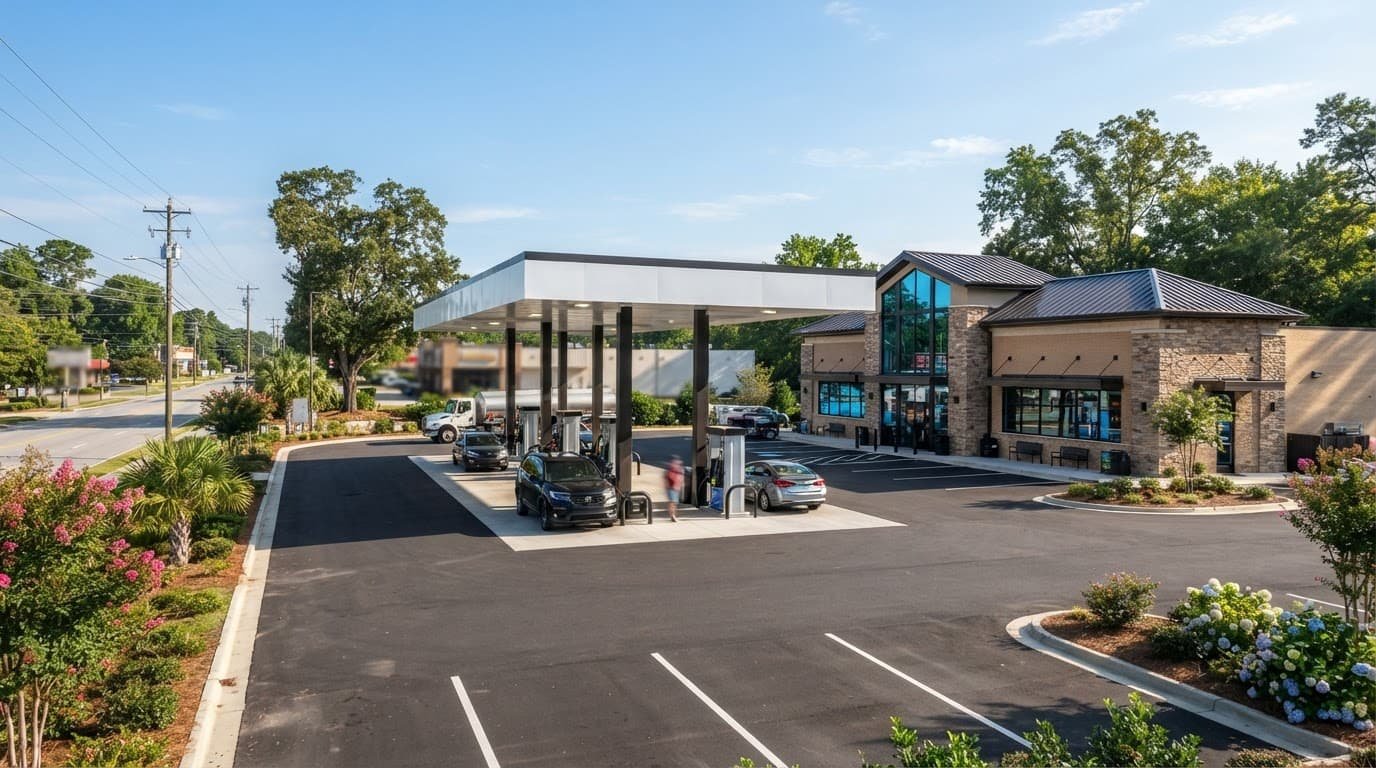
South Carolina buyers face a similar reality. A store near Hilton Head may see seasonal swings that a neighborhood store in Columbia does not. A highway station near the Georgia line may compete with travel centers, while its regional traffic still leaves questions about who stops, what they buy, and whether they return.
Visit the site at different times, including the morning rush, midday, evening, and weekend. Count competitors and observe traffic flow. Compare outside sales, driven by gallons, with inside sales from purchases made inside the store. Notice how drivers enter and exit the property. A difficult left turn, worn pavement, poor lighting, or an awkward driveway can cost more than a small rent difference.
National business-sale data and listings for gas stations for sale can help set a starting point, but they are not a valuation. BizBuySell’s gas station benchmarks put the median asking price for established stations around $450,000, while sold businesses have often reported roughly $2 million in annual revenue. Traffic counts alone do not establish value or cash flow. Local fuel volume, store sales, lease terms, local real estate value, and tank condition can move a fair price far from either figure.
Inside Sales and Outside Sales Tell Different Stories
Fuel brings people onto the lot. Inside sales often determine whether a gas station and convenience store operation truly makes money and produces cash flow.
“Outside sales” usually means gallons sold through the pumps. “Inside sales” cover drinks, snacks, tobacco, beer and wine where permitted, prepared food, grocery items, lottery commission income, and other store purchases. Both numbers matter, but they should never be judged by revenue alone.
Listings across the Southeast may show inside sales ranging from about $26,000 to $108,000 per month. Outside sales volume can range from roughly 4,000 to 79,000 gallons per month. Those figures are useful for comparison, but they are not promises. A store with $70,000 in monthly inside sales can still underperform if its gross margin is thin, shrink is high, or payroll is out of control.
NACS, a trade association, reported that 2025 U.S. convenience-store revenue from in-store purchases rose 1.7% to $341.2 billion. Fuel sales fell 5.4% in dollar terms, even as gallons sold rose slightly. That is the story buyers need to understand. Pump prices can make total fuel revenue look great or weak without telling you much about the store’s underlying health.
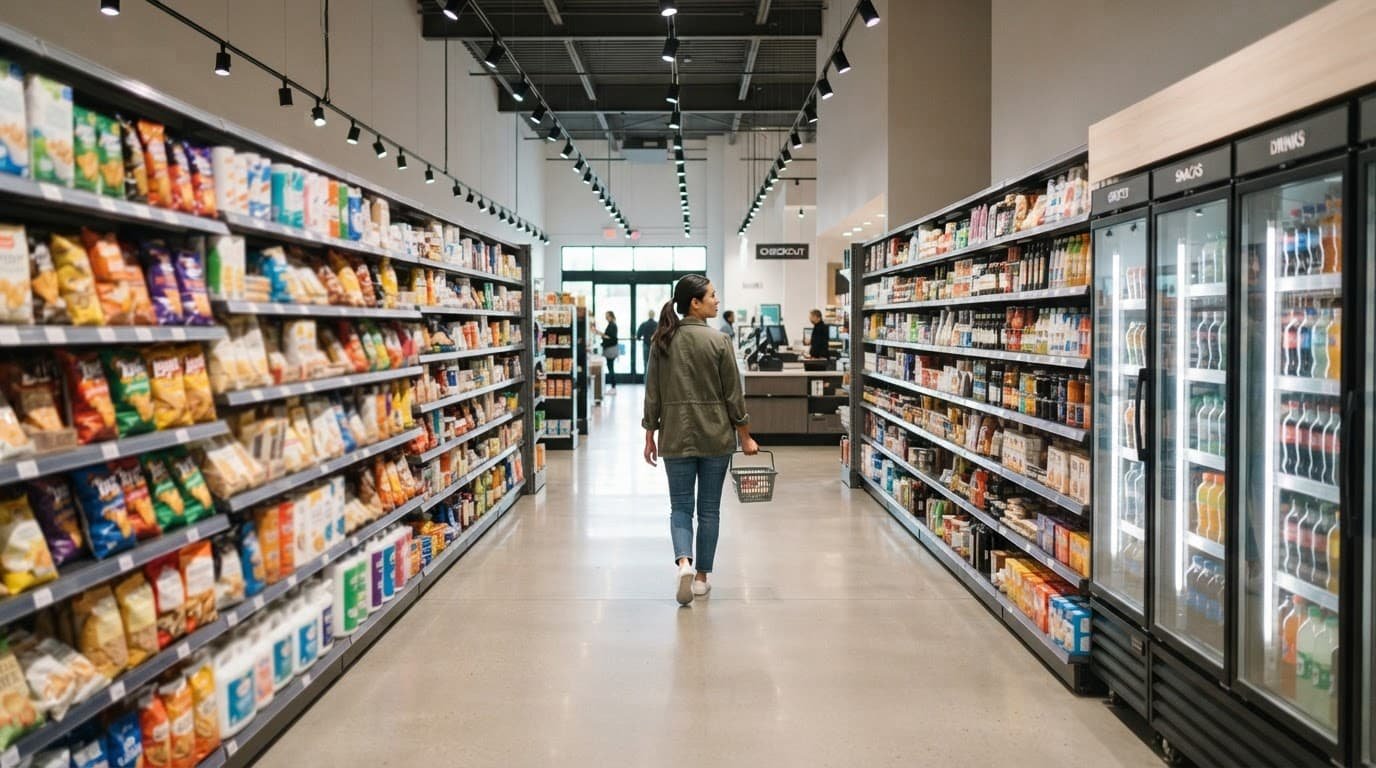
Ask for monthly profit-and-loss statements, point-of-sale category reports, fuel invoices, daily gallon reports, and merchant-processing records. Match the reports against bank deposits to test cash flow. If the seller says the store is doing $90,000 a month inside, those records should confirm outside sales and inside sales from more than one direction.
A strong c-store commonly has a healthy mix of high-frequency, higher-margin purchases. In a convenience store, inside sales from cold beverages, fountain drinks, packaged snacks, foodservice, and car-wash sales may matter more than a large tobacco number, so compare them with outside sales by gallons and fuel margin. Tobacco may bring traffic, but its margins are often tight.
Do not overlook labor. A deli counter can lift sales, but it also brings staffing, food cost, waste, health inspections, and equipment maintenance. There is nothing wrong with buying a station that needs hands-on management, but labor still affects cash flow. Just do not value an absentee-owned operation as though it requires no labor when you will work 60 hours a week.
Fuel Supply Agreements Can Make or Break Margin
For a convenience store, the fuel supply agreement is not fine print. It can shape your fuel price, brand, required purchases, equipment obligations, operating cash flow, and ability to sell the business.
A branded fuel station may offer name recognition, card-program participation, marketing support, and a familiar canopy. It may also require image upgrades, purchase minimums, long contract terms, or restrictive supply conditions. An unbranded site may give you more buying flexibility, but customers may judge it more on price and store quality.
Many operators buy through a jobber rather than directly from a major brand. Review the jobber contract line by line. You need to know the rack-price formula, freight charges, credit-card fees, rebates, volume commitments, equipment ownership, and renewal terms. Compare fuel supply agreements, including the jobber contract, for transfer, assignment, renewal, and early termination terms. Reconcile those contract economics with actual outside sales and inside sales before projecting fuel profit.
Regular gasoline should be reviewed separately from diesel sales. Diesel volume can be valuable at a highway location, but diesel equipment and supply terms may differ. A listing that advertises a 30-cent or 40-cent gross margin per gallon may reflect a favorable moment in the market. Pull several months of invoices and calculate the real margin after all direct fuel costs.
Auxiliary income can make a good store better and strengthen cash flow. Lottery commission, ATM income, air-machine income, car washes, propane exchanges, package services, and food truck pad rent can add meaningful revenue. Each stream needs its own proof.
Verify each lottery commission through operator reports and bank records. The lottery commission report should match deposits. An ATM report should show the actual net after service fees. A food truck arrangement should be in writing, with clear utility use, insurance, access, and lease terms.
Georgia’s coin-operated amusement machine business is regulated, and a COAM contract can affect revenue sharing, equipment responsibility, compliance duties, and transfer rights. Do not treat income from game machines as ordinary store sales, and keep lottery commission income separate from it. Review the COAM contract, actual commissions received, and every expense tied to those machines. Confirm transfer, equipment, and compliance responsibilities under the COAM contract for game machines.
South Carolina has different gambling rules. A Georgia COAM projection does not automatically belong in a South Carolina pro forma. Get state-specific legal guidance before placing value on a revenue line.
Underground Storage Tanks and Land Use Need Real Due Diligence
Underground storage tanks are where a station purchase can turn personal fast. You may love the sales, the traffic, and the location. None of that changes the cost of a release, an aging tank system, or a compliance problem.
A Phase I environmental site assessment is a starting point for real estate environmental due diligence, not a free pass. Depending on the property’s history and the Phase I findings, you may need soil or groundwater testing, tank-system review, or further investigation. If a seller says, “There has never been a problem,” ask for the records.
Request tank registrations, inspection records, release reports, corrective-action files, closure documents, leak-detection records, cathodic-protection testing, insurance information, and any correspondence with regulators. Georgia buyers should review records tied to the Georgia Environmental Protection Division. South Carolina buyers should verify records with the South Carolina Department of Environmental Services. State-specific legal services can help with environmental, gambling, or land-use questions.
For an overview of the compliance issues tied to operating tank systems, review these underground storage tank licensing requirements. Federal and state rules overlap, and the responsible party may change when ownership or operations change.

The purchase agreement should address who pays for known contamination, how long the seller’s indemnity lasts, whether funds are held back, and what happens if a previously unknown release appears. A seller indemnity is helpful only if it is written well and backed by a seller who can pay. Buyers reviewing older stations should understand the practical issues around UST removal and closure services before they agree to take title.
For the legal background, the EPA’s underground storage tank regulatory workbook shows why tank compliance is not a one-page checklist.
Expansion plans also raise real estate entitlement questions. Travel centers, added diesel lanes, truck parking, drive-throughs, car washes, new signs, beer caves, or restaurants can require approvals beyond ordinary convenience store operations. Confirm the property’s allowed use, setback requirements, parking counts, stormwater rules, fire access, sign limits, health permits, environmental permits, and driveway or transportation approvals.
Do this before you promise a lender that expansion will create the upside. A corner lot is not automatically entitled to become a travel center.
Build an Offer That Protects You
A serious offer is not only about purchase price. It defines whether you are making a business-only purchase or acquiring a broader asset package. It also states what you are buying, what must happen before closing, and what lets you walk away if the facts change.
SBA financing can work well for an owner-operated convenience store, especially when the deal includes real estate and equipment. Conventional bank loans, seller notes, real estate loans, and commercial finance options can also fit. The best structure depends on cash flow, collateral, buyer experience, property value, and the lender’s view of the fuel operation. Commercial finance underwriting may differ for larger travel centers or multi-site projects than for an individual station.
Owner-financing can help bridge a gap, but it should not cover a weak deal. A seller note is one form of owner-financing and works best when the seller is confident enough to share risk. Documented cash flow should support repayment, and its terms should be clear.
For portfolio transactions, advisers with mergers and acquisitions experience can help compare structures and risks.
Before you submit a letter of intent, line up these items:
- Request three years of tax returns, monthly financials, sales-tax filings, bank statements, and, for a business-only purchase, records separating inside sales from outside sales.
- Verify store sales by category, fuel gallons, fuel invoices, lottery reports, lottery commission, ATM reports, and payroll records.
- Review the lease, fuel agreement, jobber contract, COAM contract, equipment leases, vendor contracts, and every renewal or assignment clause, including transfer rights for the COAM contract.
- Order environmental work early enough to make decisions before your due-diligence deadline.
- Confirm licenses for tobacco, alcohol, lottery, foodservice, and local operations can be transferred or reissued.
- Set a realistic inventory process, since fuel and store inventory are often priced separately at closing, especially in a business-only transaction.
- Include financing, inspection, lease-assignment, license, and environmental contingencies in the offer.
A clean letter of intent should also address whether the deal is business-only, the non-compete, training period, property condition, allocation of purchase price, deposits, and who pays for repairs discovered before closing.
When you review a listing, remember that asking price and gross revenue are the easy numbers. The deeper work is understanding the cash flow that remains after fuel costs, payroll, rent or debt service, maintenance, taxes, and owner compensation. Then test whether gross margin from inside sales and outside sales supports the deal. An owner-operator should not accept an absentee-owned valuation for a hands-on job. This guide on how to read a business-for-sale listing can help you spot what a listing says, and what it leaves out.
Frequently Asked Questions
Is buying a gas station in Georgia or South Carolina a business-only or real estate purchase?
It can be either. Some listings include only the operating business, while others include the land, building, canopy, tanks, and equipment, so confirm exactly what the purchase price covers.
How should I evaluate a gas station’s financial performance?
Review monthly profit-and-loss statements, tax returns, fuel invoices, gallon reports, point-of-sale records, payroll, and bank deposits. Compare inside sales, outside sales, fuel margins, labor, rent or debt service, maintenance, and owner compensation to determine the cash flow that remains.
What should I review in a fuel supply agreement?
Check the pricing formula, freight charges, credit-card fees, rebates, purchase minimums, equipment obligations, renewal terms, assignment rights, and early termination provisions. A branded station may provide customer recognition and support, but it can also impose long-term operating requirements.
Why are underground storage tanks such an important risk?
A release, aging tank system, or compliance issue can create substantial cleanup and operating costs. Request tank registrations, inspection and leak-detection records, release reports, corrective-action files, closure documents, and regulator correspondence, then use environmental and legal contingencies to protect the purchase.
Do Georgia and South Carolina have the same requirements?
No. Georgia and South Carolina differ in environmental oversight, gambling rules, licensing, land use, and other operating requirements, so a COAM projection or compliance assumption from Georgia should not automatically be used in South Carolina.
A Good Gas Station Deal Is Built on Proof
A search for “buy gas station Georgia South Carolina” may lead you to dozens of listings for a gas station and convenience store. The right one will hold up after you test the location, inside sales, and outside sales. Check lottery commission records, lease or property value, contracts, and environmental records.
Buy the station with numbers you can verify, agreements you understand, and cash flow remaining after verified expenses. Choose a genuinely documented opportunity over an absentee-owned listing, and turn a promising fuel canopy into a business worth keeping, y’all.
We are Members of the Georgia Association of Business Brokers and Realtors, Commercial Alliance, Georgia Association of Realtors, and National Association of Realtors