
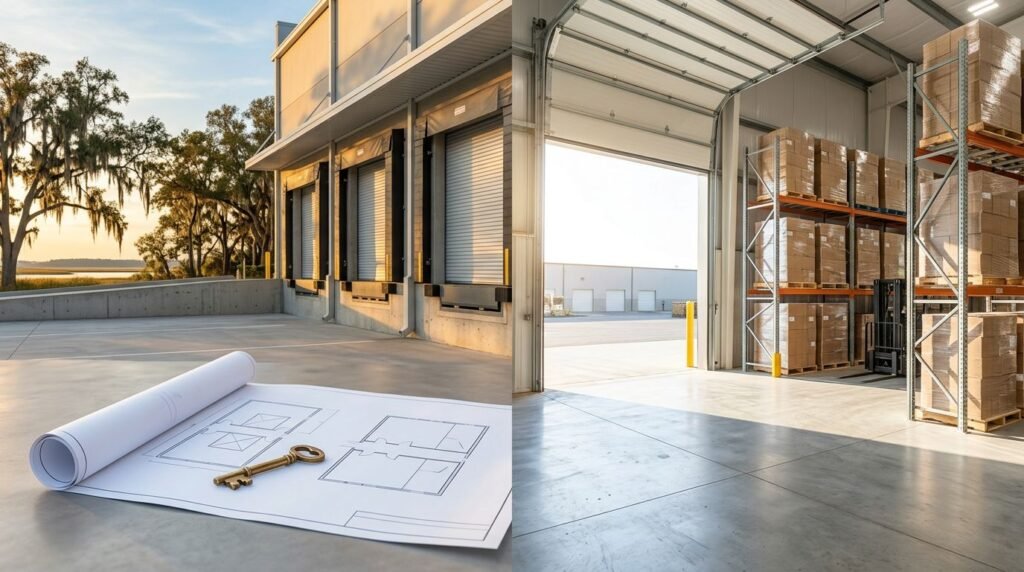
For a business in Savannah GA, a warehouse decision can affect cash flow, shipping costs, supply chain speed, and your eventual exit. With a Savannah warehouse, you are not simply choosing a building. You are choosing how much control, risk, and flexibility your business can carry.
Buying can build an asset. Leasing can preserve cash and give you room to change course. The right call depends on what is moving through your doors today, where you expect the business to be in five years, and what you cannot afford to get wrong.
Key Takeaways
- Choosing a Savannah warehouse affects cash flow, shipping costs, supply chain speed, operational control, and your eventual exit strategy.
- Buying can provide long-term control, equity, and customization, while leasing preserves capital and offers more flexibility as your business changes.
- Compare the full cost of ownership or occupancy, including financing, taxes, insurance, repairs, maintenance, tenant improvements, utilities, and lease escalations.
- Evaluate each property based on your actual freight pattern, including port access, truck routes, labor availability, dock capacity, clear height, trailer parking, and growth needs.
- A Savannah 3PL may be a better option than buying or leasing when you need flexible storage, fulfillment, transloading, or changing capacity without owning a facility.
Buying or Leasing a Warehouse in Savannah Starts With the Work
Before comparing a sale price to a lease rate, map the actual work your building must handle. Your distribution center may support wholesale distribution, inbound containers, outbound truckloads, employee shifts, rack storage, office space, trailer parking, and returns. A cheaper building is no bargain if your drivers lose time at the wrong access point every day.
Savannah’s appeal begins with location. Garden City Terminal and the Port of Savannah support port-oriented freight. Interstate 16, Interstate 95, Highway 21, Port Wentworth, and Pooler offer different operating advantages. A site near the port can reduce drayage distance for imported goods. Farther inland, a site may offer better regional truck routes or access to a larger labor pool.
In fiscal year 2025, the Port of Savannah handled 5.7 million twenty-foot equivalent units. That volume supports freight activity, but truck flow, container availability, and congestion still deserve close attention. Savannah’s industrial warehousing market has been strong for years, as this report on warehouse demand in Savannah shows.
A building close to the port is not automatically the better building. The best site is the one that cuts time and friction from your own freight pattern.
Major manufacturing and logistics users also shape the local market. Hyundai’s Bryan County Metaplant and planned expansion are adding to industrial demand in the region. That activity matters when you’re competing for labor, truck capacity, and modern warehouse space.
What Ownership and Leasing Really Change
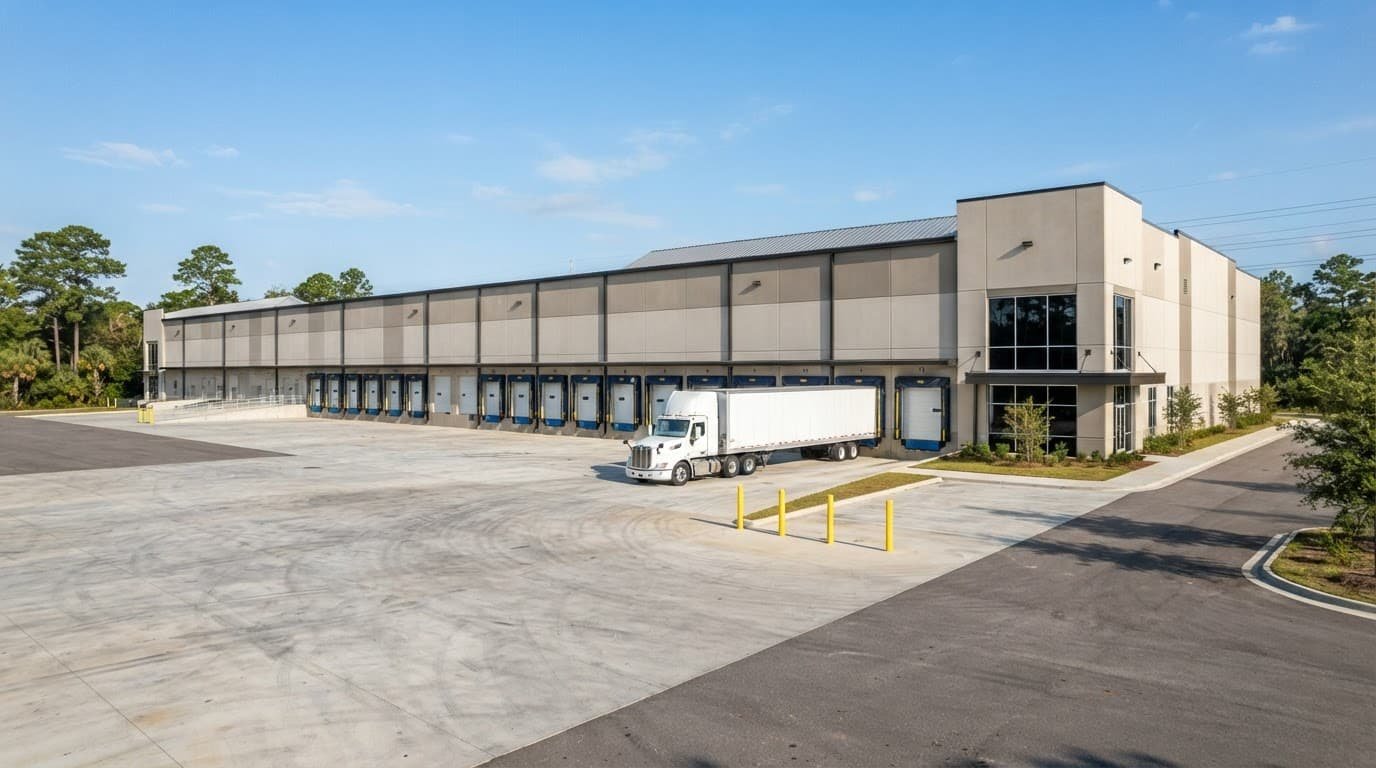
Buying makes sense when the building is central to how you make money. Maybe you need specialized racking, cold storage, a fenced yard, heavy power, or a custom loading setup. If you expect steady occupancy for years, ownership gives you control over improvements and protects you from a landlord deciding not to renew.
An owned facility can also become part of your long-term wealth. You may build equity as the loan is paid down. A well-located industrial property can also make your business more attractive to a future buyer. Still, ownership ties up capital. Roof repairs, paving, drainage, insurance, taxes, and surprises all land on your desk.
Leasing is often the smarter move when your business is growing, testing a new distribution model, or managing uneven inventory levels. You can get into a functional building faster and keep funds available for people, inventory, equipment, and marketing. That flexibility has value, y’all.
Here is the practical difference:
| Question | Buying | Leasing |
|---|---|---|
| Up-front cash | Requires a down payment, closing costs, and reserves for repairs. | Usually requires a deposit, initial rent, and tenant improvements. |
| Monthly exposure | Loan payments may stay predictable, but ownership costs remain. | Rent can rise at renewal, while many repairs stay with the landlord. |
| Building control | You control the property, subject to financing and zoning limits. | You control the space only within the lease terms. |
| Growth options | Expansion may require buying adjacent land or another building. | You can relocate or expand when the term ends. |
| Exit strategy | You can sell the property or lease it to another tenant. | You leave the asset behind when the lease expires. |
The strongest choice is rarely about pride of ownership. It is about whether the building supports your plan without putting too much pressure on the business itself.

Price the Full Deal, Not the Asking Rate
In CRE, a low headline number can hide an expensive commitment. A page of commercial real estate for sale can make a purchase look simple. It is not. Buyers need to account for financing, inspections, property taxes, insurance, repairs, environmental questions, and the cost of adapting the building to their operation.
The same is true for commercial real estate for lease. Savannah’s Class A bulk asking rents were generally in the low-to-mid $7 range per square foot on a triple-net basis during the first quarter of 2026. A $7.50 rate is not your full occupancy cost if taxes, insurance, common-area charges, utilities, and maintenance sit on top of base rent.
You will see CRE for Lease filters on listing sites, but those filters are only the start of the conversation. Review the full lease structure, renewal options, annual escalations, repair duties, signage rights, sublease language, and required personal guarantees. This triple-net versus gross lease comparison can help you separate the advertised rate from the real monthly commitment.
CBRE reported Savannah industrial direct vacancy at 10.5% in the second quarter of 2026, with a smaller construction pipeline than in prior years. That gives qualified tenants some room to negotiate, especially on large vacant buildings. It does not mean every owner will discount. Modern space with the right dock count, clear height, trailer parking, and access to the Port of Savannah can still command attention.
For a wider view of active options, review Savannah commercial real estate opportunities. Then compare each candidate against your operating needs, not a generic price-per-square-foot average.
When a 3PL May Beat Both Buying and Leasing
Sometimes the best warehouse is not yours at all. A third-party logistics provider can combine warehousing services, transportation services, and logistics solutions with short term storage, transloading services, pick and pack, wholesale distribution, retail distribution, and e-commerce fulfillment. This combination can provide flexible storage solutions without requiring you to own a facility.
This works well for online sellers with changing order volume. Ask a Savannah 3PL fulfillment provider which platforms it connects with, including Shopify, Amazon, and WooCommerce. More importantly, ask how pick and pack workflows and e-commerce fulfillment orders move through its inventory management system. Then ask how quickly it handles inventory updates, order accuracy, and exceptions, who sends customer notifications, and who owns the customer experience when something goes wrong.
Cross docking can be especially useful for freight that does not need to sit on a rack. It moves products from an inbound container or trailer to an outbound truck with limited storage time. That can reduce handling and shorten delivery lead times, but it requires dependable scheduling and accurate paperwork.
Specialized cargo needs a closer look. Lumber, rubber, food products, hazardous materials, machinery, and industrial materials all bring their own storage, security, insurance, and compliance questions. Do not assume a building is approved simply because it looks industrial.
If your warehouse supports a business for sale, ownership versus leasing can also change the deal. Buyers may value a secure long-term lease, but they may pay more for real estate included with the operation. People comparing businesses for sale want clarity on what they’re acquiring and what future occupancy will cost.
Ask These Questions Before You Sign Anything
A warehouse can feel like a big empty box during a tour. Then your operation moves in, and every missed detail becomes expensive. Before signing a letter of intent, get clear answers to these five questions:
- Can the building support your current shipping volume and a realistic growth plan without costly changes?
- Does the property support the storage solutions required by your company’s equipment and inventory, including the right clear height, dock layout, power supply, yard, and trailer parking?
- What is your total annual cost after rent or debt service, taxes, insurance, repairs, improvements, and shipping costs?
- How would the property affect a future sale, relocation, or expansion?
- Can the deal still work if port activity, a major customer, or inventory levels change?
Do not skip due diligence because the location feels right. A thorough warehouse inspection checklist should cover roof condition, HVAC, electrical systems, pavement, drainage, fire protection, and structural issues. Coastal weather and heavy truck traffic can turn minor problems into expensive repairs.
For buyers, valuation matters too. Loading docks, building condition, parking, clear height, tenant strength, and comparable industrial sales all influence price. A careful Savannah industrial valuation guide helps you look beyond the seller’s number.
Frequently Asked Questions
Is it better to buy or lease a warehouse in Savannah?
It depends on your capital, growth plans, and how much control your operation requires. Buying may suit a stable business with specialized facility needs, while leasing may be better when flexibility and preserved cash matter more.
What should I include when calculating warehouse costs?
Look beyond the asking price or base rent. Include financing, taxes, insurance, repairs, maintenance, utilities, tenant improvements, common-area charges, lease escalations, and shipping costs.
Does being close to the Port of Savannah always make a warehouse better?
Not necessarily. Port proximity can reduce drayage distance, but the best site also supports your truck routes, labor needs, yard requirements, customer locations, and overall freight pattern.
When should a business consider using a Savannah 3PL?
A 3PL can make sense when order volume or inventory levels change frequently, or when you want fulfillment and storage without committing to a building. Ask about warehouse services, inventory systems, pick and pack workflows, shipping processes, and exception handling before choosing a provider.
Make the Warehouse Fit Your Business, Not Your Ego
Buying or leasing comes down to one clear question. Does the property give your business room to operate, grow, and protect cash when conditions change?
Buy when control, long-term occupancy, and operational fit support your plan. Lease when flexibility and preserved capital matter more. A Savannah warehouse should make daily work easier, not become another problem waiting at the loading dock.
We are Members of the Georgia Association of Business Brokers and Realtors, Commercial Alliance, Georgia Association of Realtors, and National Association of Realtors