
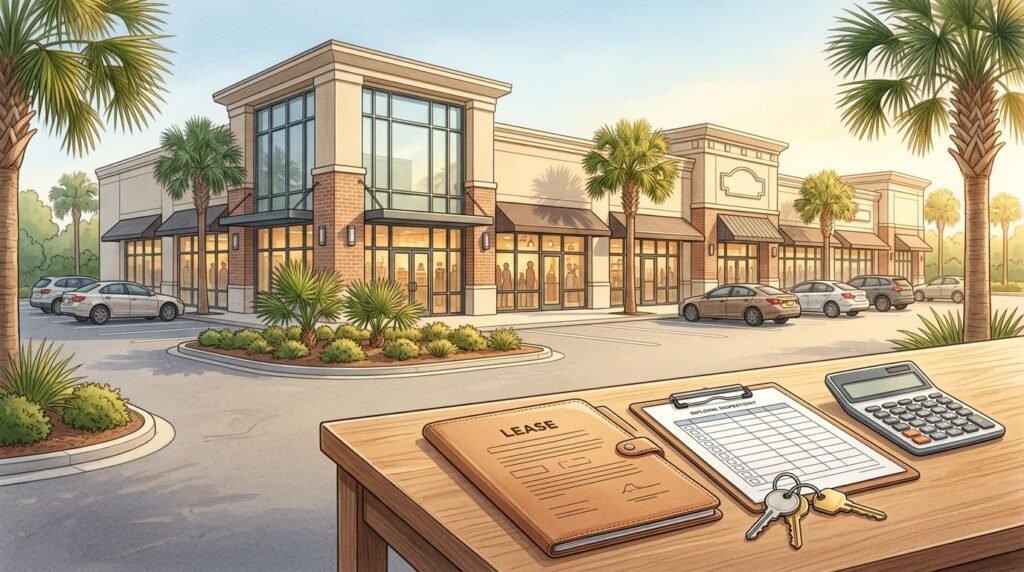
A commercial building with paying tenants can look like the easy version of real estate ownership. Rent is already coming in, the lights are on, and the space isn’t sitting empty. But buying commercial property with existing tenants means buying every promise tied to that rent, too.
The leases, roof, repair obligations, tenant credit risk, unpaid CAM charges, renewal rights, and deferred costs all come with the building. Miss one of them, and a “turn-key” deal can become an expensive lesson.
Here’s how to look past the brochure and evaluate an occupied South Carolina property with your eyes wide open.
Key Takeaways
- Buying commercial property with tenants means buying the leases, obligations, repair risks, tenant credit risk, and future rollover—not just the building and current rent.
- Rebuild the property’s income from signed leases, tenant ledgers, bank records, CAM reconciliations, and operating statements instead of relying only on the seller’s rent roll or offering memorandum.
- Complete thorough due diligence on the building, environmental conditions, title, zoning, occupancy approvals, tenant records, and upcoming capital needs before your earnest money becomes difficult to recover.
- Match the financing to the ownership plan, since passive investment properties and owner-occupied buildings may qualify for different loan structures, including SBA 504 financing for eligible owner-users.
- Protect the transition after closing with accurate contracts, rent and deposit adjustments, clear tenant communications, and steady property management.
Know What You’re Really Buying
An occupied building is not only brick, steel, and square footage. It is a stack of contracts, operating costs, tenant relationships, and future obligations. The property may produce income today, but you need to know whether that income will still be there next year.
Separate the business value from the real estate value
Many buyers start by browsing businesses for sale, then find a restaurant, warehouse, medical practice, or retail operation where the building is part of the package. That can be a good opportunity, but don’t roll everything into one number and call it a deal.
A listing may be labeled “Business For Sale,” “Commercial Real Estate for sale,” or “CRE for Lease.” Those labels are only a starting point. The operating company has value based on cash flow, goodwill, equipment, inventory, and customers. The building has a separate value based on rent, condition, location, lease terms, and market demand.
If you’re looking at a company and its property together, how to read a business-for-sale listing can help you separate the moving parts before you make an offer.
Understand what transfers after closing
Ask for every lease, amendment, guaranty, side letter, and tenant notice. Don’t settle for a rent roll alone. A rent roll is a summary prepared by the seller. The lease is the actual agreement.
You also need to know what deposits transfer, which repairs the seller has promised, and whether a tenant has a purchase option or right of first refusal. Some leases give tenants expansion rights, exclusive-use protections, or early termination rights. Those details can change the value of a building in a hurry.
A tenant paying rent today is not the same thing as a tenant obligated to pay rent tomorrow.
Buying Commercial Property Starts With the Building, Not the Brochure
The tenant may be the headline, but the building is still the asset. A strong tenant in the wrong location or an aging building with major repair needs can create problems long after closing.
Look at the property’s real daily life
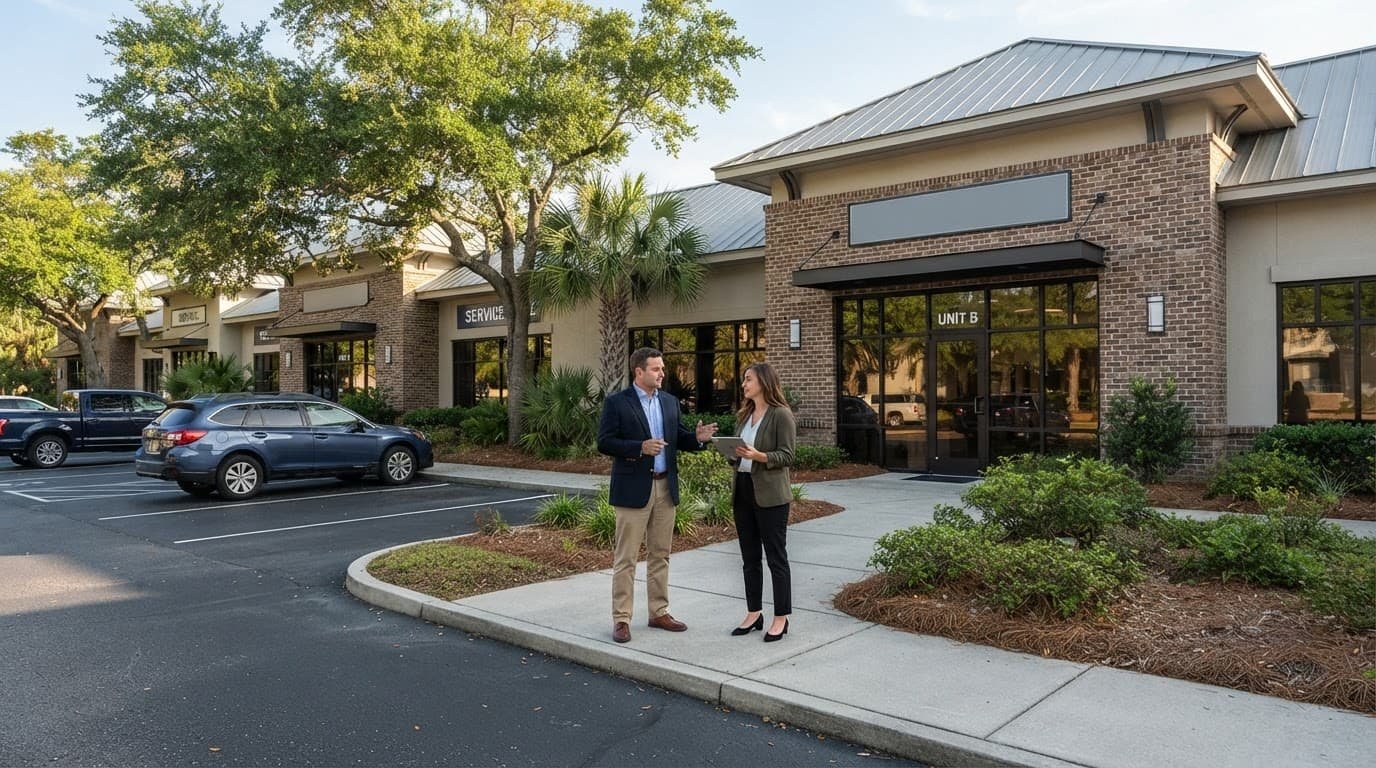
Drive the site more than once. Visit early in the morning, around lunch, and near closing time. Is the parking lot full? Are delivery trucks backing up safely? Does traffic move easily into the property? Are neighboring businesses active or struggling? Use these visits as market research, comparing competing space, tenant demand, traffic patterns, and nearby development.
In Savannah and the Lowcountry, industrial properties may depend on truck access, ceiling clearance, loading doors, and port-related routes. Retail properties live or die by visibility, access, parking, and nearby rooftops. Office space needs a different test, including access, layout, elevator condition, and tenant demand in that submarket. By contrast, multifamily properties require attention to occupancy, unit turnover, and common-area condition.
Don’t buy a building because the tenant’s business sounds impressive. Buy it because the location supports that business and could support another one if the tenant leaves.
Match the tenant use to the next possible tenant
A specialized use can be a blessing while the lease is healthy. It can also limit your options later. A former medical office, daycare, auto shop, restaurant, or manufacturing space may need expensive changes before another tenant can move in.
Study zoning laws, the certificate of occupancy, parking requirements, utilities, signage rights, and permitted uses. Then ask a simple question: if this tenant walked out at the end of the lease, who else could use this building?
When comparing nearby CRE for Lease listings or marketing labeled “Commercial Real Estate for Lease,” pay attention to what competing space offers that yours does not. A building’s replacement value matters, but so does its ability to attract the next occupant.
Underwrite the Income, Not the Seller’s Story
A polished offering memorandum can make any building look like a winner. Your job is to rebuild the numbers from source documents. That’s where buying commercial property becomes less about excitement and more about discipline.
Build net operating income from actual records
Start with a current rent roll, then match it against signed leases, tenant ledgers, bank deposits, and the seller’s operating statements. Confirm the base rent, lease expiration date, options, concessions, unpaid balances, and reimbursement obligations for every suite.
Net operating income, or NOI, is effective gross income minus ordinary operating expenses. Debt service, income taxes, depreciation, and major capital projects aren’t part of NOI.
Use this simple framework:
| Item to verify | Supporting record | Why it matters |
|---|---|---|
| Contract rent | Signed lease and amendments | Confirms the actual legal rent |
| Payments received | Tenant ledger and bank activity | Shows whether reported NOI is dependable |
| Expense reimbursements | CAM reconciliations and invoices | Reveals what tenants truly pay |
| Lease end dates | Lease abstract and options | Shows rollover risk |
| Delinquencies | Accounts receivable aging | Flags income that may not arrive |
If furniture, fixtures, or equipment are included in the sale, identify who owns them and who pays related taxes. SCDOR’s business personal property guidance is a helpful reminder that business equipment and real estate aren’t the same asset.
Use a cap rate with local context
A cap rate is NOI divided by purchase price. Turn that around, and the formula becomes: value equals stabilized NOI divided by a market-supported capitalization rate.
That sounds simple because the math is simple. The judgment isn’t. A building with one tenant, two years left on the lease, and a roof near the end of its life shouldn’t be priced like a long-term, creditworthy triple-net investment. Any value add strategy must be modeled separately, so the real estate investment isn’t priced on unproven upside.
Compare the asking price for the investment property with recent local sales of similar occupied buildings. Match the property type, tenant profile, lease length, age, condition, and location. Then look at your likely annual cash flow after loan payments, reserves, and closing costs. That is the number behind cash on cash return, and it’s the number your bank account will feel.
For a package deal, South Carolina business valuation multiples can also help keep the company valuation separate from the building valuation.
Audit Every Lease Before You Trust the Rent Roll
A lease can create steady income. It can also hide obligations that belong to you after closing. Read each commercial lease with a commercial real estate attorney who understands South Carolina transactions, especially when the tenant is large, the lease is old, or the building has several occupants.

Know which expenses the tenant really pays
A gross lease generally puts most operating costs on the landlord. A modified gross lease divides costs between landlord and tenant. In a triple net lease, the tenant usually pays base rent plus its share of property taxes, insurance, and common-area maintenance.
That label alone tells you little, y’all. The lease may cap controllable expenses, exclude roof replacement, limit management fees, or require the landlord to front costs before reimbursement. Read the definitions, not only the title at the top of the lease.
Review the last two or three years of CAM budgets, invoices, and reconciliations. If the seller has not billed tenants for recoverable expenses, you need to know whether the leases still allow you to recover them.
Check the clauses that can change your deal
Focus on rent increases, renewal options, assignment rights, subleasing, co-tenancy clauses, exclusive uses, repair duties, insurance requirements, and personal guaranties. A five-year lease may not mean much if the tenant can terminate after 12 months.
Ask each material tenant for an estoppel certificate. It confirms key facts, including current rent, deposits held, lease defaults, side agreements, and claims against the landlord. If a tenant refuses to sign one, don’t brush it aside. Find out why.
Due Diligence Has to Include the People Inside
The seller’s documents are a starting point, not your final answer. A good diligence period gives you time to test the building, income, and paper trail before your earnest money becomes hard to recover.
Inspect the major systems and repair history
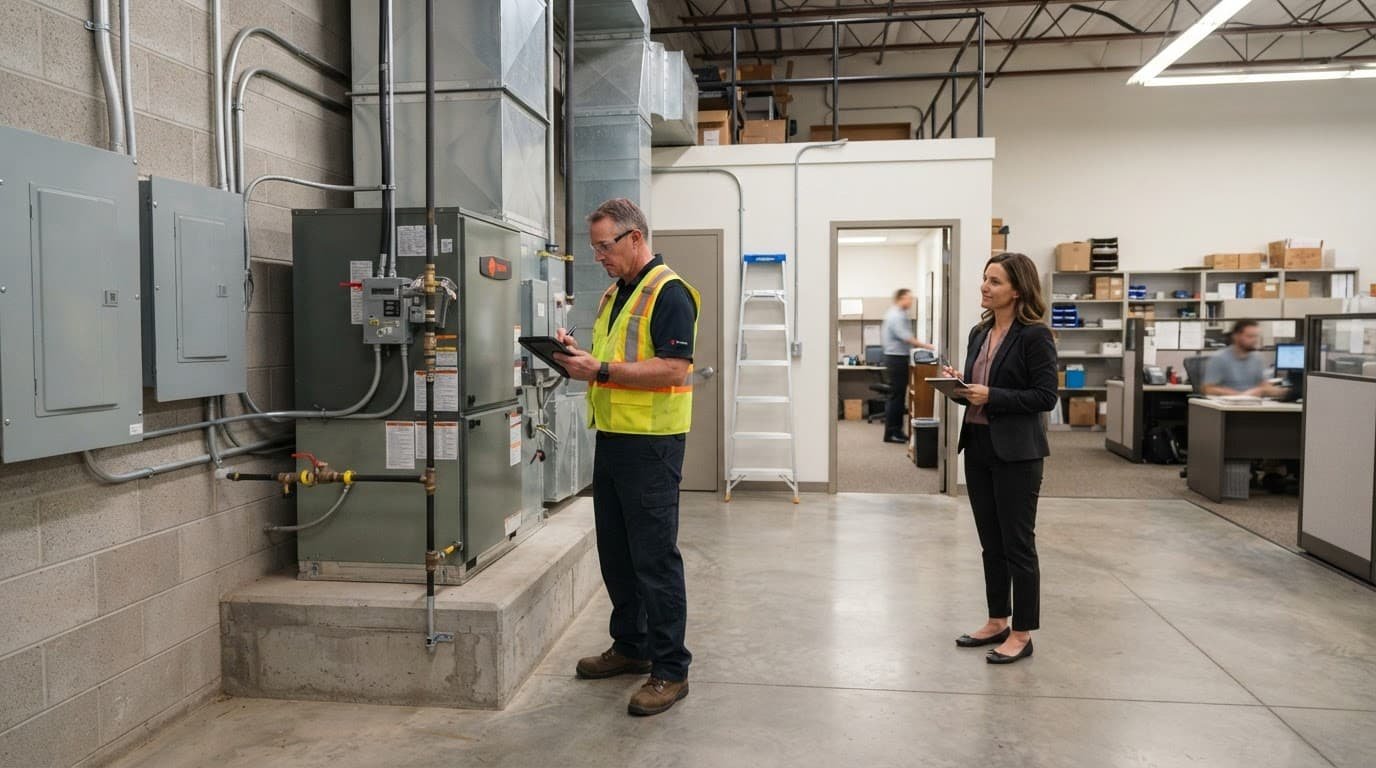
Hire a qualified commercial property inspector. Review the roof, HVAC units, electrical service, plumbing, structure, drainage, fire systems, paving, and ADA-related access. Request repair invoices, maintenance agreements, warranties, permits, and service records.
A roof leak can be visible. Deferred HVAC replacement often isn’t. If a major repair is likely soon, add a realistic reserve to your underwriting or negotiate a credit. Don’t hope the first big bill arrives after your cash flow catches up.
Treat environmental review as a business decision
A Phase I Environmental Site Assessment is the customary first step in a broader environmental assessment. It reviews the property’s history and looks for signs of recognized environmental conditions.
Older industrial buildings, automotive uses, dry cleaners, fuel storage, printing operations, and properties near rail or port activity deserve extra attention. If the Phase I raises concerns, your lender or environmental consultant may recommend a Phase II investigation.
Talk with local environmental counsel and your lender before deadlines expire. If contamination becomes your problem after closing, it can affect financing, resale value, tenant use, and post-closing operations.
Verify title, zoning, and tenant records
Order title work and a survey. Look for easements, access issues, encroachments, utility rights, restrictive covenants, and recorded leases. Confirm that current tenant uses match zoning and occupancy approvals.
A commercial diligence period often runs 30 to 90 days, depending on the asset and financing. South Carolina CRE due diligence timelines can vary, so give yourself enough time to complete the work without rushing your team.
Choose Financing That Fits the Ownership Plan
The right commercial property financing depends on who occupies the building. A passive investor buying a fully leased retail center has different financing needs than a business owner buying a building for their own company.
Investment property loans focus on the tenant and cash flow
For an investment property, a commercial mortgage lender will look closely at lease term, tenant quality, property condition, loan to value ratio (LTV), debt-service coverage, and your experience as an owner.
Expect questions about tenant concentration. One tenant paying all the rent creates a different risk than six tenants with staggered lease expirations. Lenders also want to see reserves. Don’t use every available dollar for the down payment and leave nothing for repairs, vacancy, or leasing costs.
SBA 504 can work for owner-users
Among SBA loan programs, the SBA 504 loan program provides long-term, fixed-rate financing for major fixed assets. It can be a strong fit when your operating company will occupy the building.
For an existing building, the borrower generally must occupy at least 51% of the usable space. An occupied property may qualify as owner occupied commercial real estate if your business is taking over enough of it. A passive investor buying a tenant-filled building usually does not qualify.
A common 504 structure includes a bank first mortgage, a CDC-backed second mortgage, and borrower equity. NADCO’s 504 financing outline explains why a 10% borrower contribution is often discussed, though lender underwriting and deal details still control.
Write an Offer That Gives You Room to Verify
When buying commercial property, the letter of intent sets the business terms. The purchase and sale agreement turns those terms into an enforceable contract. Don’t let a fast-moving deal push you into a short diligence period or vague seller obligations.
Put the economics and dates in writing
Your LOI should cover price, earnest money, financing contingency, diligence period, closing date, seller-paid costs, tenant estoppels, repair credits, and what happens if material facts change. Spell out what records the seller must provide and when.
South Carolina commercial real property is generally assessed at 6% of fair market value before local millage is applied. Check the parcel’s current assessment, tax bill, and county millage before closing. A change in ownership can affect the numbers in your model.
Also budget for the South Carolina deed recording fee, currently $1.85 per $500 of realty value or fraction thereof. Confirm who pays it in the contract, and have closing counsel review whether any exemption applies.
Make the contract protect against surprises
Your purchase and sale agreement should require accurate tenant information, updated rent rolls, lease copies, estoppels, and notice of any new default, amendment, or vacancy before closing.
Ask for a closing adjustment of rents, security deposits, CAM balances, prepaid expenses, and unpaid bills. Get clarity on open maintenance work and seller promises to tenants. A clean closing statement matters, but a clean handoff matters more.
Your core team should include a real estate broker, lender, attorney, accountant, inspector, and environmental professional when the property calls for it. Nobody wins a commercial deal alone, trust me.
Take Over Without Shaking Up Good Tenants
Closing day isn’t the finish line. It’s when tenants start deciding what kind of landlord you will be. A calm, professional transition protects the income you worked hard to buy.
Give tenants clear information right away
Send a welcome notice immediately after closing. Include the new ownership name, rent payment instructions, management contact, emergency number, maintenance process, and proof of insurance if the lease requires it.
Confirm where security deposits are held, then reconcile each tenant ledger. If rent is paid by ACH, lockbox, or online portal, explain the transition clearly. A good tenant shouldn’t be marked late because nobody shared the payment instructions.
Listen before you start changing things
Meet tenants when practical, especially the larger ones. Ask about building issues, upcoming plans, and service concerns. You may learn about a recurring leak, parking problem, or lease question before it becomes a dispute.
Don’t promise a new lease, expansion, or rent concession during a friendly first conversation. Listen, take notes, and review the lease. Good property management is steady, fair, and responsive. Tenants notice that.
Frequently Asked Questions
What should I review before buying a commercial property with tenants?
Review every lease, amendment, guaranty, side letter, tenant notice, rent ledger, CAM reconciliation, and estoppel certificate. You should also inspect the building and verify title, zoning, environmental conditions, occupancy approvals, and upcoming repair needs.
How do I know whether the reported rental income is reliable?
Match the current rent roll against signed leases, tenant ledgers, bank deposits, operating statements, and accounts receivable records. Confirm that reported reimbursements, concessions, delinquencies, and unpaid CAM charges are supported by documentation.
What is an estoppel certificate, and why does it matter?
An estoppel certificate confirms important facts between the landlord and tenant, such as rent, deposits, lease defaults, side agreements, and claims. A tenant’s refusal to sign one may signal a dispute or an inconsistency that should be investigated before closing.
Can I use SBA 504 financing to buy a tenant-occupied building?
SBA 504 financing can work when your operating company will occupy at least 51% of an existing building’s usable space. A passive investor buying a property occupied by unrelated tenants generally does not qualify under the owner-occupancy requirement.
How can I protect the deal in the purchase agreement?
Include clear deadlines and seller obligations for diligence materials, tenant estoppels, updated rent rolls, new defaults, repairs, financing, and closing adjustments. The agreement should also address security deposits, CAM balances, prepaid expenses, unpaid bills, and any promises the seller made to tenants.
A Strong Deal Holds Up After the Excitement Fades
When buying commercial property with existing tenants, income can start on day one. That only works when the leases, expenses, building condition, and financing support the price. The strongest deals aren’t the ones with the prettiest brochure. They’re the ones that still make sense after you verify every line item.
Trust the documents, test the income, and respect the tenants. That’s how you buy a South Carolina commercial building with confidence and protect the value you paid for.
We are Members of the Georgia Association of Business Brokers and Realtors, Commercial Alliance, Georgia Association of Realtors, and National Association of Realtors