
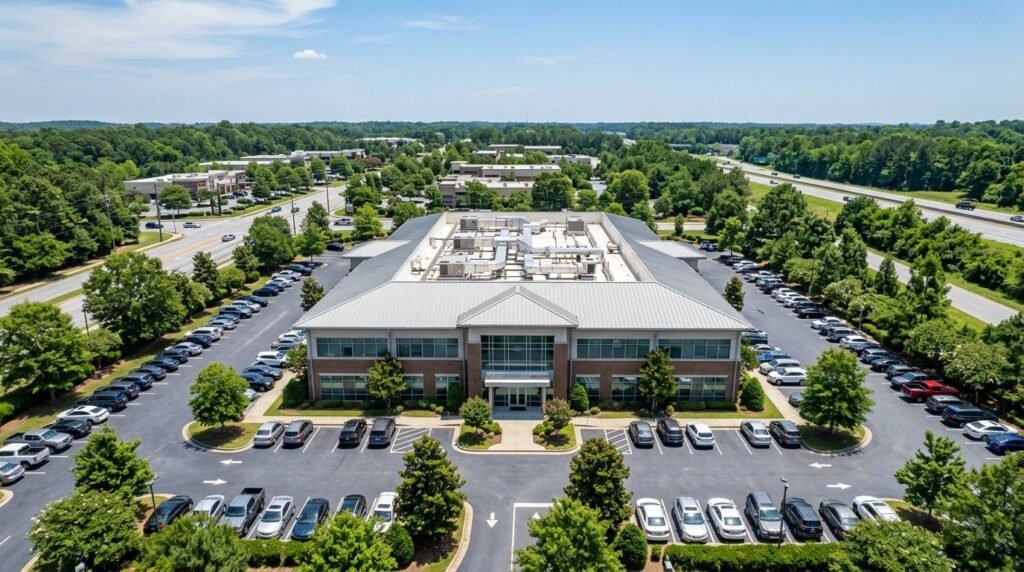
Bad surprises rarely start in the closing room. They start on the roof, inside a worn-out HVAC unit, or under the tires in the parking lot.
If you’re buying a property in Savannah, Pooler, Atlanta, or Macon, those three areas can swing the deal fast. Georgia commercial inspections are about more than square footage and rent rolls. You need to know how the building handles heat, rain, traffic, and neglect. Start there, and the rest of your due diligence gets sharper.
Why these three checks carry so much weight
When you’re reviewing a Business For Sale with real estate attached, the building isn’t a side note. It’s part of the income, part of the repair exposure, and part of the financing story.
The same goes for Businesses for Sale that look strong on paper but hide deferred maintenance outside. A clean profit line can still sit under a tired roof and beside a broken lot.
Many listings live in two buckets at once, business acquisition and CRE. Buyers comparing Commercial Real Estate for sale with nearby CRE for Lease options often start with price per square foot. Fair enough. But a failing roof or weak rooftop unit can erase that savings fast.
Georgia makes these issues more obvious. In Savannah and Brunswick, salt air can speed up corrosion. In Atlanta and Warner Robins, long cooling seasons punish older HVAC units. In Pooler, Macon, Dublin, and Waycross, traffic and stormwater can wear down pavement quicker than a quick drive-through suggests. A Hilton Head investor buying across the river still needs Georgia eyes on the site.
Lenders and insurers look at these systems with cold eyes. They don’t care how polished the offering memo looks. If the roof is near the end, the HVAC has no records, or the lot has ADA and drainage issues, the buyer pays somewhere, through reserves, credits, higher premiums, or a tougher approval process.
A simple snapshot helps frame the walk:
| Area | What buyers risk | What to ask for |
|---|---|---|
| Roof | Leaks, trapped moisture, short remaining life | Age, repair log, warranty status |
| HVAC | Comfort complaints, high utility costs, unit failure | Service records, model dates, major repairs |
| Parking lot | Trip claims, drainage trouble, poor first impression | Paving history, patch dates, ADA review |
Think of it like buying a truck for the business. You wouldn’t ignore the tires, engine, and suspension. The roof, HVAC, and lot are the building’s version of those same systems.
In bundled deals, like this Savannah retail and online business with real estate, those inspection findings can move value and closing terms at the same time.
Roof and HVAC checks that can change the deal
A roof tells the truth. Owners can freshen paint and clean suites, but the roof usually keeps the real diary.
Look for ponding water, open seams, patched sections, soft spots, clogged drains, loose flashing, and messy penetrations around vents or lines. A solid commercial property inspection checklist covers those basics, but don’t stop there. Ask who repaired the roof, when it happened, and whether any warranty transfers.
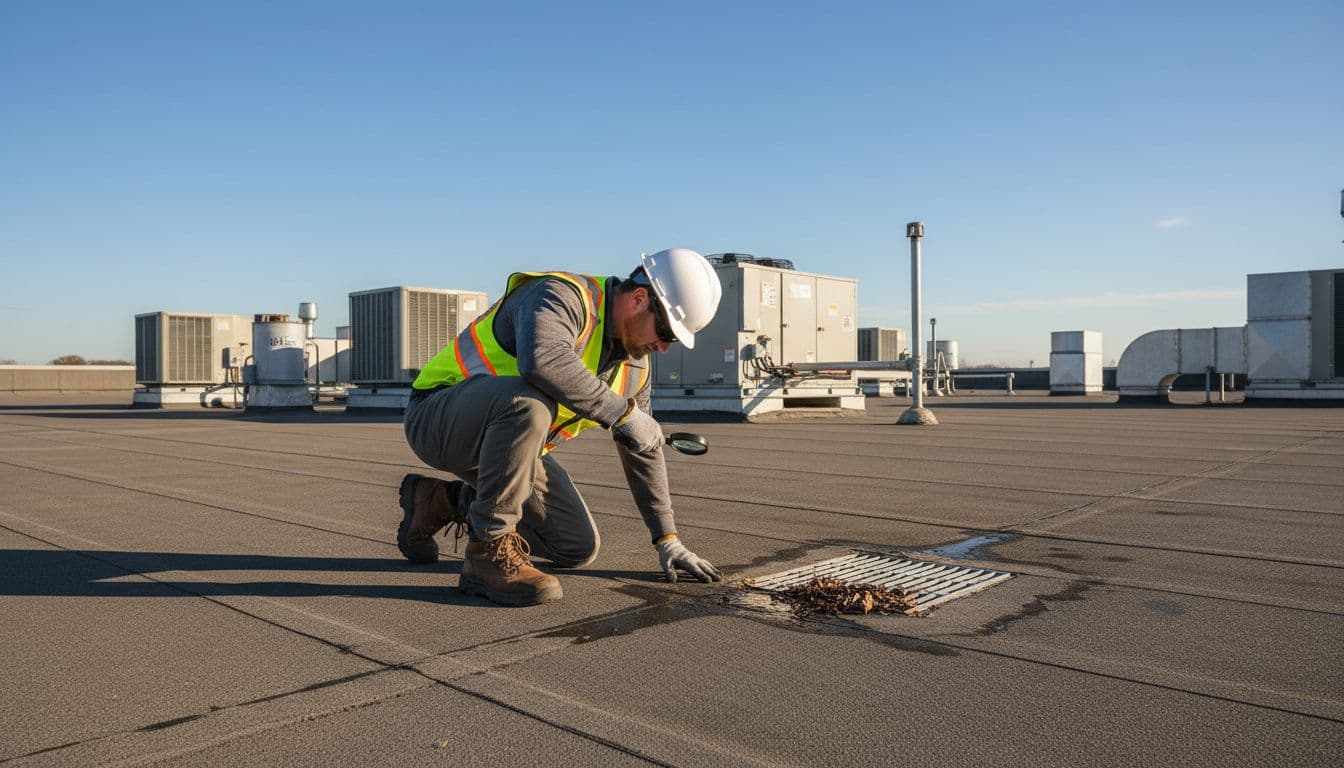
Also check where rooftop drainage ends up. Water that shoots onto walkways or erodes the lot can create another repair line item below. One defect often travels with another.
Now tie the roof to the HVAC. Rooftop units add weight, vibration, and penetrations. If curbs aren’t sealed well, water finds a way in. If units are old, neglected, or mismatched, comfort complaints show up first and replacement costs show up right after.
Ask for service logs, filter history, refrigerant repairs, control issues, and unit ages. Listen for odd noise. Look for rust, bent fins, oil stains, dirty coils, and patched wiring. In Georgia, cooling season is long, so an HVAC system in Atlanta or Macon doesn’t get much grace.
Don’t rely on seller memory. “I think it was replaced a few years ago” is not a record. Serial numbers, service invoices, and contractor notes matter, especially when you’re trying to estimate remaining life instead of current function.
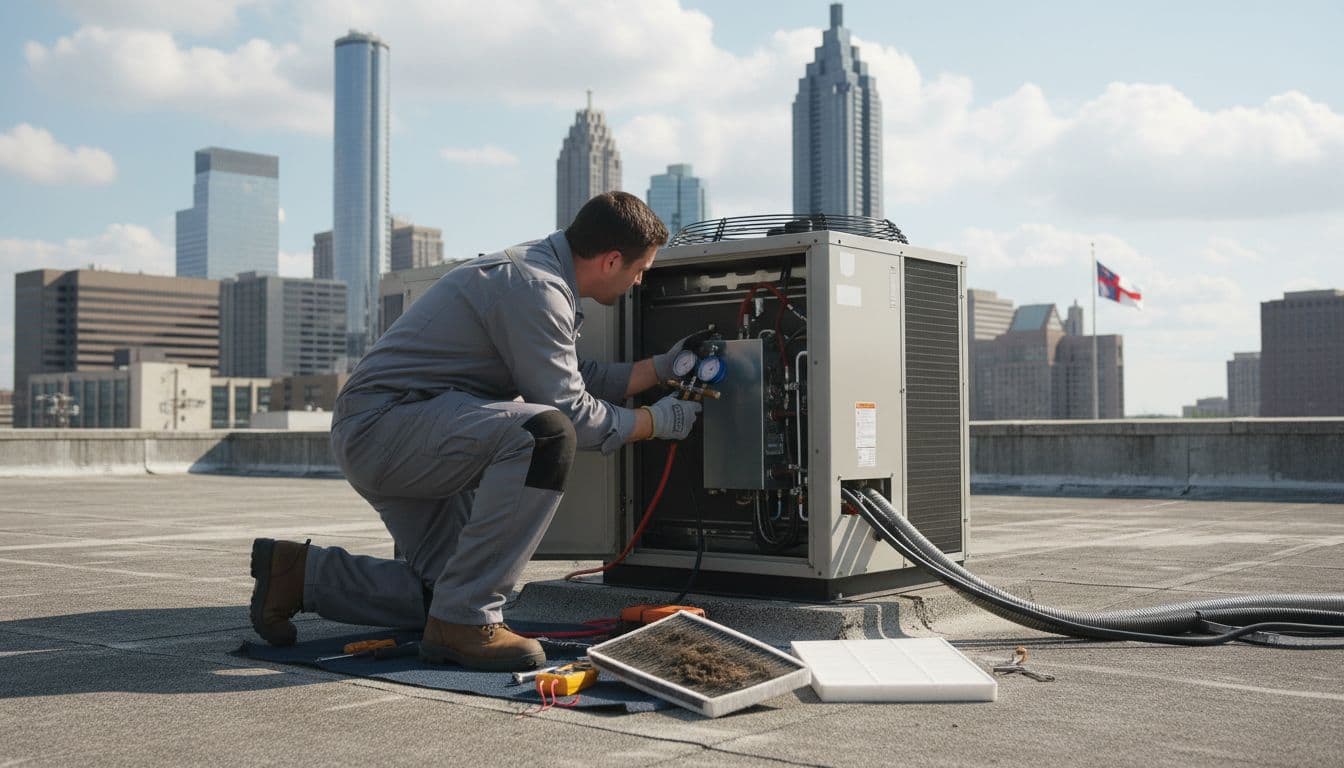
On older retail centers, ask whether thermostats, zoning, and fresh-air intake match current use. A space converted from warehouse to office can strain a system that was never sized for the new load.
If you’re weighing Commercial Real Estate for sale against a nearby building offered as Commercial Real Estate for Lease, remaining roof life and HVAC condition can settle the question quickly. The same goes for CRE for Lease renewals. A landlord may absorb some capital work, or they may not. Get it in writing, y’all.
The biggest mistake is calling these items “maintenance” and moving on. They’re deal terms. Repairs, escrows, seller credits, and timing extensions often start right here.
Parking lot problems buyers spot too late
The parking lot is the handshake before anyone reaches the front door. Customers notice it. Tenants notice it. Insurance carriers do too.
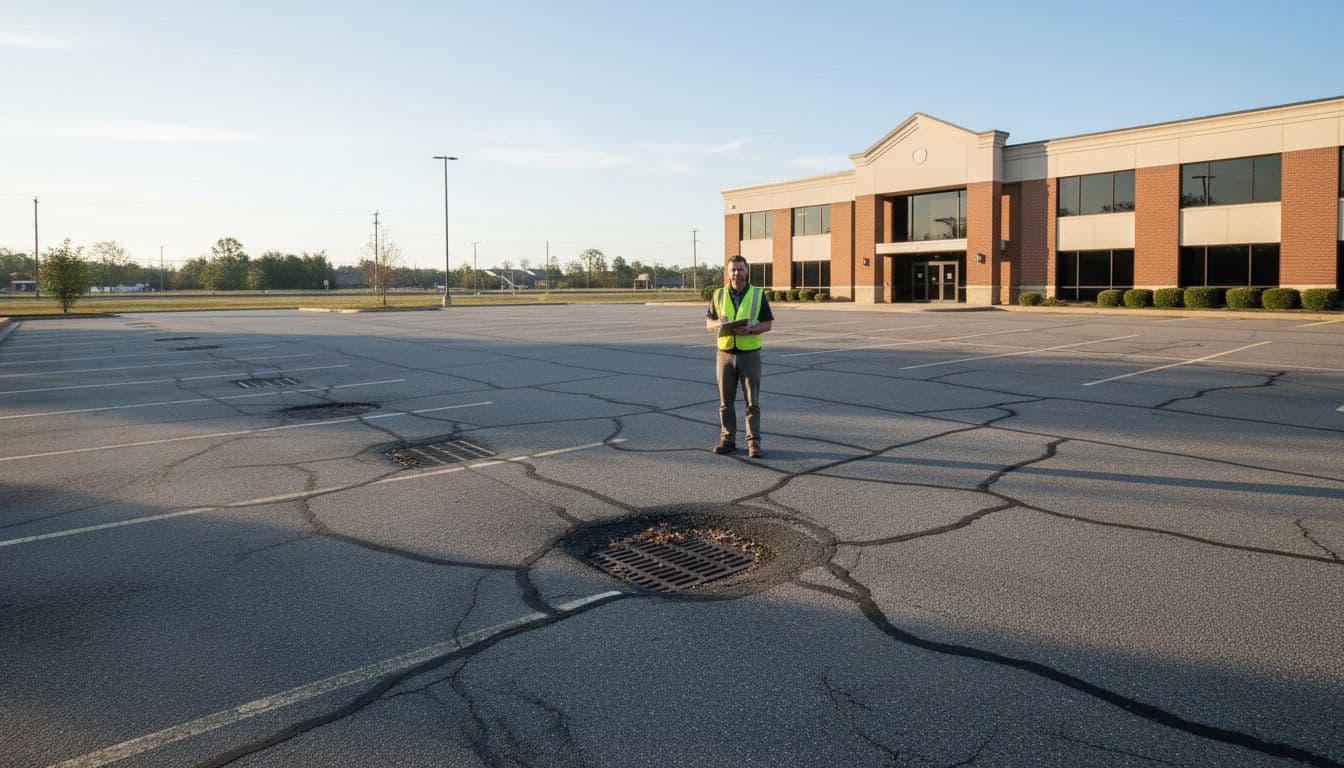
Check cracking, potholes, failed patches, rutting, standing water, broken curbs, faded striping, ADA spaces, and how runoff moves after rain. A lot that drains toward the building creates trouble twice, once in the asphalt and again at the wall.
Industrial sites need even closer review. Truck turns chew up edges and loading areas. That’s one reason buyers studying premier industrial companies off I-95 should inspect pavement and circulation with the same care they give equipment. A guide to parking lot, sidewalk, and drainage checks is a useful starting point, but real repair bids tell the story.
Striping matters more than buyers think. Faded lanes, missing fire access markings, or poorly marked ADA stalls can create compliance issues and confuse traffic on day one. That’s not the opening-week surprise any new owner wants.
This matters for retail, warehouses, and multi-tenant sites alike. In Pooler, faded lanes can hurt traffic flow. In Waycross or Dublin, a service yard with broken asphalt can slow operations. Near Savannah or Brunswick, drainage problems can linger after coastal weather.
If the property depends on curb appeal, the lot is part of the brand. If it depends on trucks, the lot is part of operations. Either way, it belongs in your budget model before you sign.
Final Thoughts
Bad surprises rarely begin at closing. They begin in the ordinary places buyers assume are “good enough.”
When roof, HVAC, and parking lot checks happen early, you negotiate from facts, not hope. That’s the real value in solid Georgia commercial inspections. They protect your price, your timeline, and your peace of mind before the ink dries.
We are Members of the Georgia Association of Business Brokers and Realtors, Commercial Alliance, Georgia Association of Realtors, and National Association of Realtors