
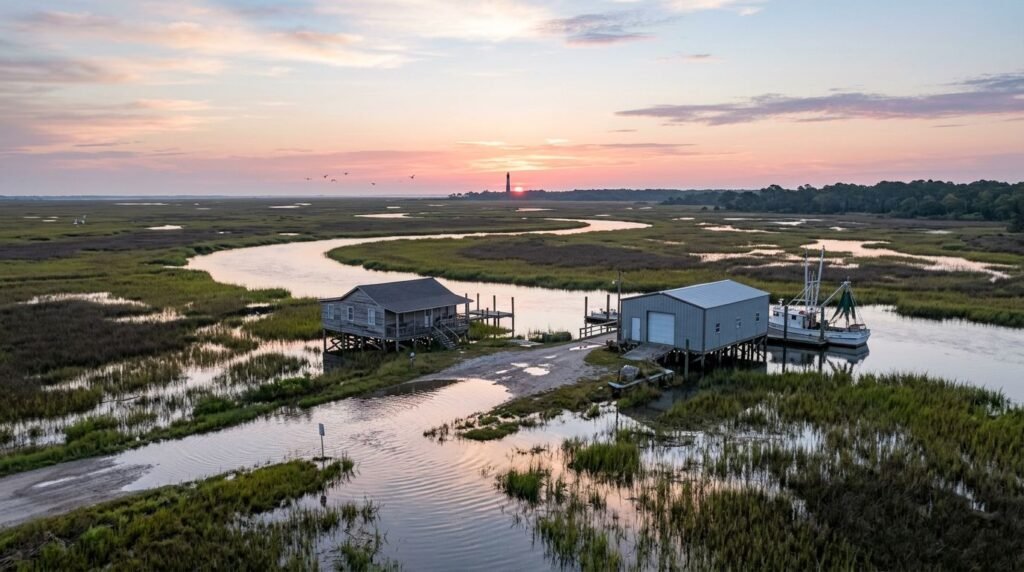
A marsh view can sell the dream fast. Still, coastal flood zone risks can turn a promising deal into a costly surprise.
If you’re buying in Savannah, Pooler, Brunswick, or Hilton Head, where many properties fall into FEMA flood zones, flood exposure affects more than insurance. It can change lender terms, build-out costs, lease language, and even how often customers can reach the site. That’s true for a house, a warehouse, and a Business For Sale tied to a physical location.
Before you fall for the view, look at the water story behind the address.
Why flood maps matter more than the asking price
On the Georgia and South Carolina coast, flood risk isn’t limited to beachfront homes. Low spots near marshes, creeks, and tidal roads often fall within Special Flood Hazard Areas or other high risk areas and can flood first. Sometimes the building stays dry up to the base flood elevation, but the parking lot doesn’t. Sometimes the road closes, which hurts operations all the same.
That matters in Savannah’s port corridor, in parts of Pooler with drainage pressure from climate change and gaps in the flood control system after heavy rain, around Brunswick’s low-lying areas, and across barrier markets like Hilton Head with their flood zone V and flood zone VE complexities. As of early 2026, South Carolina is still updating FEMA maps in counties statewide, reflecting the 1% annual chance or 100-year flood standards, and other map changes remain active in some areas driven by storm surge waves and sea level rise. So a flood label from a few years ago may not tell the whole story, especially with river or stream flood risks and undetermined flood zones inland from the shore.
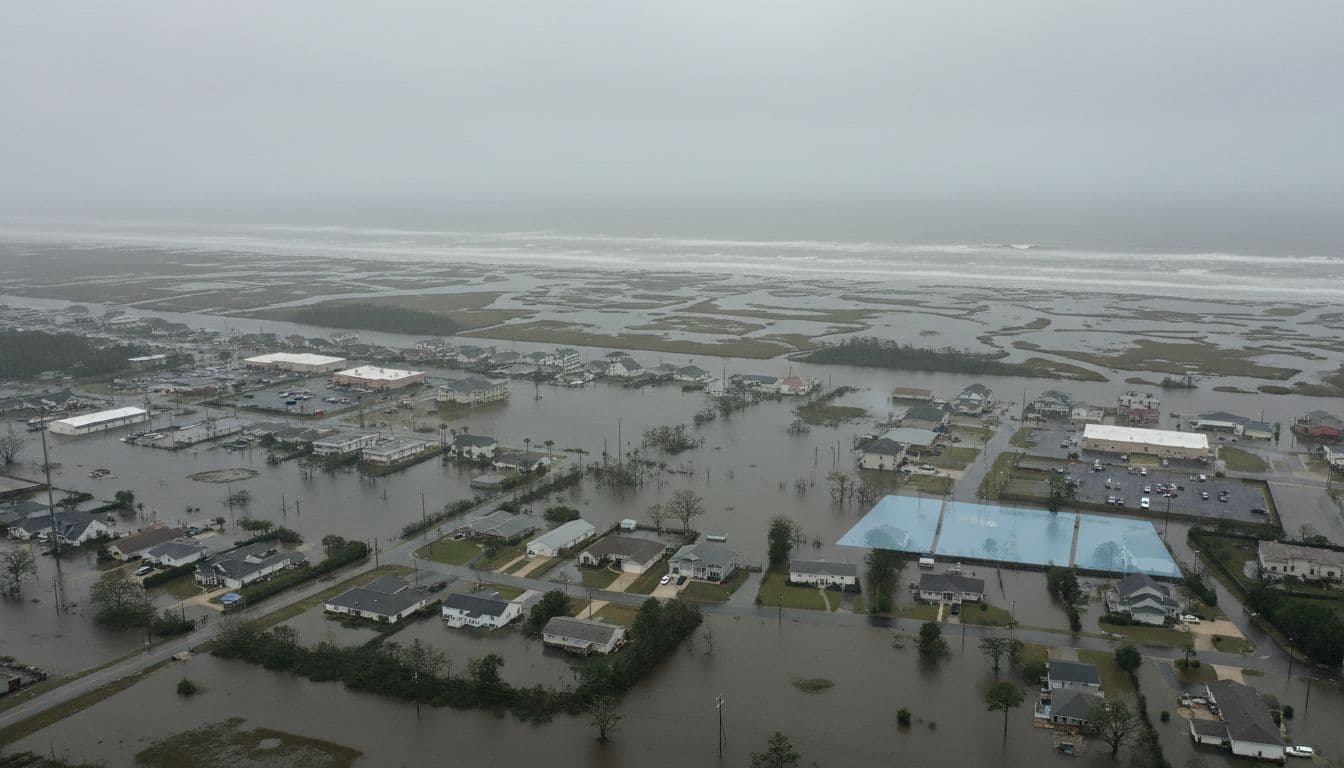
A lot of buyers focus only on the FEMA zone. That’s a start, not the finish. You also need to ask about storm surge, king tides, drainage backups, prior water claims, and road access after a hard rain. A site outside a high-risk zone can still flood.
Ground-floor electrical panels, inventory storage, and HVAC units can turn a minor water event into a six-figure repair. For retail and light industrial sites, the weak link is often equipment placement, not the walls.
A cheap coastal site can turn expensive fast if trucks, tenants, or customers can’t reach it.
Compare that with Atlanta, Macon, Warner Robins, Dublin, or Waycross. Inland buyers still check floodplains, but storm surge usually isn’t driving the decision. On the coast, it often is.
This is why a port-adjacent listing, like this turnkey Savannah retail business with dual income streams, needs more than a quick look at revenue. If real estate is part of the package, the flood map belongs beside the profit and loss statement.
How flood risk changes value, lending, and operations
Water risk shows up all through the deal. It affects the price, the lender’s comfort, and your monthly costs after closing.
If you’re reviewing Businesses for Sale, ask whether sales depend on a physical site staying open. An RV repair shop near I-95, a marina service business, or a contractor supply store can lose revenue when access roads flood, even if the building avoids damage. That’s one reason a coastal listing such as this Savannah RV repair shop for sale $225K deserves a location-risk review, including FEMA flood zones, not only a cash flow review.
Here is where flood exposure usually changes the numbers:
| Deal factor | Why it matters |
|---|---|
| Insurance | Premiums from the National Flood Insurance Program, especially mandatory flood insurance in Special Flood Hazard Areas with 1% annual chance floods, can cut net income and raise escrow needs |
| Lending | Some lenders want flood coverage, extra reserves, or more paperwork, like for a 30-year mortgage |
| Access | Lost road access can interrupt sales, staffing, and deliveries; do not rely solely on federal disaster assistance |
| Build-out | Elevation to base flood elevation and code work can raise renovation costs |
The takeaway is simple. A building can look affordable until the hidden monthly carry shows up.
This hits CRE buyers especially hard. A warehouse may pencil out until insurance and drainage fixes eat the return. The same goes for buyers scanning Commercial Real Estate for sale near marsh edges or tidal creeks, while inland sites like Atlanta or Macon often face only moderate flood risk or 500-year flood exposures. If you’re comparing Commercial Real Estate for Lease, don’t assume the property owners carry every flood-related cost. With CRE for Lease or Commercial Real Estate for Lease, the lease should spell out repairs, insurance, build-out rules, and who pays if a flood shuts the space down.
South Carolina buyers face the same math. Local guides for Charleston area flood zones and insurance and a broader South Carolina flood zone breakdown for buyers show how quickly zone status from FEMA maps can change insurance costs. That’s why smart buyers underwrite the property twice, once for the business case and once for the water case.
A smarter way to check flood zone risk before closing
A strong coastal buy doesn’t mean avoiding the coast. It means doing the homework before emotion takes the wheel.
Start with the FEMA Flood Map Service Center and the exact address. Pull the current Flood Insurance Rate Maps and flood hazard boundary maps, then see if a preliminary map or Letters of Map Change is in play. In South Carolina, buyers should compare current and proposed map views when possible. Next, ask for the property’s flood history, insurance claims, seller disclosures, and any elevation certificate on file. If the answer is vague, slow down.
If the asset is large or older, bring in an insurance agent and an engineer early. Have the engineer perform a hydraulic analysis. Their input can save weeks of back-and-forth later.

Then price the risk early. Get a flood insurance quote before the due diligence period gets short. Walk the site after a rain if you can. Study where water drains, where HVAC sits, how trucks or customers enter, and look for signs of shallow flooding. In addition, check whether nearby roads flood before the parcel does. For a coastal property, road access is part of the asset. Factor in coastal subsidence and climate change for long-term viability.
A short buyer screen helps keep emotions in check:
- Check the current FEMA maps and any pending update or FEMA flood zones.
- Ask for prior flood claims, repairs, and shut-down history.
- Quote insurance before final pricing or lease approval, noting mandatory flood insurance tied to the Base flood elevation and 1% annual chance.
- Review lease or purchase documents for flood duties and repair rights.
- Budget for downtime, not only physical damage.
Disclosure rules are also getting more attention. The NRDC’s overview of flood disclosure laws is a useful reminder that past water events matter to buyers and tenants alike. On barrier-island markets, resources like Kiawah flood zones and elevation certificate guidance help show why elevation paperwork can carry real weight.
The best coastal buyers aren’t scared off by risk. They price it correctly, write it into the deal, and move forward with clear eyes.
A water view can still be a smart investment. But on the Georgia and South Carolina coast, the smart money asks one more question first, what happens here after the next big rain?
If you’re weighing a site, a lease, or a business tied to the shoreline, make flood risk part of the first conversation, not the last. That’s how you protect your cash flow, your legacy, and your sleep.
We are Members of the Georgia Association of Business Brokers and Realtors, Commercial Alliance, Georgia Association of Realtors, and National Association of Realtors