
In Georgia, the commercial lease usually decides who pays for HVAC replacement. If it doesn’t transfer repair duties to the tenant, Georgia’s landlord repair statute supplies the starting rule, but replacement still depends on the facts and contract.
That distinction matters when you’re protecting the business you’ve worked hard to build. A failed rooftop unit can turn an affordable Savannah storefront into an expensive commitment.
Start with who maintains, who repairs, and who replaces. Those can be three different obligations.
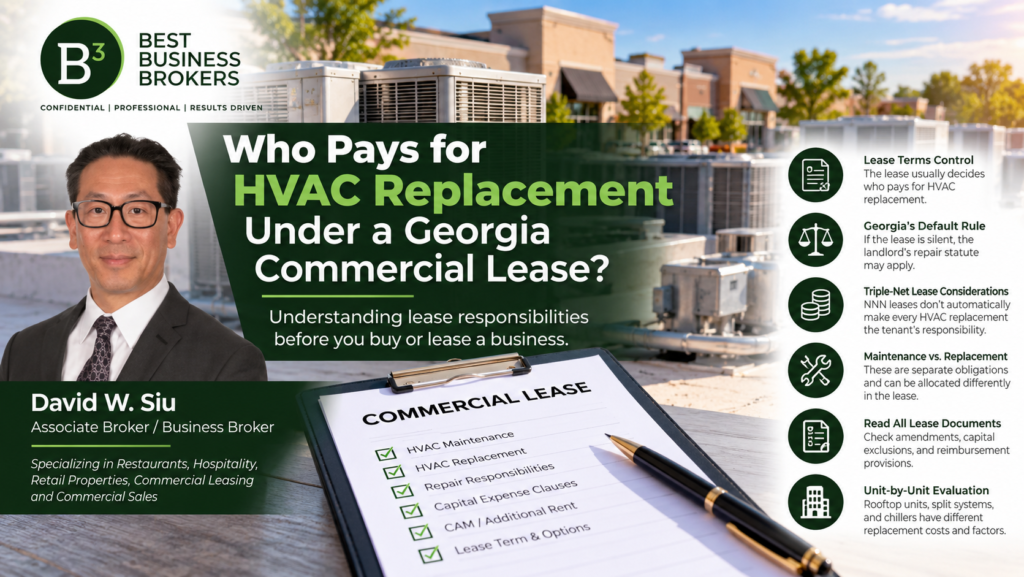
Key Takeaways
- A triple-net label doesn’t automatically make every HVAC replacement the tenant’s responsibility.
- Read the lease, amendments, capital-expense exclusions, and reimbursement provisions together.
- Unit condition, remaining lease term, and documented maintenance should shape any negotiated cost split.
Georgia’s Default Rule Starts With the Landlord
What happens when the lease is silent?
Georgia Code Section 44-7-13 places the duty to keep premises in repair on the landlord. Commercial leases can transfer repair obligations to tenants.
If the lease clause addressing HVAC is genuinely silent, the statutory duty is the starting point for landlord responsibility. Silence doesn’t automatically require a tenant to purchase new equipment.
A replacement demand raises questions about ownership, failure cause, and what work is necessary. A clause requiring the unit or premises to be kept in “good repair” should be read separately from a clause assigning replacement, since routine upkeep and replacement aren’t automatically the same obligation.
What happens when the lease assigns responsibility?
Georgia courts generally enforce clear commercial lease allocations. A commercial landlord and commercial tenant can allocate duties in their written contract, subject to applicable Georgia law.
A promise to “maintain and repair” needs a different analysis than an express obligation to “repair and replace.”
Read amendments and work letters, too. A later agreement might cap the tenant’s contribution or shift major replacements back to the landlord. The signature page alone won’t tell that story, folks.
A Triple-Net Lease Doesn’t Settle the HVAC Bill
A triple net lease generally passes taxes, insurance, and routine service expenses to the tenant alongside base rent. The roof and other building-wide components may remain the landlord’s responsibility unless the agreement transfers those costs.
HVAC can be a gray area because a rooftop unit may serve only your suite. A shared roof or parking lot serves the broader property. That distinction often drives negotiations, but the contract controls the final allocation.
Our comparison of triple-net and gross leases explains why lower base rent can come with greater operating risk.
A landlord can recover capital costs through Additional Rent only when the agreement authorizes that recovery. Read CAM definitions, capital exclusions, amortization rules, and allocation percentages. Some agreements use TMI, meaning taxes, maintenance, and insurance.
A reserve of about $2 to $3 per square foot annually is one proposed budgeting approach. It’s neither a Georgia legal requirement nor an automatic charge the landlord can add.
Read Commercial Lease HVAC Clauses as Separate Promises
Service agreements don’t answer the replacement question
A common compromise separates repair and maintenance duties from the replacement obligation. The tenant maintains a service agreement with a qualified, licensed HVAC contractor and pays for ordinary repairs. The landlord pays for replacement when repair becomes impossible or economically impractical.
Define that trigger. Who decides whether another compressor repair makes sense? Require a written contractor assessment that addresses repair cost, expected remaining life, parts availability, and replacement scope.
Also identify who pays for permits, crane work, controls, electrical changes, and roof penetrations.
Sample clauses can contain expensive surprises
LawInsider’s HVAC maintenance samples include language requiring the tenant to fund an annual written service contract with semiannual inspection, cleaning, and testing. One sample assigns costs above $200 per unit annually to the landlord.
That figure is a negotiated threshold, not a Georgia standard.
The sample also addresses landlord-funded elective replacement while assigning costs associated with the new unit to the tenant. Clarify whether that means future servicing, repairs, or broader expenses.
A landlord’s promise to fund replacement can be undermined by a separate reimbursement clause that passes the expense back through Additional Rent.
Price the Equipment Unit by Unit
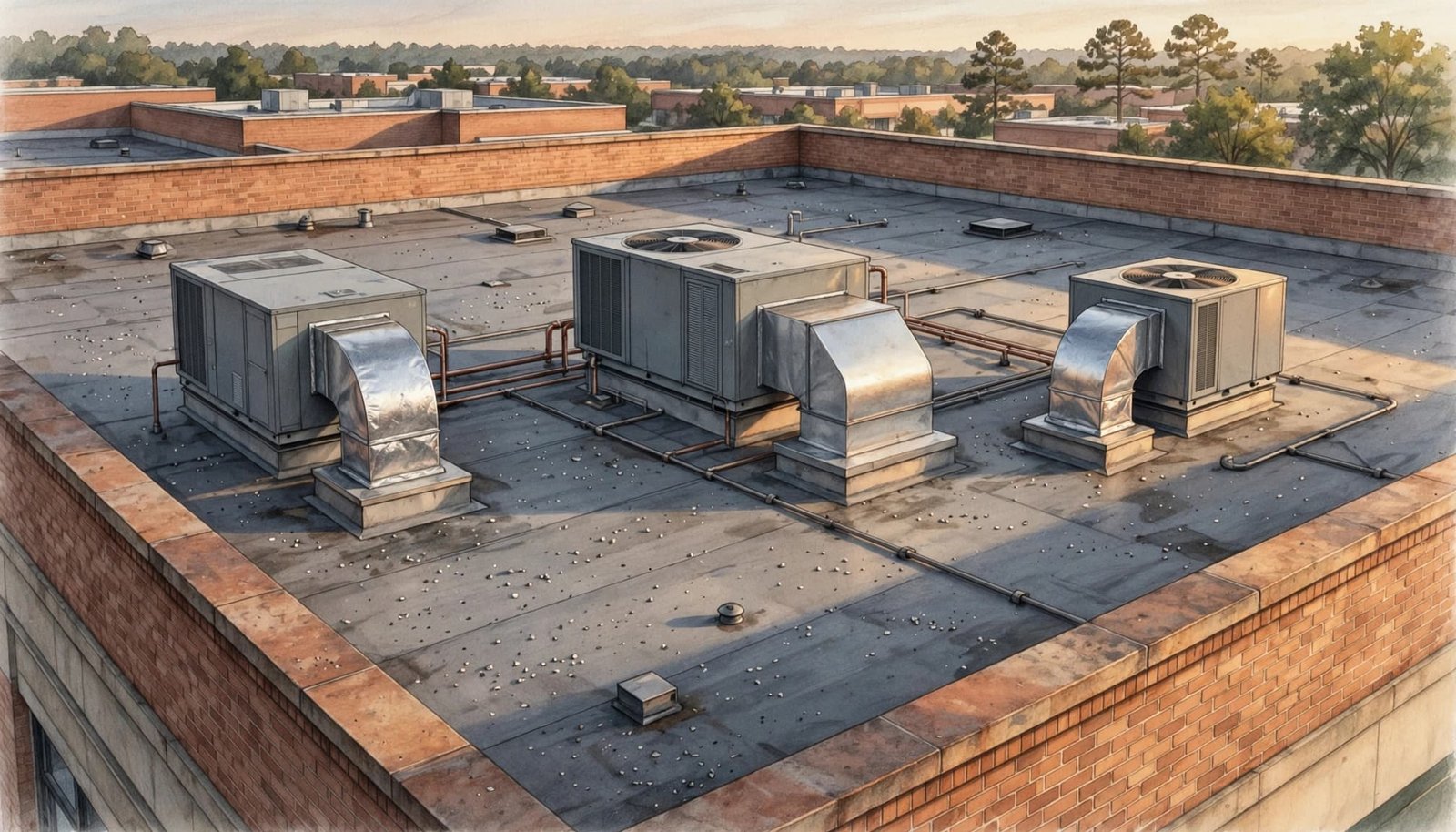
A commercial HVAC system includes heating, cooling, and ventilation equipment serving business premises. A packaged rooftop unit, a split system, and a central chiller have different installation demands.
A published RE/MAX Garden City example described rooftop units serving 1,000 to 1,500 square feet, costing $15,000 to $20,000 each to replace, with a 15 to 20-year life expectancy. Those are illustrative figures, not current Georgia quotes or guaranteed service lives.
These equipment differences help explain why one replacement allowance won’t fit every building.
| System | What changes the replacement scope |
|---|---|
| Rooftop package unit | Crane access, roof curb, capacity, and duct connections |
| Split system | Indoor equipment, outdoor equipment, refrigerant lines, and controls |
| Chiller system | Central plant capacity, pumps, piping, and building-wide integration |
Assess each unit separately. A building-wide chiller replacement shouldn’t be priced like a single storefront rooftop unit.
Before accepting responsibility, obtain serial numbers, installation dates, service invoices, refrigerant-repair history, and contractor condition reports. A depreciation schedule doesn’t establish remaining useful life.
Our guide to Georgia commercial property inspections connects HVAC condition with roof risk. Rooftop equipment adds weight, vibration, and penetrations; replacement scope should address curb seals and flashing.
In coastal Brunswick, corrosion deserves attention. In a converted Pooler warehouse, capacity and outside-air needs may matter more than equipment age alone.
Negotiate a Split That Matches the Lease Term
Put the repair-and-replacement bargain in writing
Why should a tenant with two years remaining automatically fund equipment that benefits the property much longer? That’s a fair negotiation question, y’all.
A tenant-oriented starting clause could read:
Tenant shall maintain a licensed HVAC service agreement and pay routine service and repairs. Landlord shall pay replacement when a licensed contractor determines repair is impractical. Replacement costs shall be excluded from CAM and Additional Rent, except for damage caused by Tenant.
A shared-cost version could instead require the landlord to fund replacement and recover an agreed, amortized portion during occupancy.
Neither version is a complete lease provision. Georgia lease counsel should address notice, emergency work, contractor selection, warranties, and conflicting expense clauses.
Give any rent increase a clear ending
For illustration, an agreed $18,000 replacement cost allocated over 15 years equals $1,200 annually, or $100 monthly, before interest. The 15-year term could reflect the equipment’s expected life or another negotiated period; Georgia law doesn’t require this formula. With three years remaining, the tenant would contribute $3,600 under that arrangement.
State whether renewal extends payments, whether interest applies, and whether the tenant owes any balance after departure. Prevent double recovery through both rent and CAM.
A lease modification can also document a fixed replacement surcharge that ends after repayment. Bank financing or an eligible SBA 7(a) loan may provide another route when the business bears the obligation. Financing solves timing, not responsibility.
Protect People While Preserving Your Lease Rights
Codes and workplace safety still apply
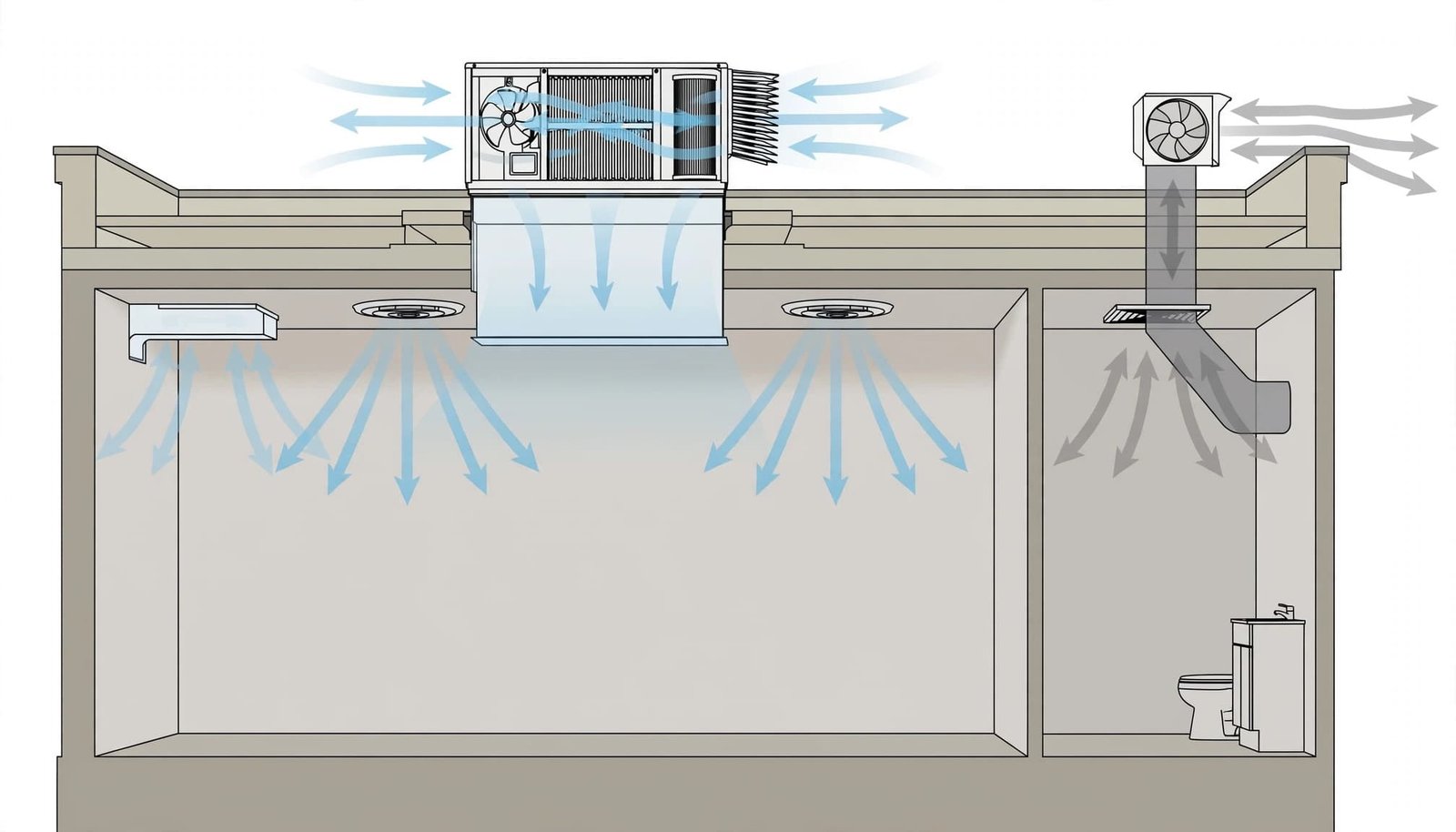
Check the building code and mechanical-code provisions that apply to the specific project. Georgia’s current construction codes include the 2024 International Mechanical Code with Georgia amendments. Applicable requirements address heating and ventilation in occupied spaces. They may also address the ventilation system serving a restroom.
Don’t assume every commercial restroom has the same legally required temperature. Occupancy, system design, and applicable code provisions matter.
OSHA doesn’t prescribe one universal workplace thermostat setting. Its heat standards guidance explains employers’ duty to protect employees from recognized heat hazards. Unsafe space heaters, overloaded circuits, or blocked exits can create separate problems.
Safety requirements don’t, by themselves, decide which party reimburses the replacement.
Send formal notice and preserve the proof
Record temperatures by date, time, and location. Keep contractor diagnoses, repair attempts, photographs, service records, and written communications.
Send notice using the lease’s required address and delivery method. Cite the specific repair provision, explain the failure, and request action within the applicable cure period.
Keep the tone professional. Clear records reduce unnecessary escalation, but they don’t guarantee protection against retaliation.
Before withholding rent, ordering work for reimbursement, or leaving the premises, involve Georgia lease counsel. A repair dispute doesn’t automatically suspend rent or establish constructive eviction.
Make HVAC Part of Business-Purchase Due Diligence
When comparing businesses for sale, include upcoming HVAC obligations in projected cash flow. A profitable operation can still need a substantial equipment investment immediately after closing.
For an owner preparing a business for sale, organized service records document equipment condition, support the asking price, and reduce last-minute renegotiation.
Our guidance on buying a business in Georgia treats lease terms and transferability as core acquisition issues. An assignment may carry existing upkeep duties without resetting equipment condition or providing a fresh warranty.
If you’re weighing commercial real estate for sale against commercial real estate for lease, compare ownership’s capital obligations with the proposed lease allocation. In either CRE arrangement, establish who owns the equipment, who controls warranties, and who pays after closing.
Frequently Asked Questions
Does the landlord have to keep the HVAC working?
That depends on the lease and applicable Georgia law. A landlord’s express service promise matters, but so do exclusions, interruption provisions, notice requirements, and remedies. A tenant’s maintenance duty doesn’t automatically answer every replacement question.
Does North Carolina’s habitability rule apply?
North Carolina doesn’t recognize an implied warranty of habitability for commercial premises, as explained in North Carolina State Bar materials. Contractual promises remain important there, alongside other applicable duties. That rule doesn’t decide a Georgia lease dispute.
Get the HVAC Obligation Clear Before You Commit
The strongest protection is a written allocation that addresses routine service, major repairs, replacement, and reimbursement. Equipment records and a realistic cost split make that agreement more useful.
At B3, we help buyers and sellers understand how property obligations affect the transaction. Bring HVAC responsibility into the conversation early, with Georgia lease counsel handling the legal language.
Your business deserves predictable obligations, especially when the next expensive repair is sitting on the roof.
We are Members of the Georgia Association of Business Brokers and Realtors, Commercial Alliance, Georgia Association of Realtors, and National Association of Realtors