

Buying a home health agency in the world of mergers and acquisitions sounds straightforward until you get into the weeds. You’re not only buying revenue. You’re buying compliance history, staffing habits, referral relationships, billing systems, and a reputation that lives in living rooms, hospitals, and case manager phone calls.
That is why a good deal can feel less like buying a storefront and more like adopting a whole operating heartbeat. If you’re looking to buy home health agency in Georgia or South Carolina, here’s how to think like a smart buyer before you sign anything.
Key Takeaways
- Buying a home health agency means acquiring more than revenue—it’s compliance history, staffing patterns, referral networks, and operational heartbeat, especially distinguishing Medicare-certified skilled services from private-pay non-medical care.
- Opportunities span Georgia and South Carolina beyond Atlanta, with coastal spots like Savannah and Hilton Head or middle Georgia markets like Macon offering stable operations over flashy locations.
- Scrutinize listings for hidden meanings in terms like CRE or Business For Sale, and conduct rigorous due diligence on financials, compliance, staffing, and client rosters to avoid post-close surprises.
- Structure deals with financing, real estate leases, and working capital in mind, then execute a smooth transition by communicating early with staff and referrals to keep the business running strong.
- The best deals go to buyers who prioritize durable operations, clean records, and practical integration over high listing prices or broad market hype.
Why buyers are looking at home health now
Aging demographics are doing what demographics do, they keep moving in one direction. More seniors want care at home, more families want help without a facility move, and more payors want lower-cost settings when appropriate. That demand is one reason the broader US home care market is still growing in 2026, with senior care agencies projecting low-to-mid single digits in annual revenue growth and much faster growth in some segments.
Add in tighter hospital discharge patterns, chronic disease management, and the push for home-based care, and you can see why investors keep circling this space. You don’t need a crystal ball to spot the attraction. An agency with solid caregivers, stable referrals, and clean records can become a durable business.

Still, don’t confuse demand with easy money. Workforce shortages are real in home health agencies. Electronic Visit Verification is now part of the day-to-day operating muscle in many home care settings. Reimbursement pressure hasn’t gone away. Larger buyers and private equity groups are also active, which means some agencies hit the market with higher expectations than their EBITDA margins or books can support.
That doesn’t mean you should back away. It means you should buy with your eyes open. In markets from Savannah to Atlanta, and from Hilton Head to Macon, the winners are usually the buyers who understand operations, not just upside.
Know what type of agency you’re buying
Here’s the first trap: many buyers say “home health” when they really mean any business that sends caregivers into the home. That’s too loose. A Medicare-certified skilled home health agency is a different animal from a private pay non-medical home care business, hospice care provider, or behavioral health service. Different services, different rules, different risk.
Think about what you’re really buying. Is this agency built around skilled nursing, therapy, and reimbursement tied to clinical documentation? Or is it built around companion care, personal care, and private pay or waiver-based services? The answer changes valuation based on payer mix, staffing, licensing, and financing.
In Georgia, home health oversight runs through the Department of Community Health. In South Carolina, buyers often deal with DHEC rules and operating standards. Certificate of Need approvals add critical layers to state licensing in both states, along with other regulatory requirements. If the agency has Medicare certification, the file gets thicker fast. A good starting point is understanding how state licensure and change-of-ownership issues can complicate a transaction, which Hendon Partners explains in its 2026 Medicare-certified agency guide.
If you can’t explain who pays the agency, who supervises care, and whether the license transfers, you’re not ready to write a serious offer.
You also need to know where the revenue comes from. One referral source can look like a blessing until it looks like a single point of failure. One star nurse can hold the whole census together until she leaves. An agency is not only a set of licenses. It’s a pattern of behavior.
Where opportunities show up across Georgia and South Carolina
Not every good acquisition target sits in the biggest city. Buyers often start in Atlanta because volume attracts attention, and fair enough. There are more potential sellers, more referral channels, and more buyers competing for the same deals. But bigger doesn’t always mean better.
Coastal markets have their own story. Savannah and Pooler keep drawing interest because population growth, healthcare infrastructure, and business activity create a healthy mix of patients and referral traffic, with some markets offering a high volume of home health care businesses for sale. Brunswick can appeal to buyers who want a smaller footprint with room to grow. Over the line, Hilton Head brings a strong senior demographic, though labor and wage pressure can change the math.
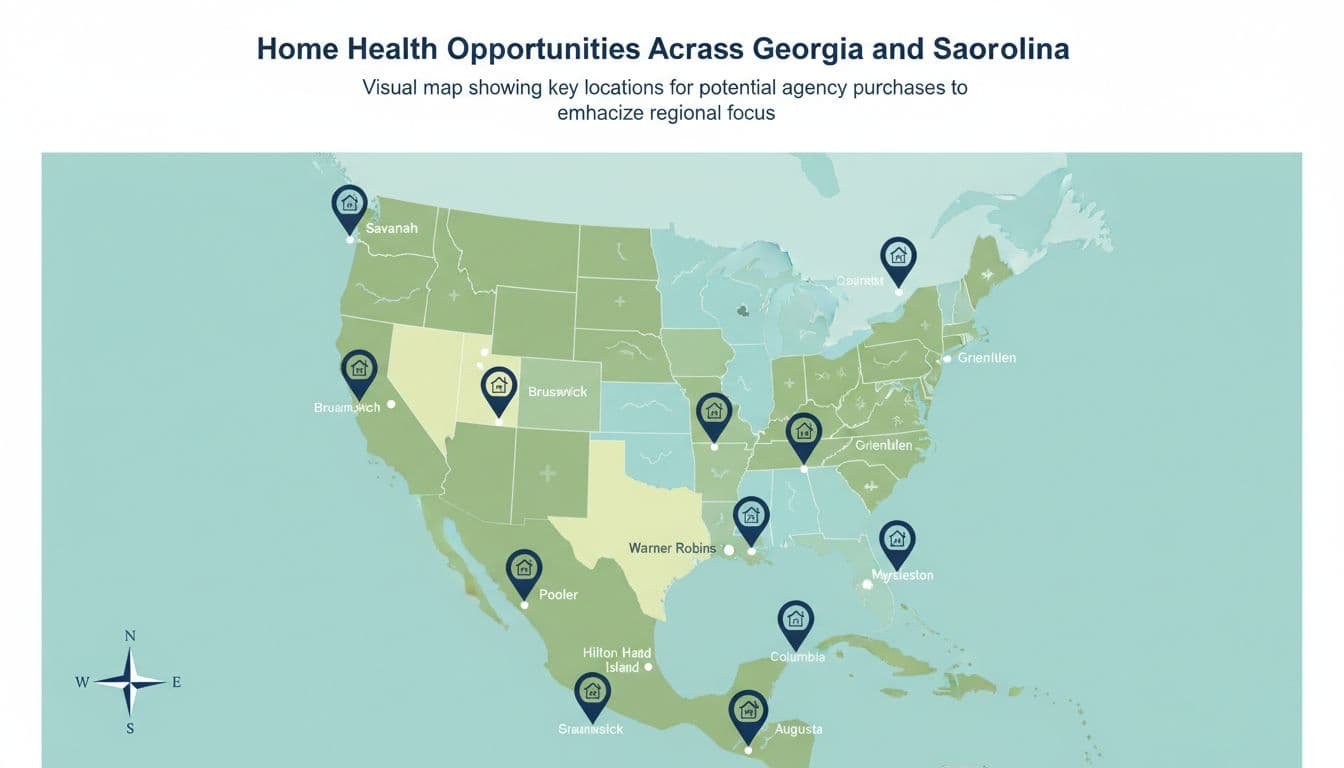
Middle Georgia deserves more attention than it gets. Macon and Warner Robins can offer lower occupancy costs, strong healthcare ecosystems, and tighter referral networks. Dublin and Waycross may not make flashy headlines, but smaller markets sometimes produce loyal staff and less buyer competition. That’s how good buyers think, y’all. They look for durable operations, not only shiny geography.
Local context matters more than broad state talk. An agency in South Atlanta with a weak staffing bench can be worse than one in Waycross with solid management and steady private-pay clients. A Savannah office with a clean history and strong referral ties may beat a larger target in a crowded metro. The point is simple: buy the business, not the postcard.
Read the listing like a buyer, not a dreamer
Public listings rarely tell the whole truth, and they aren’t supposed to. They are teasers. Their job is to start a conversation, not answer every hard question. That means a serious buyer should work with an M&A advisor to slow down and translate the language on the page before you fall in love with a number.
If you’re comparing home health care businesses for sale on B3 or anywhere else, a high-quality listing could represent a turnkey business. This guide on how to read business-for-sale listings will save you time. The same phrase can mean different deal structures, and small wording changes can shift your financing plan, your timeline, and your risk.
This quick cheat sheet helps:
| Listing phrase | What it often means |
|---|---|
| Business For Sale | You may be buying the operating company, not the building |
| Businesses for Sale | You’re comparing multiple deals with different margins and structures |
| CRE | The listing may involve real estate terms, not only goodwill and cash flow |
| Commercial Real Estate for sale | The property may be part of the package, or sold alongside the business |
| CRE for Lease | The agency likely operates from rented space, and lease terms matter |
| Commercial Real Estate for Lease | You need to review rent, renewal options, assignment rights, and landlord approval |
That table looks simple because the words look simple. The consequences aren’t. If a listing says the agency is a Business For Sale and the office is separate, you may be financing two pieces or one. If the write-up mentions CRE or Commercial Real Estate for sale, your lender may view the deal differently. If the office is under Commercial Real Estate for Lease, you need to know whether the lease can be assigned and whether the landlord has to sign off.
A listing price is also not the finish line. It’s an opening ask. Buyers who win in this space don’t chase every teaser. They ask better questions sooner.
Due diligence is where good deals stay good
This is the part where dreams either mature or fall apart. Due diligence on a home health acquisition should go through financial, operational, clinical, legal, and staffing review. Miss one lane, and the whole deal can wobble.
Start with the money by scrutinizing the financial statements. Look past top-line revenue and ask what the revenue is made of. How much is private pay? How much comes from Medicaid-reimbursed services, Medicaid waivers, or Medicare? What do write-offs look like? Are billable hours matching payroll hours? One practical overview from Regalis Capital’s SBA guide to buying a home healthcare agency makes the point well: validate billable hours against billing records and confirm the license path before you underwrite the deal. Double-check that the annual revenue figures in the financial statements align with billing records to ensure accuracy.
Then move to compliance. Review licenses, certifications, survey results, plans of correction, complaint history, background check procedures, and EVV usage if it applies to the model you’re buying. Becoming an accredited agency adds significant value here. A seller may say, “We’ve had no big issues.” Nice. Show the paperwork. If the agency is Medicare-certified, you also need clarity on whether the deal is an asset purchase or equity purchase, and how any CHOW process will affect timing.

Staffing deserves the same attention as financials. Ask for staff turnover data, open positions, pay rates, overtime patterns, training records, supervisor span of control, and any dependence on agency labor. In home-based care, your caregivers are the product people experience, especially when distinguishing Medicaid-reimbursed services from private pay clients. A nice office and decent website won’t save an agency that can’t staff cases.
Don’t stop there. Read the client roster with a cold eye. Is the census spread across many patients, or concentrated in a handful of large cases? Are authorizations current? Are referral sources active today, or are you buying a story about what used to happen? Seller-side prep checklists can be helpful here too, and DealFlow OS’s home health exit readiness checklist highlights the same pressure points buyers care about, certification status, payor mix, and compliance readiness.
The market is active, but activity can trick you into rushing. Public marketplaces show plenty of North Atlanta home health listings, yet teaser copy never replaces diligence. If something feels too clean, press harder. The best buyers are polite, steady, and impossible to fool with vague answers.
Financing and real estate can change the whole deal
Most buyers spend their early energy on price. Smart buyers spend equal time on structure, especially when evaluating the agency’s annual revenue and EBITDA margins. How are you paying for this? What working capital do you need after closing? Is the office part of the deal, or are you stepping into a lease?
Many home health agencies don’t need a huge footprint. Services like private duty nursing can work from a modest office if supervision, scheduling, records, and compliance systems are tight. That’s why you often see agencies sold with Commercial Real Estate for Lease instead of owned property. If the agency’s location matters for referral access, staff commute patterns, or local reputation, then lease assignment terms become a real piece of value. If the space is lousy or overpriced, a cheap business can become an expensive headache.
Sometimes the office condo or building is included. That’s where CRE, CRE for Lease, and Commercial Real Estate for sale stop being listing jargon and start affecting your lender, down payment, and monthly debt service. Buyers who need help comparing loan structures should read B3’s breakdown of SBA 7a vs 504 for GA business purchase. In plain English, 7(a) often fits operating business acquisitions, while 504 comes into the picture when owner-occupied real estate is a larger piece of the deal.
There’s another money question buyers skip: how much cash do you need after the closing wire goes out to support operations until annual revenue collections ramp up? Home health businesses can have payroll timing issues, credentialing lag, and slow collections. A deal that works on paper can still squeeze you in month two if you underfund working capital. Don’t buy yourself a new boss called cash flow.
Closing the deal without losing the staff
The closing table is not the finish. It’s halftime. Once you buy a home health agency, the first 90 days will tell you whether your underwriting matched reality.
Transition planning matters. Will the seller stay on board for the transition period (30 days, 90 days, or longer)? Will key staff meet you before closing, or only after? How will you talk to referral partners without creating panic? If there is a Medicare or Medicaid change-of-ownership process in play, your legal and operational teams need to be in step. A useful reminder on that front is in Regalis Capital’s CHOW-focused seller article, which points out how licensing and payor approvals can stretch timelines if nobody plans ahead.

Your first conversations with staff matter more than your first social media post. Caregivers and office staff want operational stability; they need to know payroll will stay stable, schedules will stay sane, and leadership will answer the phone. Referral partners want continuity. Patients and families want care to show up on time. That’s the business. Buyers may benefit from strategic consulting during the integration phase.
A buyer who closes well usually does three things. They communicate early, protect key people, and watch cash every week. Simple? Yes. Easy? No. But that steady, practical work is what turns a signed purchase agreement into a business you can actually keep.
Frequently Asked Questions
What types of home health agencies should I consider buying?
Home health agencies range from Medicare-certified skilled services with nursing, therapy, and strict clinical documentation to private-pay non-medical companion or personal care. The type dictates payer mix, regulations, valuation, and risks—Georgia’s Department of Community Health and South Carolina’s DHEC oversee licensing, often with Certificate of Need hurdles. Know your target before offering, as one star referral or nurse can make or break stability.
Where are the best opportunities in Georgia and South Carolina?
Don’t fixate on Atlanta; coastal areas like Savannah, Pooler, Hilton Head, and Brunswick draw interest for population growth and referrals, while middle Georgia spots like Macon, Warner Robins, Dublin, and Waycross offer lower costs, loyal staff, and less competition. Local context trumps size—an agency with solid management in a smaller market beats a weak one in a metro. Buy the business patterns, not the geography.
How do I read home health agency listings effectively?
Listings are teasers, not full disclosures—decode phrases like ‘Business For Sale’ (likely no real estate), ‘CRE for Lease’ (review assignment terms), or ‘Commercial Real Estate for sale’ (impacts financing). Compare revenue sources, margins, and structures across platforms like B3, and use an M&A advisor to translate before falling for top-line numbers. Listing price is just the opener; ask hard questions early.
What does due diligence entail for a home health buy?
Cover financials (validate billables vs. payroll, payer mix, write-offs), compliance (licenses, surveys, EVV), staffing (turnover, overtime, training), and clients (census spread, active referrals). For Medicare-certified agencies, clarify CHOW processes and asset vs. equity deals. Vague seller answers mean dig deeper—clean paperwork separates good deals from traps.
How can I ensure a successful post-closing transition?
Plan seller transition periods, early staff intros, and referral continuity talks to avoid panic, especially with Medicare/Medicaid CHOW delays. Stabilize payroll, schedules, and cash flow while protecting key caregivers who deliver the service. Communicate steadily—it’s halftime at closing, and the first 90 days test if your underwriting matched the real operating heartbeat.
Final thoughts
If you want to buy home health agency in Georgia or South Carolina, don’t start with the listing price. Start with the type of agency, the quality of the operations, and the transfer path for licenses, contracts, and people.
The best deals are rarely the loudest ones. They’re the agencies with clean records, honest numbers, workable staffing, and a transition plan that respects the humans inside the business.
That’s the real test. Not whether you can buy the agency, but whether you can own it well once the papers are signed. A well-managed home health agency generates consistent annual revenue and maintains its status through high-quality care.
We are Members of the Georgia Association of Business Brokers and Realtors, Commercial Alliance, Georgia Association of Realtors, and National Association of Realtors