

A pool company can look simple on paper, truck, chemicals, route, done. Then you step in and find dead accounts, messy books, and an owner who held the whole thing together by memory.
If you want to buy a pool service business in Georgia or South Carolina, the upside is real. Long swim seasons, steady population growth, and recurring service revenue make these companies attractive to business owners, entrepreneurs, and investors. The catch is simple: you need to know what you’re buying before you write the check.
Let’s get into the parts that matter.
Why these two states keep attracting pool business buyers
As of April 2026, current listings across Georgia and South Carolina range from small pool routes near $51,000 to multi-crew companies priced in the millions. That spread tells you something right away, this market is not one-size-fits-all.
A route in Atlanta is not the same as a coastal service business near Hilton Head or Brunswick. Savannah and Pooler can support dense residential work with strong repeat demand. Macon, Warner Robins, Dublin, and Waycross can work well too, but travel time becomes a bigger piece of the math.

Many marketplaces lump every listing under Business For Sale or Businesses for Sale. That label is too broad to help. A small owner-operated route, a repair-first shop, and a construction-heavy company can all sit in the same results page.
If you want a quick reality check on valuation, compare this Upstate South Carolina pool service and construction listing with this lower-entry Atlanta maintenance and repair listing. Same broad category, very different risk, scale, and buyer fit.
Recurring revenue pays for the deal. Repairs and remodels add upside, but the route is what keeps the lights on.
Know what you’re buying before you fall for the asking price
Think about a pool company like a rental house. The fresh paint is nice, but the rent roll is the real story. In pool service, that story is monthly recurring accounts, customer tenure, route density, average ticket, and churn.
Some buyers get distracted by whether the company owns a shop, yard, or warehouse. CRE can matter, but only after you understand the operating model. Plenty of solid service companies run lean with modest space and low overhead. Others need more room for inventory, repairs, or construction staging.
This quick comparison helps:
| Model | What drives value | Real estate angle |
|---|---|---|
| Route-only service | Monthly cleaning, chemicals, low churn, tight route density | Often little or no CRE, or a modest shop under CRE for Lease |
| Full-service company | Recurring service plus repairs and equipment swaps | May depend on Commercial Real Estate for Lease |
| Construction hybrid | Service revenue plus new builds and remodels | Sometimes includes Commercial Real Estate for sale |
The takeaway is simple. Buy the business model first, then price the real estate correctly.
A listing might look exciting because it includes property, but property can also inflate a deal that should stay light and flexible. If your search is still wide open, this guide on buying service companies in GA can help narrow your criteria before you start chasing every shiny listing.
Due diligence is where good deals stop being guesses
This is the part buyers rush, and it’s the part that costs them later. You are not buying a logo and a pickup. You’re buying habits, retention, service quality, and customer trust.
Start with four checks that tell the truth fast:
- Ask for 12 to 24 months of monthly revenue by service type, not one blended number.
- Compare customer counts to technician capacity and actual route maps.
- Ride along for a full day and inspect pumps, filters, vacuums, software, and chemical storage.
- Call out seller dependency early. If the owner is the dispatcher, lead tech, and sales rep, you do not have a hands-off company.
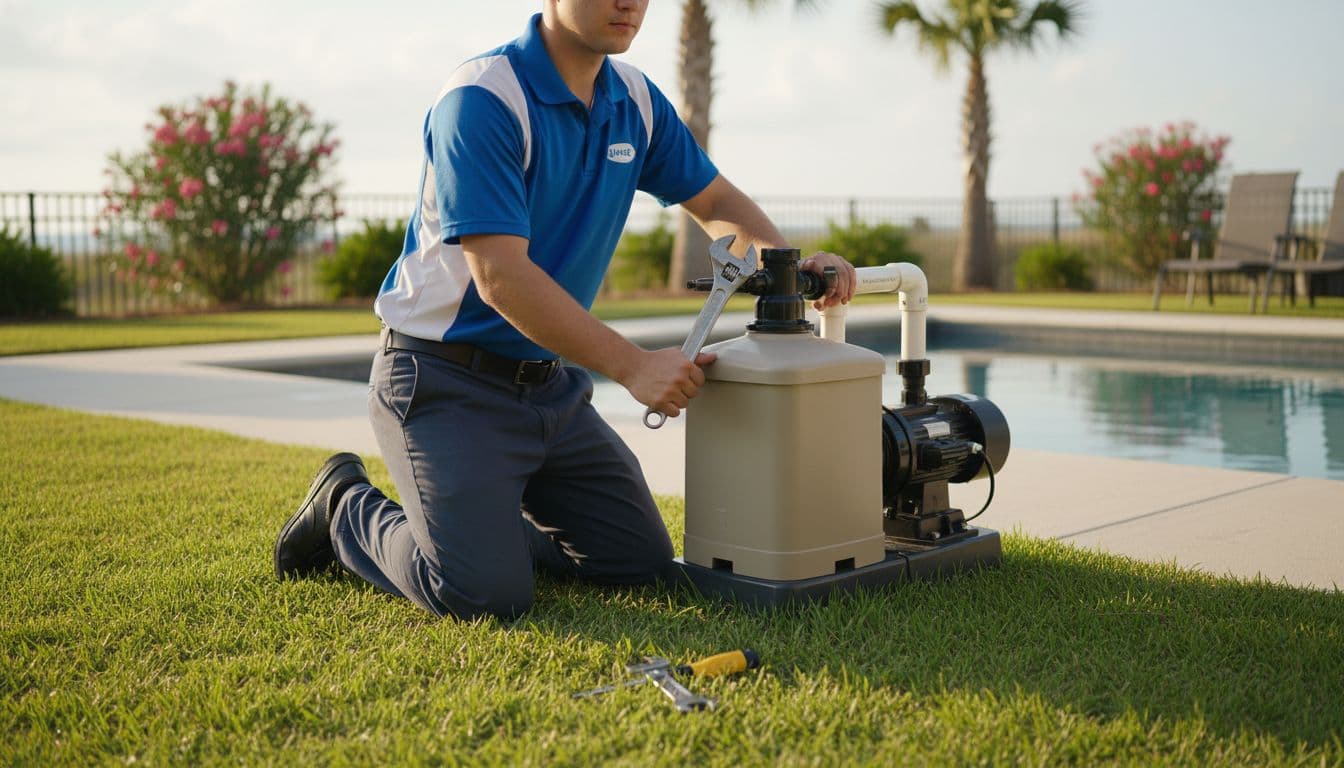
Look hard at trucks and equipment too. A fleet can make a business look bigger than it is. What matters is maintenance history, replacement timing, and whether those vehicles support profitable stops.
Then check the human side. Will customers stay after the handoff? Will key techs stay through peak season? In a service business, one strong technician can hold a route together, and one bad departure can punch a hole straight through cash flow.
Route density deserves its own look. Thirty pools in Savannah may be a great route. Thirty pools spread between Brunswick and Waycross may be a scheduling headache. The more windshield time you add, the less forgiving the margins become.
Put the deal together with clear terms
Most buyers do better with an asset purchase. That structure lets you buy customer accounts, equipment, vehicles, phone numbers, and goodwill without inheriting every old problem. Your attorney should spell out the transfer of service agreements, deposits, digital assets, and vendor relationships.
If the seller leases space, read the lease like it matters, because it does. A cheap rent number means little if the assignment dies at the landlord’s desk. If the business includes real estate, review zoning, parking, storage, and any environmental issues with the same discipline you use on the customer list.
Financing can also change the quality of a deal. Seller notes often bridge valuation gaps and keep the owner invested in a smooth handoff. If that option fits your plan, these owner-financed businesses in Georgia show how flexible terms can widen your choices.
Push for a real transition plan, not vague promises. You want route introductions, vendor handoffs, training days, and a non-compete that has teeth. Trust me, “I’ll help after closing” is not a plan.
Final thoughts
When you buy a pool service business in Georgia or South Carolina, you’re not buying summer. You’re buying recurring relationships, operating discipline, and a route that still works after the seller steps away.
The best deals have clean books, dense stops, dependable people, and terms that fit the business you want to own. Get those pieces right, and the right company becomes a lot easier to spot.
We are Members of the Georgia Association of Business Brokers and Realtors, Commercial Alliance, Georgia Association of Realtors, and National Association of Realtors