
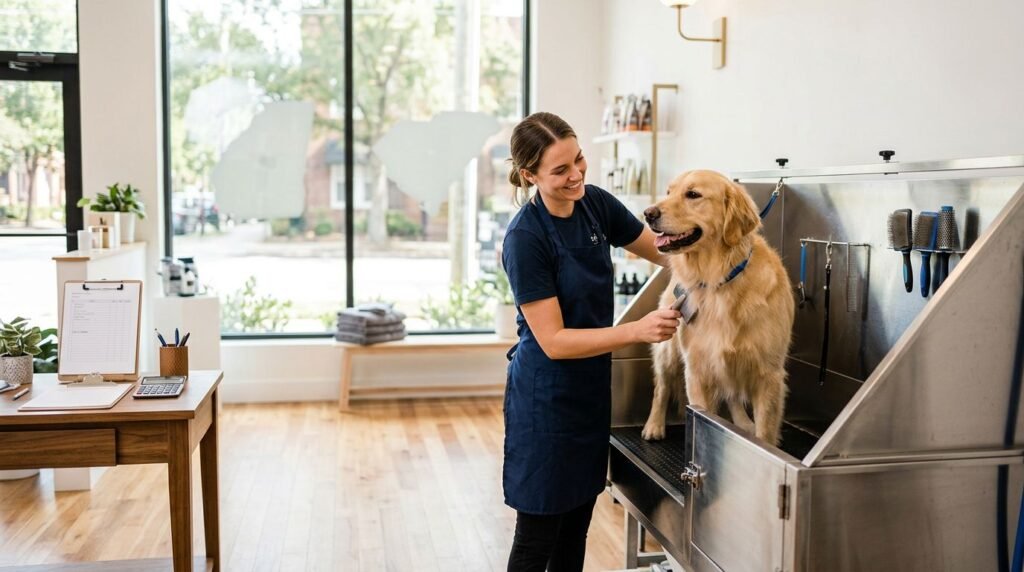
A good grooming shop is a habit business. Dogs need regular dog grooming services like baths, trims, nail care, and owners want a place they trust enough to come back every few weeks.
If you want to buy pet grooming business in Georgia or South Carolina, you are not buying tubs and clippers alone. You are buying repeat appointments, trained hands, local reputation, and a location that either helps the business breathe or chokes it. That is where smart buyers separate a pretty listing from a strong deal.
Key Takeaways
- Pet grooming businesses thrive on recurring revenue from repeat clients and trusted service, making them resilient even in tough economies—focus on income quality over size when buying.
- Prioritize due diligence on financials (tax returns, bookings, payroll), stable staff, systems, reputation, and a solid lease/location that supports easy access and operations without hidden costs.
- Tailor your buy to local markets: Atlanta favors scaled operations with staff depth, Savannah/Pooler needs convenience and locals over tourists, while smaller towns like Macon or Brunswick reward community loyalty and lower overhead.
- Structure deals as asset purchases with seller training, non-competes, and lease approvals to protect against risks like owner dependency or client churn.
- Chase proof over polish—strong repeats, clean books, and reliable setup beat fancy photos every time.
Why this niche keeps pulling in buyers
The pet care industry has staying power because it sits close to daily life. When families tighten spending, they may skip a weekend trip. They are less likely to skip the groomer for a dog with matted fur, skin issues, or nails clicking across the floor.
That demand is still moving upward. South Carolina’s pet grooming and boarding segment grew about 6.0 percent annually from 2021 through 2026, and national pet spending reached $158 billion in 2025. Those numbers matter, but the real story is simpler. Pet owners keep paying for care they trust.
For buyers, that creates a business with recurring revenue, recurring clients, personal relationships, and room to grow. A pet grooming salon can stay small and owner-operated. It can also expand into dog boarding, retail, mobile grooming, or memberships. A tight salon in Macon is one kind of buy. A larger pet spa near Atlanta is another. A boutique setup in Savannah or Hilton Head has a different customer base again.
Georgia and South Carolina also give you a nice mix of markets. Atlanta can support premium pricing and multi-staff operations. Pooler and Savannah benefit from family growth and strong traffic corridors. Macon and Warner Robins often reward consistency and word-of-mouth. Brunswick, Dublin, and Waycross can work well for buyers who like community-based businesses with lower overhead. If you want a broader feel for businesses for sale in Georgia, start there, then narrow by size, service mix, and location.
South Carolina deserves the same close look. A quick scan of South Carolina dog grooming businesses for sale shows how different the market can be from county to county, especially between tourist-heavy coastal areas and inland cities.
Researching pet grooming businesses for sale
Most buyers begin on a Business For Sale site and then bounce across broader Businesses for Sale marketplaces, broker sites, and local referrals. That’s normal. What’s not smart is falling for the first listing with cute photos and a clean lobby.

When you search for a pet grooming business, sort by the business model first. Is it grooming only? Grooming plus retail? Grooming plus boarding and daycare? Mobile van? Franchise resale? Those are four different businesses wearing the same collar. If you want a wider snapshot of current GA business listings, compare grooming opportunities against other service businesses with similar staffing and lease needs.
Read every listing like a detective. When comparing these business models, it’s important to have a business plan that outlines your operational and financial goals. If one ad says “turnkey operation” and another says “owner-operated,” slow down. Turnkey operation may mean trained staff and documented systems. It may also mean the seller thinks the furniture alone is worth a premium. Owner-operated can mean strong margins. It can also mean the owner is the business, and revenue may wobble the moment they leave.
That is why local context matters. A Savannah pet supplies and grooming store listing may look appealing because of the city alone. But Savannah foot traffic is not the same as repeat client traffic. A pet grooming salon with tourists walking by is nice. A salon with 400 active local clients is better.
Ask yourself a blunt question early: do you want to buy a pet grooming business because you love animals, or because you want a solid service company with recurring revenue? Those are not always the same thing. Love for dogs helps. Clear-eyed buying helps more.
Evaluating the pet grooming business
Price is the headline. Cash flow is the story.
Current 2026 listings suggest many grooming businesses in Georgia trade somewhere between about $135,000 and $389,000, while South Carolina listings often fall between $80,000 and $195,000. Nationally, the median asking price for an established grooming business is around $240,000. Useful numbers, yes. Final answers, no.
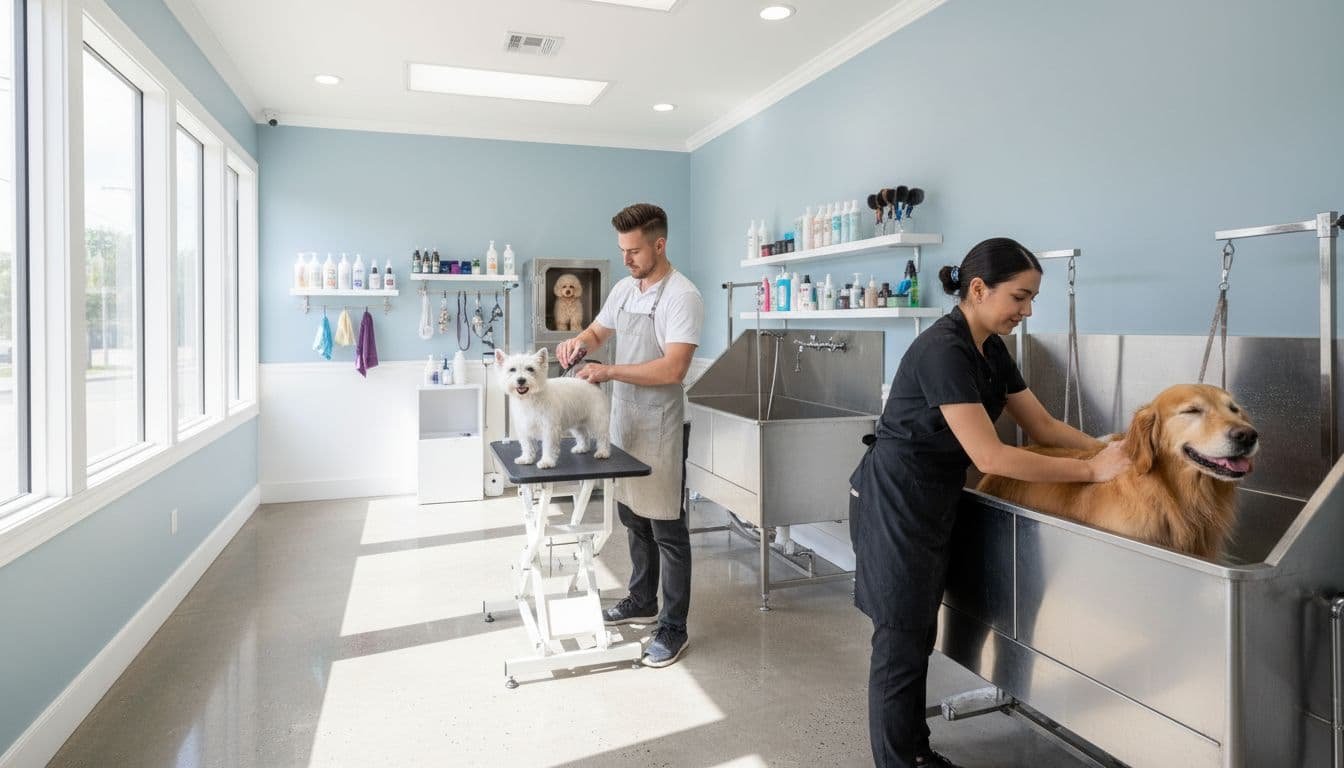
A pet grooming salon is worth what it reliably earns, not what the seller hopes it feels like. One salon may have modest revenue but excellent repeat clients, steady groomers, and room to add hours. Another may show bigger sales but rely on the owner’s hands, personality, and 55-hour workweek. Those are two different risks.
This is the paperwork that starts telling the truth:
| What to review | What it tells you |
|---|---|
| Three years of tax returns and profit statements | Whether reported income matches the story |
| Booking and point-of-sale reports | Client volume, average ticket, rebooking habits |
| Payroll records | The role of each professional groomer, and at what cost |
| Seller schedule and production reports | How dependent revenue is on the owner |
| Grooming equipment list and repair history | Near-term replacement costs and hidden capital needs |
| Reviews, complaints, and incident logs | Reputation, safety issues, and service consistency |
The takeaway is simple. You are buying income quality, not only income size.
A good listing can still hide weak structure. That is why an Atlanta pet boutique and grooming spa listing is useful as a comparison point. It highlights management in place, staff count, and a loyal customer base. That sounds attractive, but you still need to verify who books appointments, who handles difficult dogs, and whether the business stays strong without the seller greeting clients every day.
Also, don’t ignore revenue mix. If half the profit comes from boutique retail, you are not only buying grooming. If the business offers dog boarding, your staffing, insurance, and risk profile changes fast.
Choosing the right location, lease, and real estate setup
A grooming business can survive dated paint. It cannot survive the wrong business location.
Some acquisitions include the building, which turns the deal into both a business purchase and a Commercial Real Estate for sale review. Most do not. Most buyers step into a lease, and that means the CRE deserves its own file, not a quick glance at monthly rent.

In this industry, CRE is not abstract. It is drains, plumbing, parking, noise, odor rules, the floor plan for wash stations, utility load, signage rights, and whether a landlord wants wet dogs in the center at 7:30 in the morning. It is also access. Owners need easy drop-off. Staff need practical parking. Vans need room if mobile grooming is part of the model.
If the seller leases the space, ask for the full lease, all amendments, CAM charges, personal guarantees, and landlord contact details. Compare that site against the broader market. A search of Georgia retail spaces for lease gives useful context when you are weighing an existing salon lease against nearby alternatives. That is where terms like CRE for Lease and Commercial Real Estate for Lease stop sounding like broker jargon and start affecting your profit.
If the landlord won’t approve the transfer, you don’t have a deal yet.
Location strategy also changes by city. In Atlanta, market competition is heavier and labor can cost more, but density helps scheduling. In Savannah and Pooler, parking and convenience matter more than charm alone. Hilton Head can support premium grooming, yet seasonality and rent deserve close review. Macon and Warner Robins often reward a practical site with easy access. In Brunswick, Dublin, and Waycross, a smaller trade area means client loyalty and travel radius matter more than trendy finishes.
One weak location can drain a good business. One strong location can carry average marketing for years. That’s how this works, y’all.
Due diligence on staff, systems, and client trust
This is the part many buyers rush. They shouldn’t.
In grooming, clients often follow a person more than a brand. A salon may have five-star reviews, but if two lead groomers leave after closing, you may be left holding the keys to a much smaller business. Ask who the top professional groomers are, how they are paid, how long they have stayed, and whether they plan to remain after the sale.
Look at the operating system, too. Not the software logo, the actual system. How are appointments booked? How far out is the calendar full? How are no-shows handled? Is pricing consistent? Are vaccine records tracked? Are incident reports documented? If the answer to every question is “the owner knows,” you don’t have a system. You have a memory problem waiting to happen.
Current market trends matter here. More pet owners want wellness-oriented grooming, breed-specific care, quieter tools, easy digital booking, and products that feel safer or more eco-conscious. That does not mean you need a fancy concept. It means the business should feel current enough, including a marketing strategy that appeals to modern preferences, to keep good clients. A small pet grooming salon can beat chains all day if service is personal and rebooking is strong.
A shop with loyal clients and stable groomers often beats a prettier shop with constant turnover.
Reputation has to be checked in layers. Read reviews, yes. Then match those reviews against actual records. Ask about refunds, bites, injuries, difficult breeds, and customer churn. If the seller says, “We’ve never had issues,” keep digging.
This is also where buyer fit matters. Some people want an owner-operator salon where they groom three dogs before lunch. Others want a managed service business, where a solid business plan is essential. If you are still sorting that out, this guide to buying the right pet grooming business in Georgia helps frame the decision in a practical way.
Structuring the offer and getting to closing
A clean deal is usually built before the purchase agreement shows up.
Many grooming acquisitions are better as asset purchases. That lets the buyer choose which assets, contracts, and liabilities come over. Sometimes a purchase of the business entity makes sense, such as when it is structured as a limited liability company, but only when the records are clear and the risk is understood. This is where a business attorney and CPA earn their keep.
Keep the offer grounded in what the business can prove. A smart path to securing funding and getting to closing usually looks like this:
- Start with a letter of intent that ties the price to due diligence, lease transfer, and clean financial review.
- Separate the purchase price into furniture, fixtures, equipment, inventory, vehicles, and goodwill.
- Require seller training after closing, with a real schedule and clear handoff duties.
- Ask for non-compete and non-solicit terms that protect the client base and staff.
- Build the lease approval into the timeline, because closing without space approval is asking for trouble.
Owner financing can help bridge the gap when the seller wants a higher price than the bank loves. It also keeps the seller tied to the success of the transition. If you want examples of how that can look, browse owner-financed listings in Georgia and compare terms, down payment expectations, and transition support.
One more thing, do not skip working capital. Buyers often spend so much energy on the sale price that they forget opening payroll, shampoo, retail supplies, utilities, repairs, software, and marketing. A shop can be profitable on paper and still feel tight in the first 60 days if cash is thin.
And if the business includes daycare, boarding, or transportation, check every licenses and permits, insurance detail, and operating rule tied to those services before closing. Ensure licenses and permits for dog boarding services are fully compliant, as a grooming salon is one thing. A pet care operation with multiple service lines is a different animal.
What strong opportunities look like across Georgia and South Carolina
The best target depends on the kind of owner you plan to be. This quick view helps keep the market differences straight.
| Area | What buyers should watch first |
|---|---|
| Atlanta | Staff depth, wage pressure, parking, and whether the seller is truly absentee ownership |
| Savannah and Pooler | Convenience, neighborhood growth, lease costs, and repeat local clients beyond tourist traffic |
| Macon and Warner Robins | Service consistency, family customer base, and easy in-and-out access |
| Brunswick, Dublin, and Waycross | Trade area size, owner involvement, and how far clients drive for appointments |
| Hilton Head and nearby Lowcountry | Premium pricing potential, seasonality, and whether upscale branding matches actual demand |
A buyer looking in Atlanta may want a pet grooming salon with systems, supervisors, and room to scale. A buyer in Brunswick or Dublin may do better with a simpler shop, lower overhead, and a loyal community following. A Hilton Head deal may justify stronger pricing, but only if the reviews, service standards, and lease all hold up.
That is why city-by-city discipline matters. The right acquisition is not always the biggest one or the one with the fanciest photos. It is the one that fits your budget for dog grooming services, your management style, and the market around it.
Frequently Asked Questions
What makes a pet grooming business a strong buy in Georgia or South Carolina?
These are habit businesses with recurring appointments and upward demand, fueled by pet owners who prioritize grooming over luxuries. Look for proven cash flow, stable groomers, and local reputation rather than just equipment or aesthetics. Markets vary: Atlanta supports premium scaling, coastal areas need tourist-proof locals, and inland spots reward word-of-mouth consistency.
How do I evaluate the financial health of a grooming salon for sale?
Dig into three years of tax returns, profit statements, booking reports, and payroll to verify income matches the story and isn’t owner-dependent. Check revenue mix—pure grooming differs from retail or boarding—and assess client rebooking habits for true recurring strength. Ignore asking prices; value it on reliable earnings after verifying equipment needs and working capital gaps.
Why is location and lease so critical for pet grooming businesses?
Grooming can’t survive poor access, parking, plumbing, or odor rules—a strong site carries average operations for years. Review full lease terms, amendments, CAM charges, and landlord approval before closing, comparing against local CRE options. City matters: Atlanta needs density, Savannah convenience, smaller towns easy in-out for loyal clients.
What due diligence should I do on staff and operations?
Confirm top groomers’ tenure, pay, and post-sale plans, as clients often follow people—not brands. Audit booking systems, pricing consistency, incident logs, and reviews against records for hidden churn or issues. Ensure the business feels current with digital tools and wellness trends to retain clients long-term.
How should I structure the purchase offer and close the deal?
Opt for asset purchases to cherry-pick liabilities, include seller training and non-competes, and tie price to due diligence/lease transfer. Factor in owner financing for transitions and budget extra working capital for the first months. Always verify licenses for add-ons like boarding, and use a business attorney/CPA to navigate entity risks.
Final thoughts
The best pet grooming acquisition usually looks a little boring on paper. Strong repeat clients. Steady staff. Clean books. Reliable grooming clippers and grooming tables. A lease that works. No drama hiding in the back room.
That is the heart of it. If you want to buy a pet grooming business in Georgia or South Carolina, chase proof over polish. Proof includes solid business registration that forms the legal foundations of trust. The dogs will keep coming if the business was built on trust, and the pet care industry rewards those who focus on trust.
We are Members of the Georgia Association of Business Brokers and Realtors, Commercial Alliance, Georgia Association of Realtors, and National Association of Realtors