
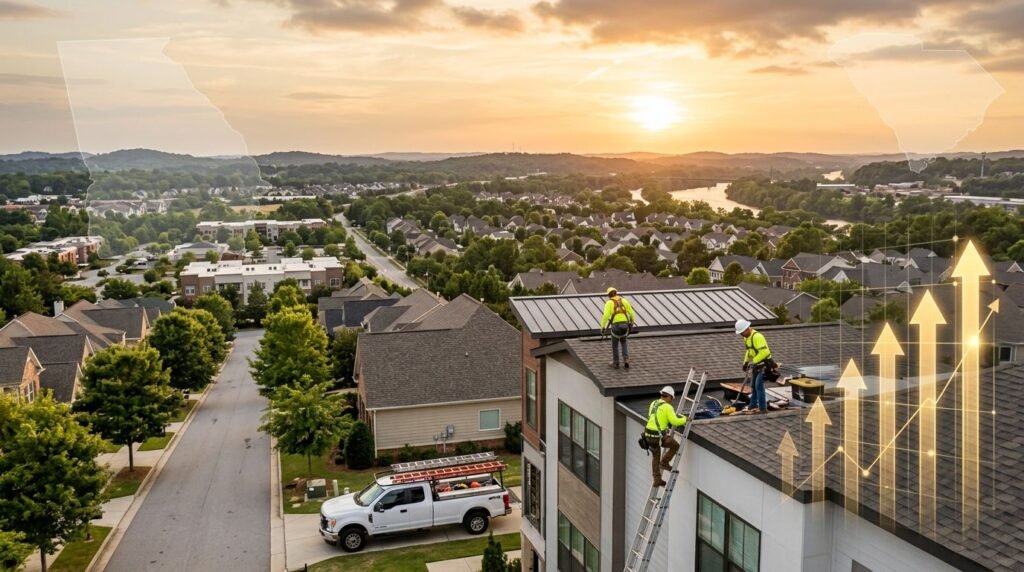
Buy the wrong roofing company, and you’re not buying cash flow, you’re buying callbacks, warranty fights, and truck payments.
Buy the right one, though, and you step into crews, contracts, supplier relationships, and steady demand in places like Savannah, Pooler, Atlanta, Hilton Head, Macon, Warner Robins, Brunswick, Dublin, and Waycross. The trick is knowing what sits under the shingles, and what only looks good on paper.
What makes a roofing business worth buying right now
If you want to buy a roofing company in Georgia or South Carolina, start with the market, not the asking price. Roofing is tied to storms, insurance work, housing turnover, and commercial upkeep. That mix can be strong, but it can also hide thin margins.
As of April 2026, major manufacturers had pushed roofing material prices up by about 5 percent to 8 percent. That hurts sloppy operators first. A disciplined company with tight estimating, good supplier terms, and low rework can still protect margin.
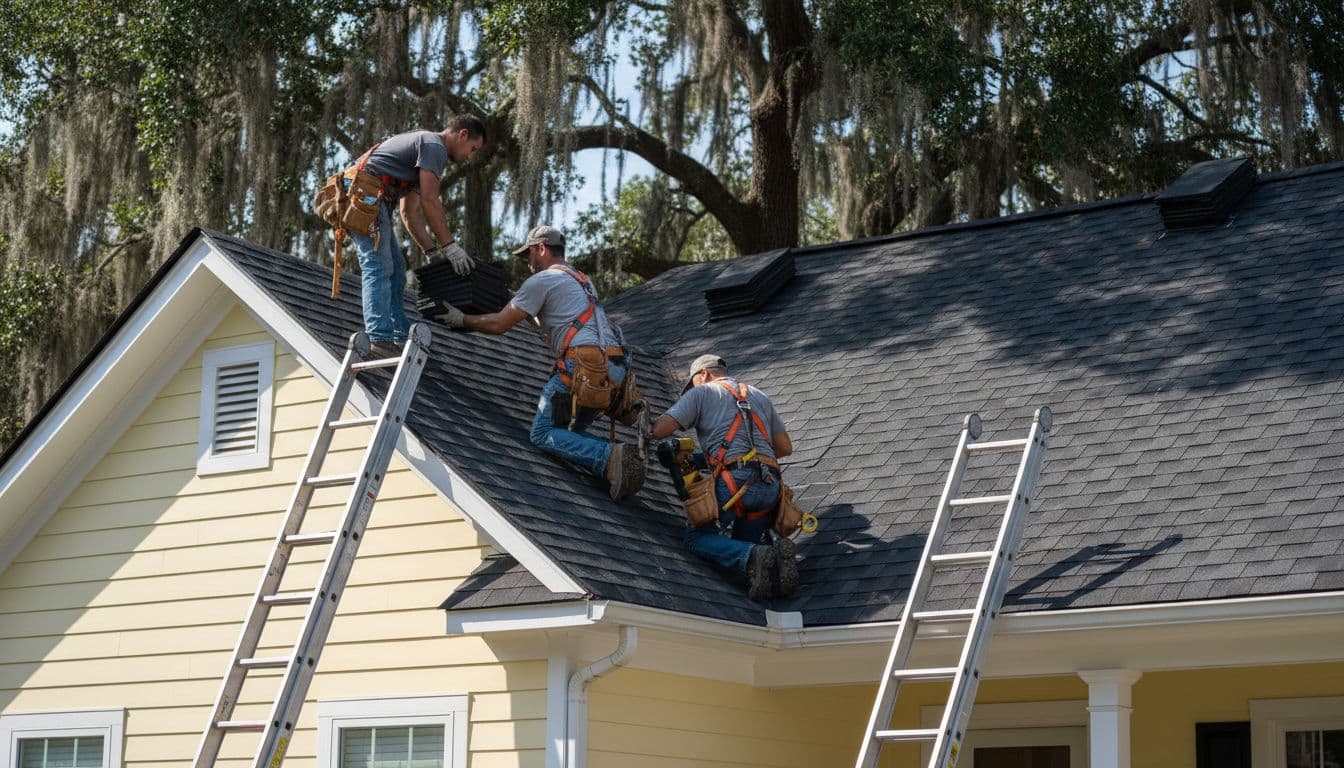
Public listings are also thinner than many buyers expect. On some South Carolina roofing listings, there may be no active options at all, while Georgia construction business listings often group roofers in with every type of contractor. That tells you something useful, the best deals may never hit a public marketplace.
So when you search a Business For Sale site, don’t confuse “available” with “good.” On many Businesses for Sale platforms, roofing companies are filed under construction, restoration, or commercial services. You have to read between the lines.
A company in Atlanta with strong commercial reroof work is a different animal than a residential-heavy shop in Brunswick or Pooler. A Hilton Head or Savannah operator may live off storm response and referrals. A Macon or Dublin company may depend more on repeat builders, property managers, or county work. Same industry, different economics.
What are you really buying? Crew stability, estimator talent, insurance claims know-how, and a reputation that still holds up when the seller steps back. That’s the heart of the deal.
Due diligence: look past revenue and into the roofline
Most buyers look at revenue first. Fair enough. But in roofing, bad jobs can sit like landmines under last year’s numbers.
Spend time in the field. Ride with an estimator. Watch how leads are handled. Review open permits, warranty claims, chargebacks, and insurance certificates. Ask how many jobs needed rework in the last 12 months, and who paid for it.
If the owner still sells every job, manages every crew, and solves every complaint, you’re buying a job, not a company.
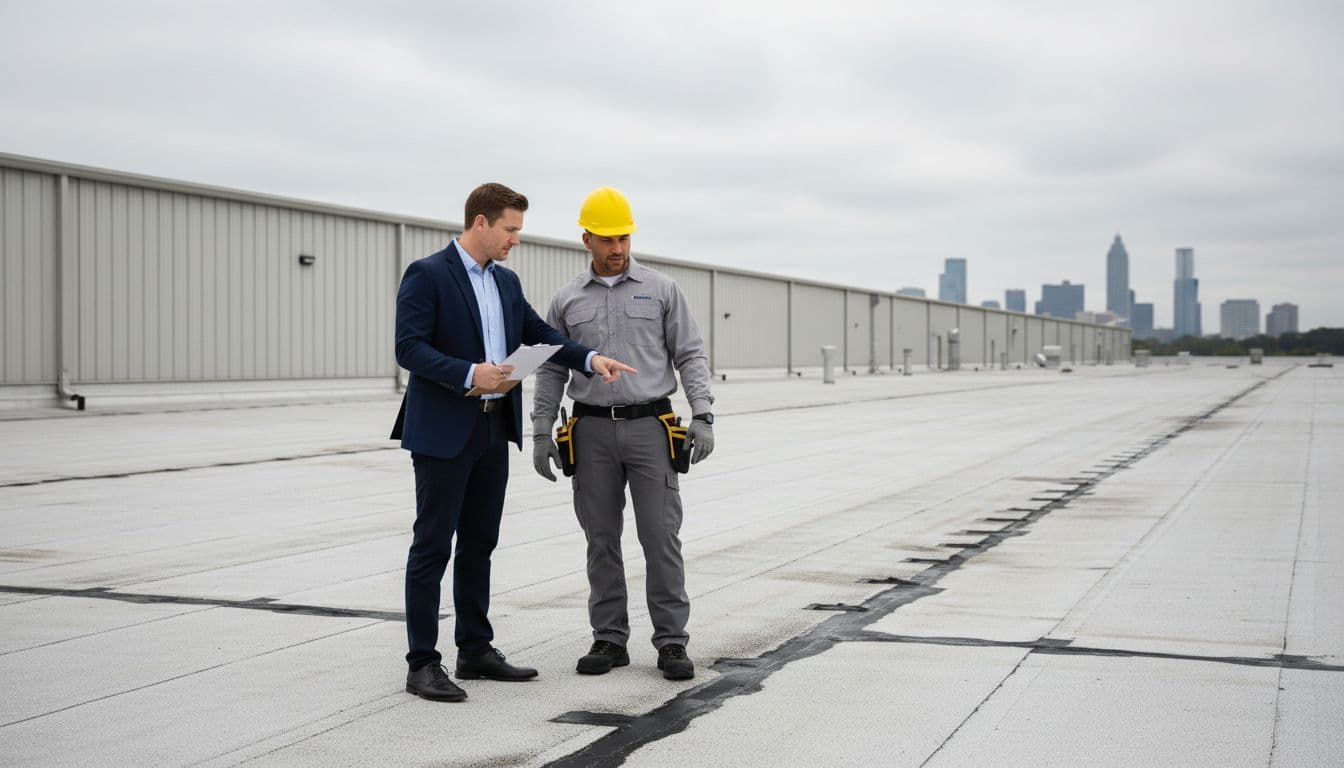
Licensing matters too, and Georgia and South Carolina don’t play by the same rules. In Georgia, roofing often falls to local business licenses, permits, and insurance requirements. In South Carolina, residential roofing work over $5,000 and commercial work over $10,000 usually triggers state-level rules through the Residential Builders Commission.
Here’s the quick version:
| Issue | Georgia | South Carolina |
|---|---|---|
| State roofing license | Often no separate state roofing license | State registration and licensing rules apply more often |
| Local permits | Common, city and county dependent | Common, plus state oversight can matter |
| Insurance proof | Usually required by market or municipality | Often required for licensing and project work |
The takeaway is simple, verify the exact counties and cities where the company operates. A clean setup in Savannah doesn’t tell you much about jobs in Hilton Head or Atlanta.
Then look at the property side. Some roofing deals include CRE, either as Commercial Real Estate for sale with the business or as Commercial Real Estate for Lease under a long-term occupancy agreement. You’ll also see shorthand like CRE for Lease in broker notes. If the company owns its yard, warehouse, or office, review commercial real estate in Georgia and South Carolina with the same care you give the income statement.
Don’t skip trucks, trailers, dumpsters, and storage space. Roofing companies burn through rolling assets. If the fleet is a big part of the package, this look at business fleets and commercial real estate helps frame the risk.
Structure the deal so it still works after closing
When buyers try to buy a roofing company too fast, the first 90 days get ugly. Crews leave. Old customers call the former owner. Gross margin slips because the handoff was weak.
Most Businesses for Sale listings spotlight EBITDA or seller’s discretionary earnings. That’s fine as a starting point. Still, roofing buyers should also test backlog quality, deposit handling, seasonality, unpaid warranty work, and customer concentration. A reported national range for mid-size roofing companies is often around 4x to 8x EBITDA, but don’t marry the multiple. A pretty multiple can’t fix a shaky crew.
Asset deals are often cleaner than stock deals because they can limit old liability exposure. You’ll still want a clear transition plan, a non-compete, and working capital terms that match the way the business runs. If receivables, inventory, or open jobs are part of the value, put that in writing.
Public examples can help you calibrate what attracts buyers. A multi-state commercial roofing company shows the kind of traits that travel well, broad licensing, repair capability, and room for seller financing.
The best purchase structure is boring in the best way. Clean books. Clear asset list. Defined training period. No mystery liabilities. That’s how we do business in Georgia.
Final thoughts
A roofing acquisition should feel solid underfoot. If you rush, you can buy headaches disguised as revenue.
If you slow down and verify the crew, licenses, customer mix, fleet, and CRE story, you can buy a roofing company that keeps producing long after the seller is gone. That’s the difference between owning work and owning a real business.
We are Members of the Georgia Association of Business Brokers and Realtors, Commercial Alliance, Georgia Association of Realtors, and National Association of Realtors