

A cheap building can turn expensive fast when Americans with Disabilities Act access problems show up after closing. That’s why an ADA compliance checklist belongs in your due diligence file, right next to rent rolls, inspections, and financials.
Commercial properties fall under Title III of the act. If you’re buying property in Savannah, Pooler, Atlanta, Hilton Head, Macon, Warner Robbins, Brunswick, Dublin, or Waycross, don’t treat accessibility like a side issue. It affects value, leasing risk, tenant fit, and how smoothly your deal runs.
Key Takeaways
- Treat ADA compliance as core due diligence for Georgia and South Carolina commercial buys—check parking, paths, doors, interiors, restrooms, leases, and websites early to avoid post-closing costs that erode value.
- Walk the site like a customer: count accessible parking spots, test routes from lot to entrance, doors, counters, and restrooms for real usability, not just a glance.
- Scrutinize lease language on maintenance, alterations, and compliance—who pays for fixes in common areas or interiors can shift risk unexpectedly.
- Audit websites for WCAG 2.1 AA standards alongside physical barriers; rising digital claims make this a must for customer-facing businesses in 2026.
- Price ADA fixes before the deal closes—the cheapest upgrade is the one you spot and budget for upfront.
Before the offer, treat ADA issues like part of the price
If you’re reviewing a Business For Sale with a building attached, or comparing Businesses for Sale that come with a long lease, look past the headline numbers. In CRE, architectural barriers work like a slow roof leak. They may seem small at first, then keep costing you.
That matters whether the asset is a retail strip center, office suite, warehouse showroom, or restaurant. A site marketed as Commercial Real Estate for sale may still need new striping, a better route from parking to the front door, updated hardware, or restroom changes to meet the ADA Standards enforced by the Department of Justice. Older buildings don’t get a free pass, either. Buyers should ask what barriers can be removed readily, what alterations happened before the sale, and what complaints or repair requests already exist.
Before you trust the listing, it helps to read business for sale listings like a pro. Accessibility problems rarely appear in the headline, and lease duties often hide in the fine print.
The bottom line is simple. Don’t ask only, “Can I afford this property?” Also ask, “What will it take for customers, staff, and visitors to use it safely and fairly?”
Walk the site like a customer, not just an investor
The best first pass is simple and helps you spot architectural barriers early. Start in the parking lot, then follow the same route a first-time visitor would take.
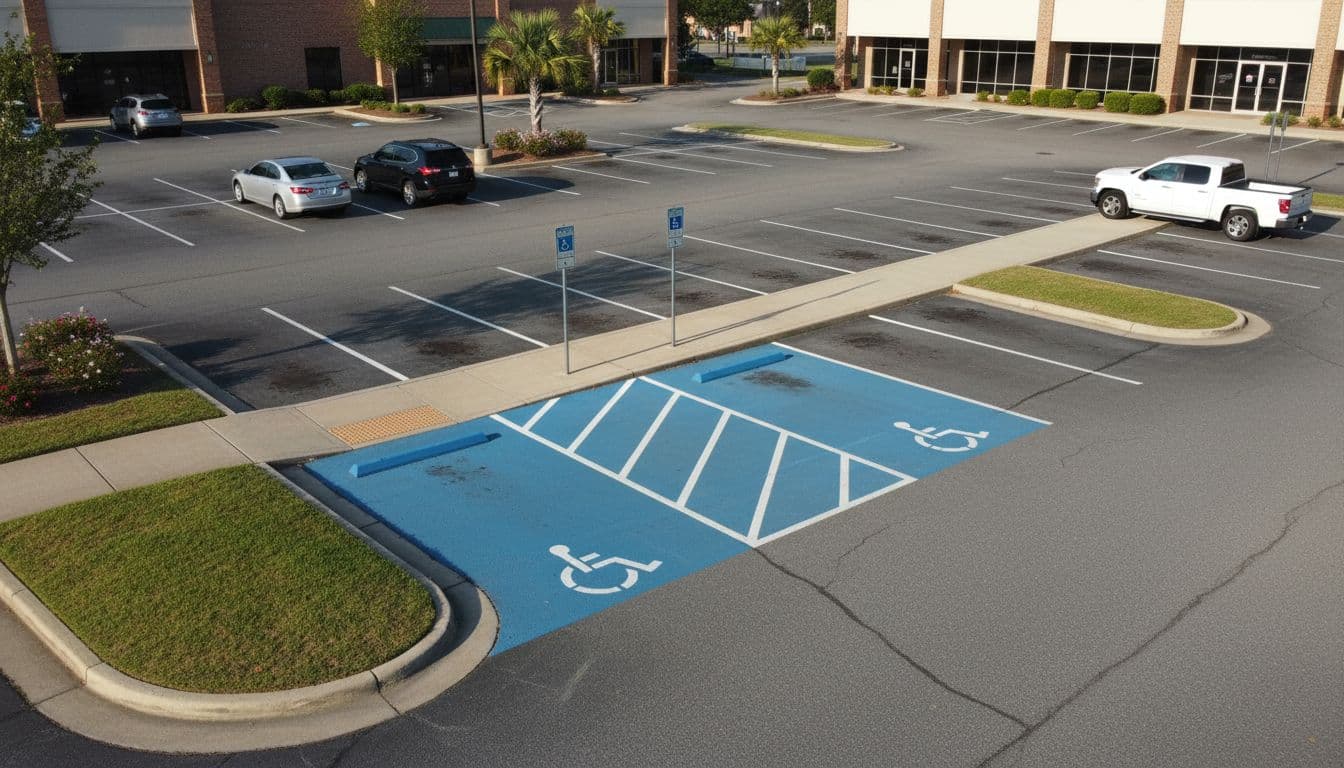
Use this short checklist on every tour as an informal accessibility audit:
- Count accessible parking spaces according to accessible design standards, then check van access, striping, signage (clear signage helps visitors with visual impairments), and access aisles.
- Follow the route from the lot to the entrance. Look for broken pavement, steep changes, missing curb ramps, and narrow pinch points.
- Test the front door. Heavy doors, bad thresholds, and awkward handles are common trouble spots.
- Check the path inside. Aisles, halls, and waiting areas should stay clear of displays, cords, and furniture.
- Look at service counters, seating, and transaction areas. If all customer touchpoints sit too high, that’s a warning sign.
- Visit the restroom. Don’t stop at “it has grab bars.” Look at clear floor space, sink access, faucet style, and door swing.
For parking-specific detail, this South Carolina ADA parking lot compliance guide gives a helpful field-level view.
The cheapest ADA fix is the one you price before closing.
A buyer walking a storefront in Brunswick or a mixed-use site near Hilton Head should notice the same things as a buyer touring an older building in Macon or Dublin. Geography changes the market, not the need for access.
Don’t ignore the restroom, the lease, or the website
Restrooms sink plenty of deals because buyers assume they’re “close enough.” They often aren’t.
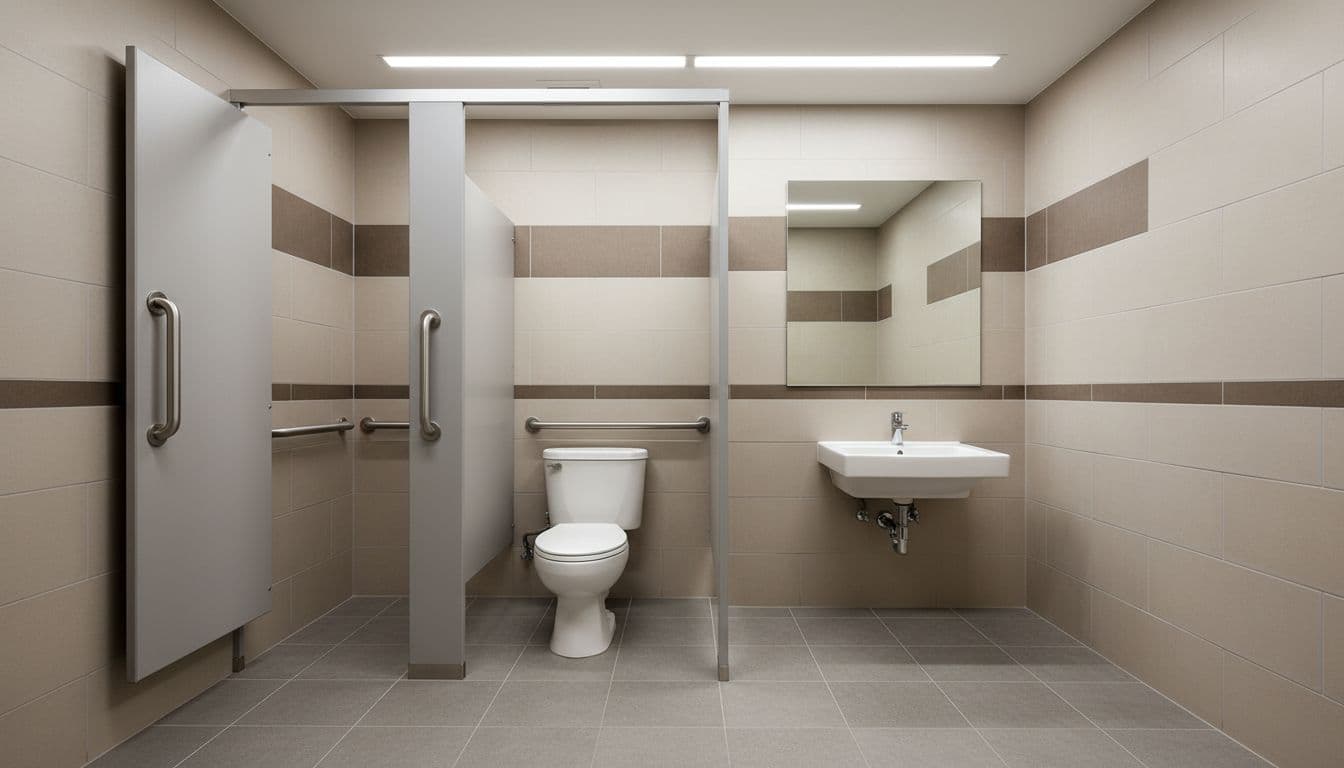
Check whether the restroom can work for real users, not only pass a quick glance. You want usable turning space, reachable fixtures, stable grab bars, and sinks that don’t block wheelchair access. If the property has several tenant suites, also confirm who controls shared restrooms and who must pay for upgrades.
Lease language matters just as much. If a property is offered as CRE for Lease or Commercial Real Estate for Lease, don’t assume the landlord handles every access fix. Read the sections on common areas, alterations, maintenance, indemnity, and compliance. In some leases, the tenant pays for interior work while the landlord handles parking and exterior routes. In others, the risk shifts more than buyers expect.
There’s one more issue many commercial buyers miss in 2026: the website. As of April 2026, website accessibility claims keep rising, with more than 5,100 filed in 2025. So if the deal includes an operating business, review the site along with the building for full digital accessibility. This matters even more when you buy a customer-facing brand in Atlanta or Savannah, where website accessibility is now a key part of overall compliance.
While private commercial real estate falls under Title III of the ADA, public entities must adhere to Title II, which often sets precedents influencing Section 508 and Rehabilitation Act standards for contractors working on digital projects. For commercial buyers, prioritizing WCAG guidelines ensures robust website compliance. Specifically, WCAG 2.1 AA represents the gold standard for 2026 digital accessibility, meeting Level AA requirements that mitigate legal risks effectively.
To evaluate digital accessibility, conduct WCAG-focused audits on the site’s digital content. Key WCAG checkpoints include adding alternative text to images for screen reader compatibility, ensuring seamless keyboard navigation without mouse dependency, maintaining a sufficient color contrast ratio for readability, and verifying support for assistive technology. Automated audits can flag initial issues quickly, while manual reviews confirm WCAG adherence, including PDF remediation for downloadable files. Public entities often enforce stricter WCAG protocols under Title II, and even Title III properties benefit from these practices to avoid lawsuits.
Georgia’s accessibility compliance checklist is written for state agencies, but it shows how detailed 2026 accessibility reviews have become, blending physical and WCAG-based digital accessibility seamlessly. WCAG 2.1 AA compliance not only meets Level AA requirements but also future-proofs website compliance amid rising claims. If retrofit costs for either physical or digital upgrades will affect your cash needs, compare financing options early with this guide on SBA financing for GA SC business purchases. Public entities and private CRE owners alike should integrate WCAG into their due diligence for comprehensive protection.
Frequently Asked Questions
Why include an ADA checklist in commercial due diligence?
ADA issues turn cheap deals expensive fast after closing. They hit value, leasing, and tenant fit, so buyers in Savannah, Atlanta, Hilton Head, or Macon must audit parking, paths, restrooms, leases, and websites like any financial.
What should I check on a property walkthrough?
Start in the parking lot: count accessible spots, check striping, signage, and aisles. Follow the customer path for curb ramps, door hardware, clear aisles, counters, and restrooms with turning space, grab bars, and reachable sinks.
How do leases affect ADA compliance responsibility?
Leases split duties—landlords often handle parking and exteriors, tenants interiors or shared areas. Read sections on maintenance, alterations, indemnity, and compliance to avoid surprise repair bills.
Why check website accessibility for ADA?
Website claims surged past 5,100 in 2025, falling under Title III for commercial properties. Audit for WCAG 2.1 AA: alt text, keyboard nav, contrast, and assistive tech support to shield against DOJ scrutiny.
Can older buildings skip ADA upgrades?
No free pass—existing barriers must be removed if readily achievable. Buyers should ask about past alterations, complaints, and fixes during due diligence.
Price the fix before you price the dream
A strong deal is more than location and cash flow. It’s a property, or business location, that people can use without friction and without surprise repair bills waiting after closing.
That’s the heart of a smart ADA compliance checklist. In Georgia and South Carolina, buyers who check access early protect their budget, their timeline, and their reputation. In other words, you’re not only buying square footage. You’re buying how well the place works for real people.
This ADA compliance checklist acts as a key financial safeguard. WCAG standards for digital accessibility are now as vital as tackling architectural barriers and adhering to ADA Standards for physical access. WCAG compliance ensures digital accessibility meets expectations, shielding your investment from Department of Justice scrutiny or Title III litigation. For thorough due diligence, start with an accessibility audit that covers WCAG guidelines alongside everything else.
We are Members of the Georgia Association of Business Brokers and Realtors, Commercial Alliance, Georgia Association of Realtors, and National Association of Realtors