
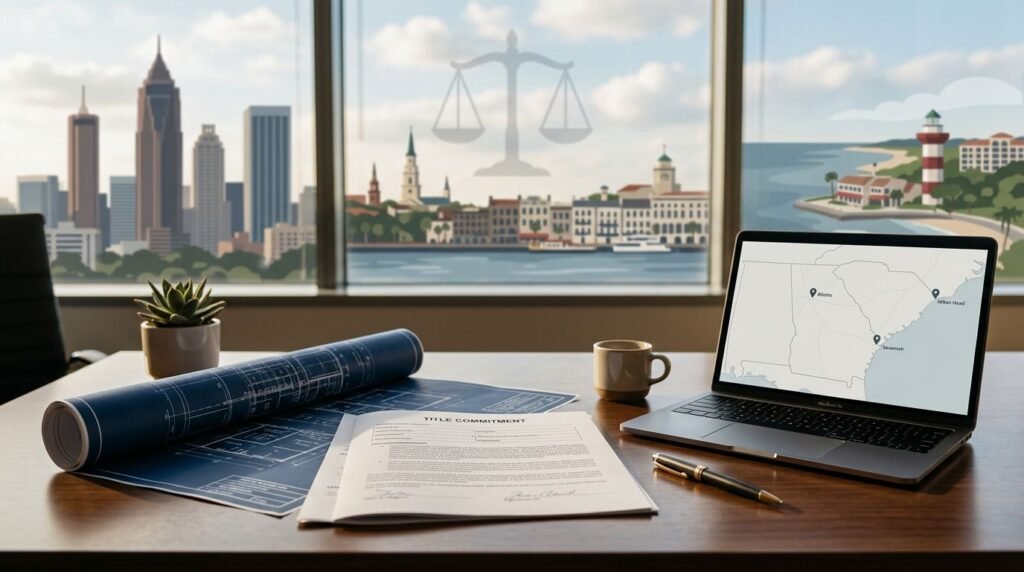
The costly surprise in a real estate transaction often isn’t the purchase price. It’s the paperwork you skimmed on page 12.
A commercial title commitment shows what must happen before a title company will insure your ownership. If you’re buying commercial real estate in Savannah, Pooler, Atlanta, Hilton Head, Macon, or Warner Robins, that document can save you from an expensive mistake. Before you get attached to the building, get clear on the title.
Key Takeaways
- A commercial title commitment is a promise to issue title insurance after clearing Schedule B-I requirements, while Schedule B-II exceptions like easements remain attached post-closing—review both early to avoid surprises.
- Match Schedule A details (names, vesting, description) to your contract, and cross-check with a current survey for access, encroachments, and parking issues before due diligence expires.
- Don’t rely solely on your lender’s review; secure an owner’s policy and pair title work with UCC searches, zoning, leases, and business due diligence, especially in mixed asset deals.
- Common pitfalls include old surveys, uncleared liens, and overlooked lease impacts—treat title review as core deal analysis, not a last-minute step, for Georgia and South Carolina buyers.
What a commercial title commitment really tells you
A commercial title commitment, often an ALTA commitment form produced by the title company or title underwriter after a title search of public records, is a promise to issue a title insurance policy after listed conditions are met. It is not the title insurance policy itself. Instead, it gives you a snapshot of ownership, closing requirements, and the matters that will stay attached to the property after closing.
Think of it like a pre-flight check. You don’t wait until takeoff to learn a wing bolt is loose.
Most commitments follow a familiar pattern. Schedule A covers the basics, including the buyer, seller, policy amount, and legal description. Schedule B, Part I (sometimes labeled Schedule C in certain forms) lists title requirements that must be cleared before closing, such as payoffs, releases, or entity documents. Schedule B, Part II lists exceptions, which often include easements, setbacks, access rights, and recorded restrictions.
As of April 2026, public updates show Georgia’s 2026 REALTOR forms are live, and South Carolina forms continue to change as well. Still, there is no single public 2026 overhaul that rewrites every commercial title commitment rule. Because of that, buyers should confirm current requirements early with the title company, closing attorney, and broker. Georgia Title’s due diligence guidance is a helpful place to start.
This matters even more when real estate is tied to an operating business. Many buyers begin with a Business For Sale search, or compare Businesses for Sale, then discover the building is part of the real value. In that case, the title file affects your lender, your operations, and your resale options. Buyers looking at commercial real estate in Georgia and South Carolina should treat title review as part of deal analysis, not a last-minute legal step.
The checklist smart buyers use before objections expire
A good checklist keeps emotion out of the room. It also helps you spot the difference between a harmless utility easement and a problem that can hurt value.
The first page looks clean. The real story usually hides in Schedule B.
Use this short review before the due diligence phase of your real estate transaction gets away from you:
- Confirm the names, vesting deed, and legal description match the contract exactly. One wrong entity name can slow funding and closing.
- Compare the commitment to the property survey. Check access points, parking, shared drives, loading areas, any encroachments, and a survey exception.
- Read every title requirement. Look for lien payoffs, releases, tax items, authority documents, and anything the seller must deliver before title can be insured.
- Study every title exception, including permitted exceptions, that will remain after closing. Some are routine. Others can limit expansion, signage, truck movement, or future redevelopment.
- Ask what the commitment does not cover. It won’t replace UCC searches, lease review, zoning review, or environmental work. If the property comes with a tenant or is part of a Business For Sale package, pair title review with lease and operations review. This is where Reading Business for Sale Listings Like a Pro can help buyers connect the real estate side to the business side.
- Request the needed endorsement early. Lenders may want survey, access, or zoning-related coverage, and late requests can drag a closing. The title insurance policy will reflect these findings.

The paperwork may look similar in both states, but your closing team may not. South Carolina buyers, especially investors crossing state lines, should also review this South Carolina title documents guide for investors. For a wider view of timing and coordination, this commercial real estate transaction checklist is worth keeping nearby.
Where Georgia and South Carolina buyers get tripped up
Most title problems are not dramatic. They are quiet encumbrances and liens that turn out boring and expensive.
One common mistake is letting the lender drive the title review. The lender focuses on the loan policy to secure their interests. You need the owner’s policy to protect future use, resale, access, and headaches after closing. Those goals overlap, but they are not the same.
Another trap is relying on an old survey. A small retail site in Atlanta or a flex building in Pooler can look straightforward until a current survey shows parking over the line or a driveway crossing onto a neighbor’s land. That is the kind of issue that can stall closing or slash value.
Mixed asset deals create their own mess. In Savannah, Brunswick, Macon, Dublin, and Waycross, buyers often evaluate a company plus real estate. The title commitment from the title company covers the land and recorded matters tied to it. It does not clear every lien tied to inventory, equipment, or accounts. Gap coverage offers protection between the title search and issuance of the title insurance policy. If you are buying both the business and the building, title work must line up with business due diligence and financing.
That financing piece matters more than most buyers expect. If the building drives the deal, loan structure and title timing move together. Buyers comparing real estate-heavy deals should review SBA 7(a) vs 504 Loans for GA Business Purchases before they lock into terms.
Then there’s the lease issue. If you’re weighing Commercial Real Estate for sale against Commercial Real Estate for Lease, the review changes. A title commitment matters most for owned property, but lease deals still need close legal review. Recorded easements, access rights, parking rights, and landlord controls can shape the value of CRE for Lease and Commercial Real Estate for Lease just as much as a purchase file shapes owned CRE. Y’all don’t want to discover that after you’ve planned your move-in.
The asking price and even settlement fees rarely cause the worst surprise. The commercial title commitment does, but only when no one reads it early enough.
Read it against the survey, the contract, and the actual deal structure. If you do that before deadlines expire, you give yourself room to cure defects, reach clear to close status, renegotiate, or walk away with confidence.
Frequently Asked Questions
What is a commercial title commitment?
A commercial title commitment is a document from the title company after a public records search, promising to issue a title insurance policy once listed conditions are met. It provides a snapshot of current ownership, required fixes in Schedule B-I (like payoffs and releases), and ongoing exceptions in Schedule B-II (like easements). It’s your pre-closing checklist, not the policy itself.
How does Schedule B differ from Schedule A?
Schedule A covers basics like buyer/seller names, policy amount, and legal description—ensure it matches your contract exactly. Schedule B-I lists must-clear requirements before closing, such as liens or entity docs, while B-II details exceptions that survive closing, like access rights or restrictions. Spotting issues here prevents funding delays or value hits.
Why pair the title commitment with a survey?
A survey reveals encroachments, parking overages, or driveway issues that a title commitment might except but not detail. Old surveys mislead, especially on retail or flex sites in Atlanta or Pooler. Request endorsements for survey, access, or zoning early to align lender needs and protect future use.
What if I’m buying a business with the real estate?
Title covers the property and recorded liens but misses UCC on equipment or inventory—conduct separate business due diligence. Gap coverage helps between search and policy issuance. Review SBA loan options as title timing affects financing in Georgia and South Carolina deals.
Can title issues affect leased commercial space?
Even for lease deals, recorded easements, parking rights, or landlord controls in the title commitment shape value and operations. Owned CRE needs full review, but leases demand similar scrutiny. Cross-check with lease terms to avoid move-in surprises.
We are Members of the Georgia Association of Business Brokers and Realtors, Commercial Alliance, Georgia Association of Realtors, and National Association of Realtors