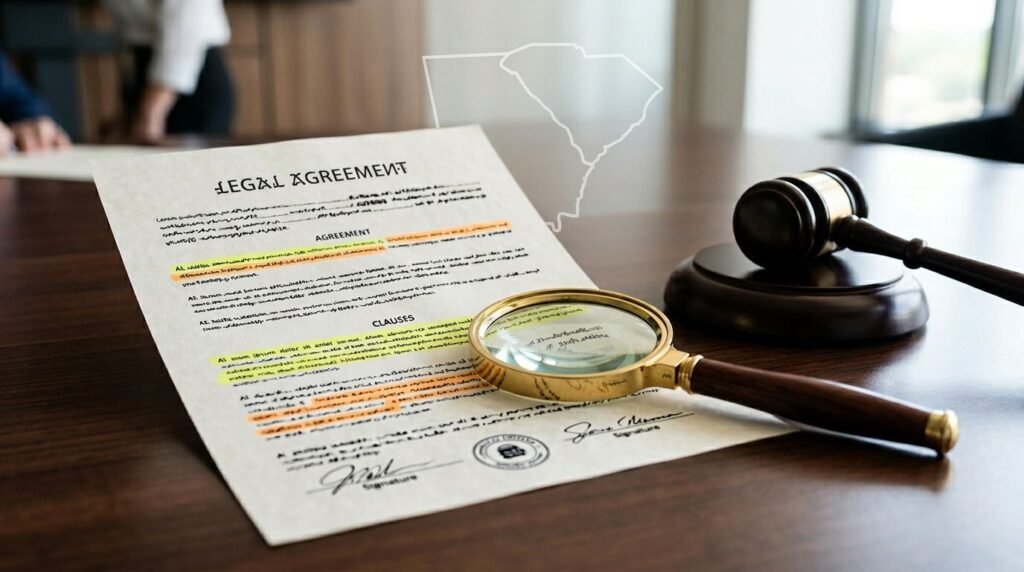
One sentence can wreck a closing.
That’s what bad use clauses do in Georgia and South Carolina. They look harmless in a lease, purchase agreement, or seller covenant, then stall the deal when lenders, landlords, or lawyers take a harder look. Like fragments in legal grammar, these use clauses masquerade as complete thoughts but crumble under scrutiny.
If you’re buying, selling, or investing, this is the fine print that deserves more respect than the asking price. A well-crafted use clause acts like an independent clause, a standalone sentence forming a complete thought that propels the deal forward.
Key Takeaways
- Use clauses in leases, seller non-competes, and covenants look harmless but derail Georgia and South Carolina deals when they mismatch the buyer’s post-closing business plan, crumbling like faulty legal grammar under lender or lawyer scrutiny.
- Georgia courts reject vague, overly broad non-compete language, while South Carolina demands fair scope in time, geography, and activity—sloppy drafting risks the whole clause getting tossed.
- Restrictive lease uses (e.g., “counter-service food only”) or exclusive provisions block growth, from Savannah restaurants to Pooler warehouses, turning solid Businesses for Sale into stalled closings.
- Fix with precise, growth-friendly drafting: match the real plan, limit non-competes realistically, check zoning and lenders early, and loop in landlords to keep deals flowing like complete independent clauses.
- Clean clauses protect value without choking operations, proving that narrow, specific language safeguards the transaction better than fear-driven boilerplate.
Why use clauses derail otherwise solid deals
Most buyers chase cash flow first. That makes sense. Still, the use language often decides whether the business can operate the way everyone expects after closing.
A buyer may see a Savannah restaurant and picture dinner service, events, and beer sales. In the landlord and tenant relationship, however, the commercial lease may only allow “counter-service food.” A Pooler warehouse buyer may want light assembly, while the lease allows only storage. In Atlanta, a buyer may pursue a company plus Commercial Real Estate for sale, but zoning ordinances or the commercial lease restrictions may not fit the new plan.
That’s where trouble starts, especially with poor drafting that creates operational friction.
A Business For Sale listing can look clean, yet the lease, deed limits, franchise rules, or seller non-compete can quietly block the real value. The same issue shows up in Businesses for Sale tied to CRE, whether the site is marketed as CRE for Lease or Commercial Real Estate for Lease. Use clauses act like a subordinate clause modifying the main clause of the purchase agreement; the subject and verb form the core transaction, but hidden restrictions derail it.
If the clause doesn’t match the real business plan, the price stops mattering.
Lenders care, too. They want to know the business can legally occupy and use the space for the full loan term. If the use is shaky, financing gets shaky. If the seller’s non-compete is too broad, that can also backfire. Buyers want protection, but courts don’t reward sloppy drafting.
If you’re reviewing listings, it helps to know where the risk hides. This guide on how to read business for sale listings like a pro is useful because listing language rarely tells the whole story.
The clauses that cause the most damage
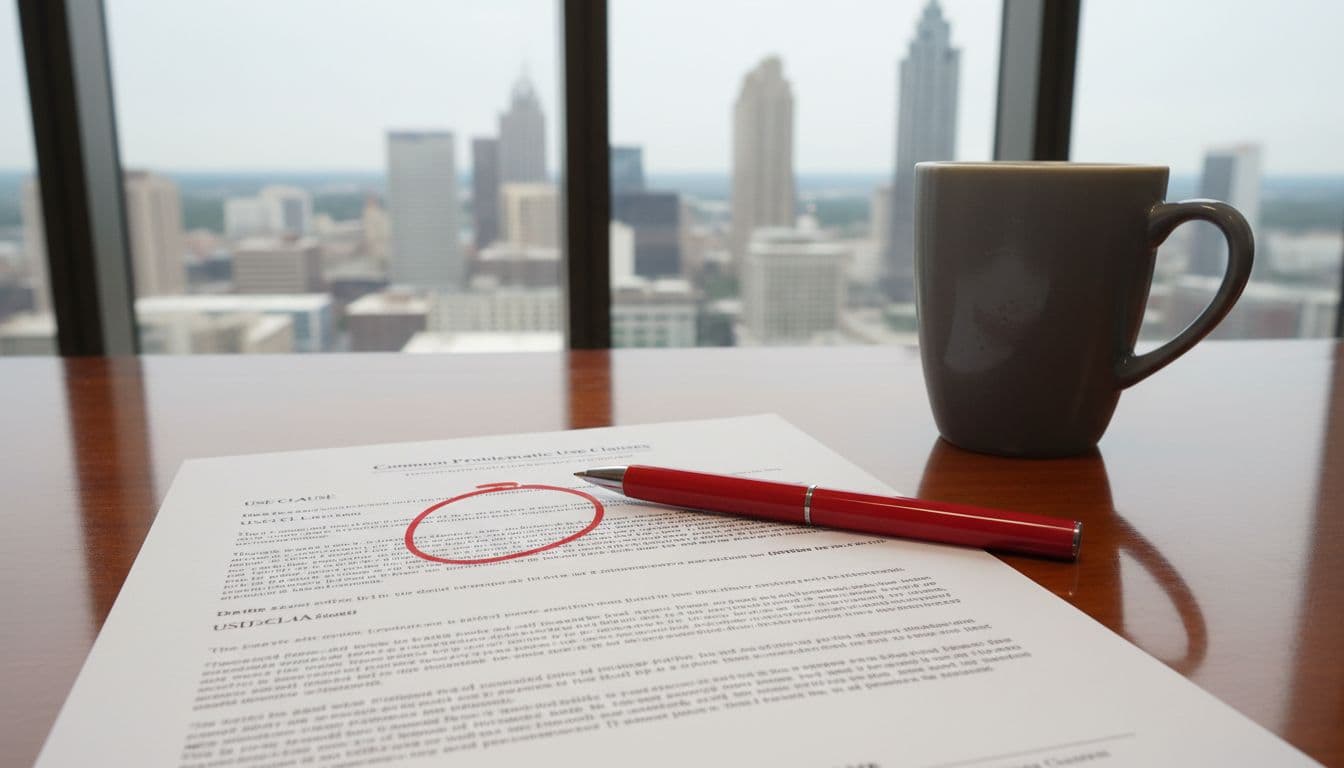
The biggest deal-killers usually fall into three buckets: restrictive clauses in seller non-competes, restrictive use clauses and overly narrow permissive use clauses in leases, and exclusive-use language that traps the landlord, tenant, or buyer later.
Georgia is especially tough on vague restraint language. Courts have rejected bans that stop a seller from working “in any capacity” for a competitor, because that wording can reach far beyond what the buyer bought. Like a non-restrictive clause set off by commas, such broad restrictive clauses fail to use a relative pronoun or adjective clause precisely to limit the scope of the sale. FordHarrison explains that problem well in its write-up on Georgia non-compete language.
South Carolina can be more forgiving in true sale-of-business deals, but only if the scope is fair. If the clause goes too far on time, geography, or activity, a court may toss it rather than fix it. That risk is why narrow drafting matters, as discussed in this piece on business-sale non-compete clauses.
Then there’s the lease side. A “restaurant only” clause may kill a shift to catering, retail sales, or entertainment. A “marine service only” clause can limit expansion in Brunswick. An exclusive clause meant to protect one tenant may also block a future buyer in Hilton Head or Macon from adding a profitable line. Hunton’s overview of exclusive use provisions in commercial leases shows how fast vague language can turn into a real dispute.
In plain English, a clause that tries to control everything often protects nothing.
How to keep a use clause from killing the closing
The fix is simple in theory, but it takes discipline. Match the clause to the real risk, not the fear in the room.
Adopt a structured grammar-based strategy for the fix. Draft permissive use clauses using a complex sentence or compound sentence to build well-drafted multi-part agreements. Add an adverbial clause to modify the when and where of the business operation. Distinguish essential clauses that drive deal-breaking terms from non-essential clauses that serve as boilerplate fluff.
Start with the business plan after closing. Will the buyer keep the same services, hours, product mix, and footprint? If not, write for the future state, not the old one. That matters in Warner Robins service shops, Dublin distribution sites, and Waycross industrial properties just as much as it does in Savannah hospitality deals.

A few habits save deals:
- Define the allowed use with enough room for normal growth.
- Limit seller non-competes to named services, realistic counties, and a fair time period.
- Check zoning, license rules, and landlord consent before due diligence gets expensive.
- Make sure the clause fits the loan structure and the space term.
Sellers should do this work before going to market. Buyers should do it before they fall in love with the story. If you’re on the seller side, this resource on how to sell a business in Georgia in 2026 is a practical reminder that clean paperwork keeps value intact.
It also helps to bring the landlord into the conversation early. Many deals die because everyone assumes lease assignment will be easy. It often isn’t. The Georgia Association of Business Brokers also highlights the value of early prep in its article on avoiding deal-breakers in business transactions.
The best clause reads like common sense. It protects the buyer without choking the business.
Frequently Asked Questions
What makes a use clause a deal-killer in Georgia and South Carolina?
Use clauses derail deals when they restrict operations beyond the buyer’s plan, like limiting a restaurant to counter-service only while envisioning events and beer sales. Lenders balk at shaky legal occupancy, and courts strike vague non-competes or unfair scopes. The result: a seemingly solid Commercial Real Estate purchase grinds to a halt over fine print that masquerades as complete but crumbles under review.
How do non-compete clauses in seller covenants backfire?
In Georgia, “in any capacity” bans reach too far and get rejected outright, lacking precise limits like named services or counties. South Carolina may enforce them in business sales if fair, but overbroad time or geography invites judicial blue-penciling or dismissal. Narrow drafting tied to the sale’s essence protects buyers without scaring off sellers or courts.
What lease use issues hit hardest in CRE deals?
Overly narrow permissive uses (e.g., “storage only” blocking light assembly) or exclusive clauses trap future expansions, from Brunswick marine services to Hilton Head retail shifts. Vague language sparks landlord-tenant disputes and kills financing. Always align the clause with the full business footprint, hours, and growth for smooth assignments.
How can buyers and sellers prevent use clause disasters?
Start with the post-closing business plan: define allowed uses with growth room, limit non-competes realistically, and verify zoning, licenses, and loan fits early. Involve landlords before due diligence deepens, as assumptions about lease transfers often prove wrong. This disciplined approach turns potential friction into a handshake outside the property, deal intact.
Why use grammar analogies for use clauses?
Like subordinate clauses modifying a main transaction, bad use provisions add friction without standalone strength, stalling the deal. Well-crafted ones form independent clauses—complete thoughts with precise nouns, predicates, and modifiers—that propel closings forward. This lens reveals hidden risks in Business For Sale listings, ensuring the fine print supports, not sabotages, the core agreement.
A tight clause protects the deal
Bad use clauses are like a locked gate on a property you thought you bought free and clear. Everything looks fine until you try to drive through it.
In Georgia and South Carolina, the safest path is narrow, specific language featuring a noun clause that captures the essence of the property use and a precise predicate that defines the action or status the deal relies on. This group of words, linked by a linking verb that connects the seller to the buyer, proves robust rather than fragile. When the clause is honest about what needs protection, with a relative clause guided by a relative adverb, a subordinating conjunction for dependencies, and a coordinating conjunction for balance, the deal has room to work.
We are Members of the Georgia Association of Business Brokers and Realtors, Commercial Alliance, Georgia Association of Realtors, and National Association of Realtors