

For the borrower, pursuing a business acquisition in Georgia can feel like trying to build a sturdy porch during a summer storm. The plan looks great, but timing and structure decide whether it holds up.
One financing tool keeps showing up in real SBA 7(a) loan deals across Savannah, Pooler, and Atlanta: the SBA standby seller note. Done right, it can reduce the cash you bring to closing. Done wrong, the lender can stall your loan right when you’re ready to sign.
Below is a practical, Georgia-focused guide to what “standby” really means in 2026, how lenders apply the rules, and how it connects to deals that include leases, renewals, and even CRE.
What an SBA standby seller note is (and why Georgia buyers keep asking for it)

A seller note, or seller financing, is simple: the seller finances part of the price, and you repay over time. An SBA standby seller note adds one big twist: the seller agrees to wait behind the SBA lender.
Think of it like this. The SBA lender is the lead singer. The seller note can join the band, but only if it stays quiet when the SBA lender needs the cash flow to stay safe.
As of March 2026, many lenders follow SBA SOP 50 10 8 guidance that a seller note can count toward the buyer’s equity injection only when it is on full standby for the life of the loan, which is often 10 years on an SBA 7(a) loan acquisition. In that structure, the seller note is commonly capped at up to 5% of the purchase price when used as part of the equity injection requirement (with the borrower still bringing cash to the table as down payment). For a readable explanation of how this is being applied in 2026, see this summary of SBA seller note rules (2026 update).
So why does it matter in Georgia?
- In hot pockets like Savannah and Pooler, buyers want speed and a lower cash hit at closing.
- In Atlanta and Macon, deal sizes can stretch higher, so every point of equity matters.
- In smaller markets like Dublin, Waycross, Brunswick, and Warner Robins, sellers often prefer a steady plan that attracts qualified buyers without dropping the price.
If you’re shopping Businesses for Sale, it’s worth learning this tool early, because it changes your negotiating posture before you ever talk price.
The standby rules lenders enforce in 2026 (full standby, subordination, and “no payments”)
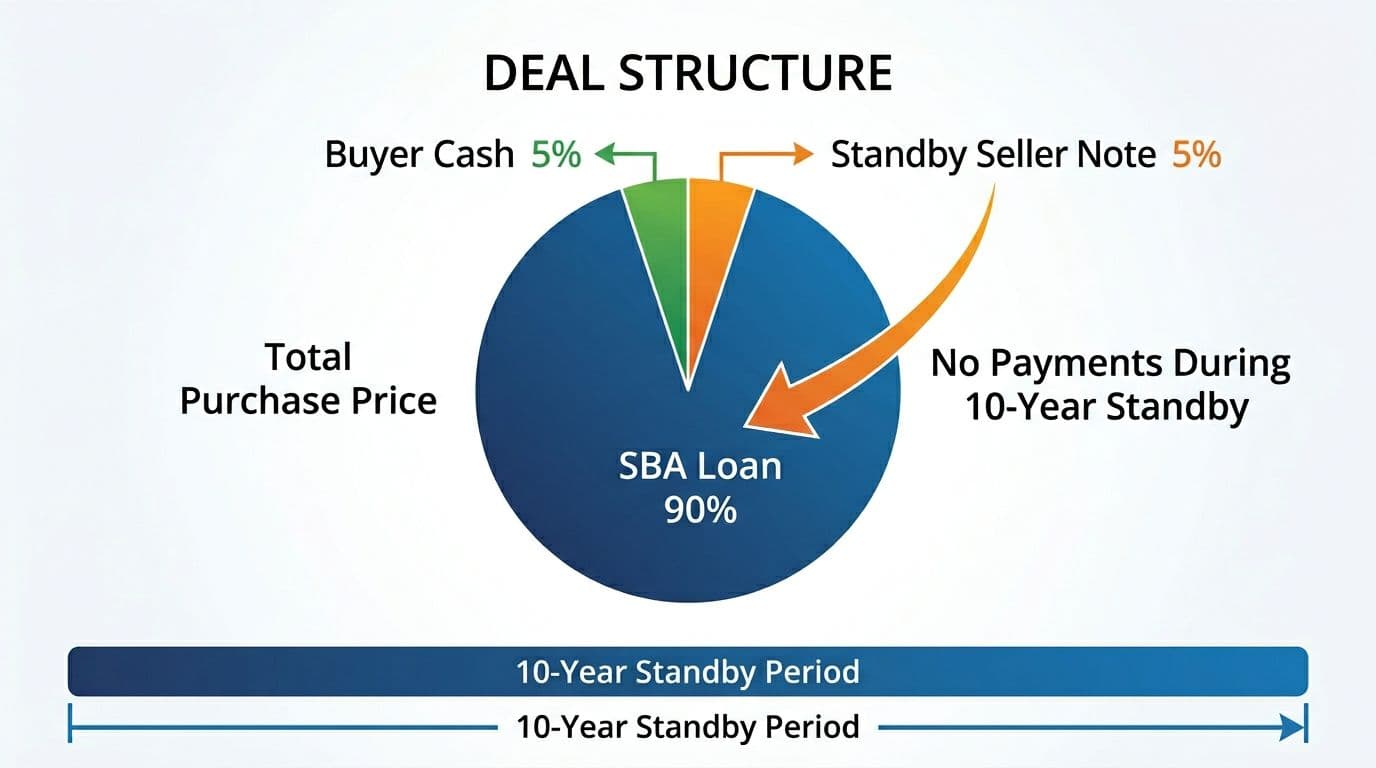
Most SBA 7(a) lenders are not “kind of” strict on standby. They’re strict-strict, because the whole point is to protect the borrower’s DSCR and cash flow.
Here’s the plain-English version of what usually gets required when the seller note is being counted as an equity injection:
| Rule lenders look for | What it means in real life |
|---|---|
| Full standby | No principal or interest payments during the full standby period, often the full SBA 7(a) loan term, even if the promissory note specifies an interest rate. |
| Subordination | Debt subordination where the SBA lender gets paid first from collateral; seller is a junior creditor behind the SBA lender in priority. |
| No side deals | No “secret” payments outside closing docs, lenders hate surprises. |
| Clean documentation | Promissory note, Standby Creditor’s Agreement, and SBA Form 155 subordination language must match the lender’s form and approval. |
| Collateral and personal guarantee | Typical lender requirements with liens on business collateral and buyer personal guarantees to secure the SBA 7(a) loan. |
The biggest change that surprises sellers is the timeline. Older deal stories often mention a shorter standby. Many 2026 transactions are being underwritten with full-term standby, meaning the seller may wait years before seeing a dime.
If the seller wants monthly payments of principal and interest right away, the note might still exist, but it often won’t count toward equity injection, and it can tighten debt coverage.
Also, remember this: SBA rules are federal. Georgia doesn’t add special statewide standby note rules. Still, Georgia lenders can have their own underwriting habits, so always ask the bank how they interpret the promissory note in your exact deal.
For a quick background on how SBA changes affected seller notes, this older but useful overview helps frame the “why” behind it: SBA change of conditions for a seller note.
How standby seller notes collide with leases, CRE, and real-world Georgia deal terms
A standby seller note doesn’t live in a vacuum. It has to fit into the total project cost of the rest of the purchase, especially the location terms. That’s where Georgia deals get interesting.
If the business operates in CRE for Lease (also called Commercial Real Estate for Lease), the lender will study the lease term, renewals, and working capital. A seller note on standby may help your cash injection, but a weak lease can still sink the package. In Savannah and Hilton Head deals, for example, landlords can be picky and tourist traffic can make rent jump at renewal. That risk shows up in underwriting.
On the other hand, if you’re buying a business plus a building (true CRE plus operations), you may be looking at Commercial Real Estate for sale alongside the company. Now the SBA lender also cares about property value, environmental questions, and whether the facility is owner-occupied.
That’s why buyers often compare SBA 7(a) loan vs 504 when real estate is involved. If you want a deeper Georgia-specific breakdown, this guide is a solid starting point: SBA 7(a) vs 504 loans for Georgia business purchases.
One more practical point: standby notes can smooth a negotiation when the seller is proud of the purchase price. In Atlanta, a seller may hold firm on valuation but agree to a standby note to help you close. Borrowers should also weigh long-term considerations, such as refinance options and any prepayment penalty on the note. In Brunswick or Waycross, the same tool can bridge a buyer’s down payment cash gap without dragging the deal out for months.
If you’re early in the search, start with a wide funnel. Browse the market, then narrow. This roundup is a good snapshot of what’s moving right now: current Georgia businesses for sale with SBA options.
Conclusion
An SBA standby seller note can be the difference between “almost” and “approved” for a change of ownership, especially when cash is tight and the seller wants their full purchase price. It reinforces the equity injection for your SBA 7(a) loan. In 2026, the big reality is full standby, meaning no payments for a long stretch, often the full loan term. Pair that with clean subordination language, and you’re speaking the lender’s language.
The borrower should track the interest rate as a final detail.
If your target includes a lease, Commercial Real Estate for sale, or any flavor of Commercial Real Estate for Lease, structure the note and the occupancy terms together. That’s how you close clean in Georgia, and keep the business healthy after day one.