

Selling a business can feel like a finish line, until someone asks, “Where’s the Georgia sales tax clearance letter?” Suddenly, the deal isn’t just about price and terms. It’s about proof.
If you’re selling in Savannah, Pooler, Atlanta, Macon, Warner Robbins, Brunswick, Dublin, or Waycross, this letter can keep your closing from stalling at the worst moment. Even buyers coming from nearby Hilton Head who are buying a business tend to ask for the same thing: fewer surprises, clean files, and a confident handoff.
Below is a practical, deal-ready checklist for sellers and buyers. It’s written for real closings, where the clock is running and everybody wants to sign.
What the Georgia sales tax clearance letter protects (and why it shows up on every serious closing list)
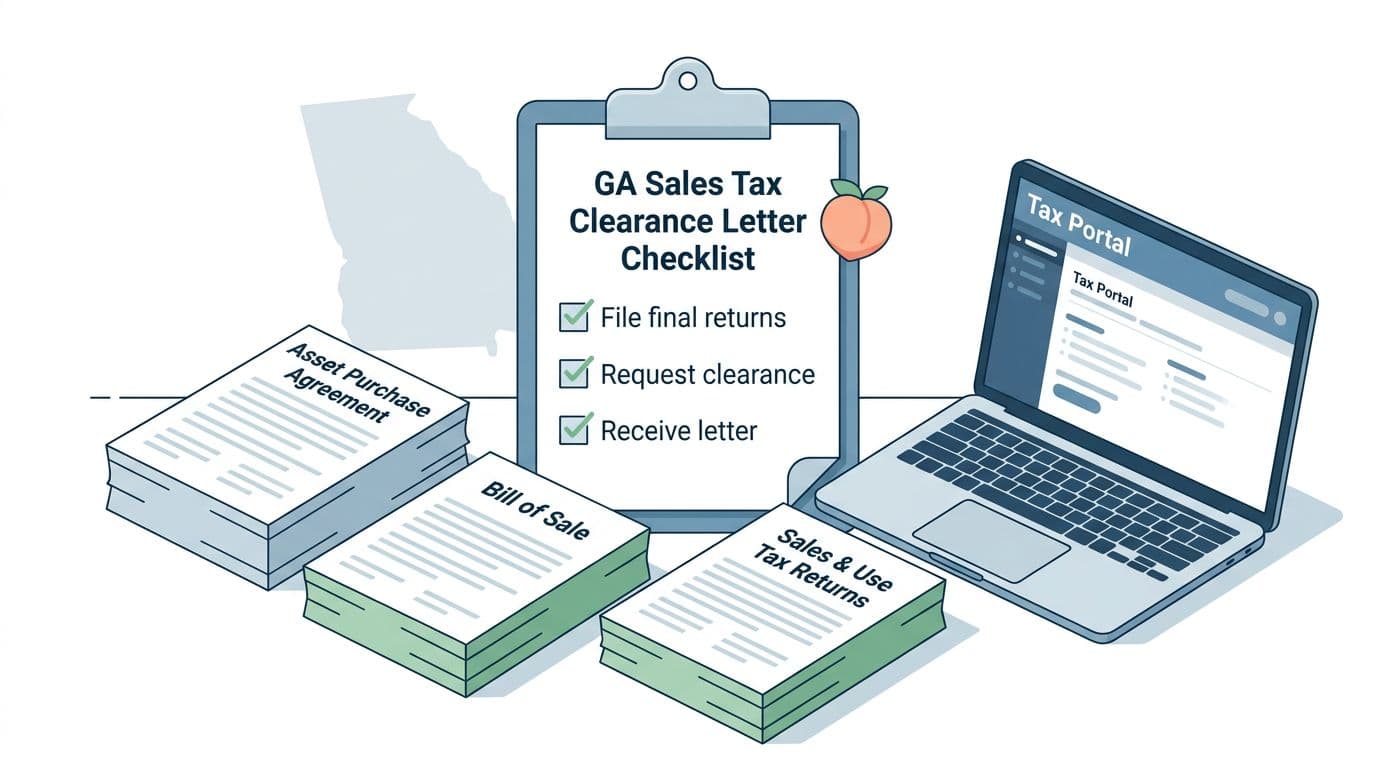
An AI-created illustration of a closing table setup with a Georgia tax clearance checklist and core sale documents.
In plain English, a Georgia sales tax clearance letter, also known as a tax clearance certificate or certificate of compliance, is your receipt from the Georgia Department of Revenue (DOR) that your accounts are clear. For many transactions, it’s the cleanest way to show you don’t have unpaid sales tax (or other state tax balances) hanging around the business.
Buyers care because Georgia tax laws can push risk onto the successor through successor liability if unpaid taxes aren’t handled. That’s why experienced attorneys often point to the state rule on final returns and successor withholding, which you can read in Georgia Code § 48-8-46. The short version is simple: if the seller owes sales tax and the buyer doesn’t protect themselves, the state can come looking.
This comes up constantly in business asset purchases, which are common when a Business For Sale listing involves equipment, inventory, vehicles, and goodwill, but not the old entity’s tax liability. It also shows up in equity sales, because buyers still want proof you’ve been filing and paying like you should; they often verify this by checking the Georgia sales tax number for filing history.
Real estate can add another layer. If the deal includes CRE (maybe Commercial Real Estate for sale, or a property plus operating company), the closing can be bigger and more formal. If the buyer is taking over a location under CRE for Lease terms, the landlord paperwork is its own puzzle. Either way, tax clearance is part of making the transfer feel safe.
If a buyer can’t get comfortable with tax exposure, they don’t “wait and see.” They reduce price, change terms, or walk.
For a broader view of the sale timeline and what buyers expect before they sign, see How to Sell a Business in Georgia.
Pre-closing checklist: what to clean up before you request clearance
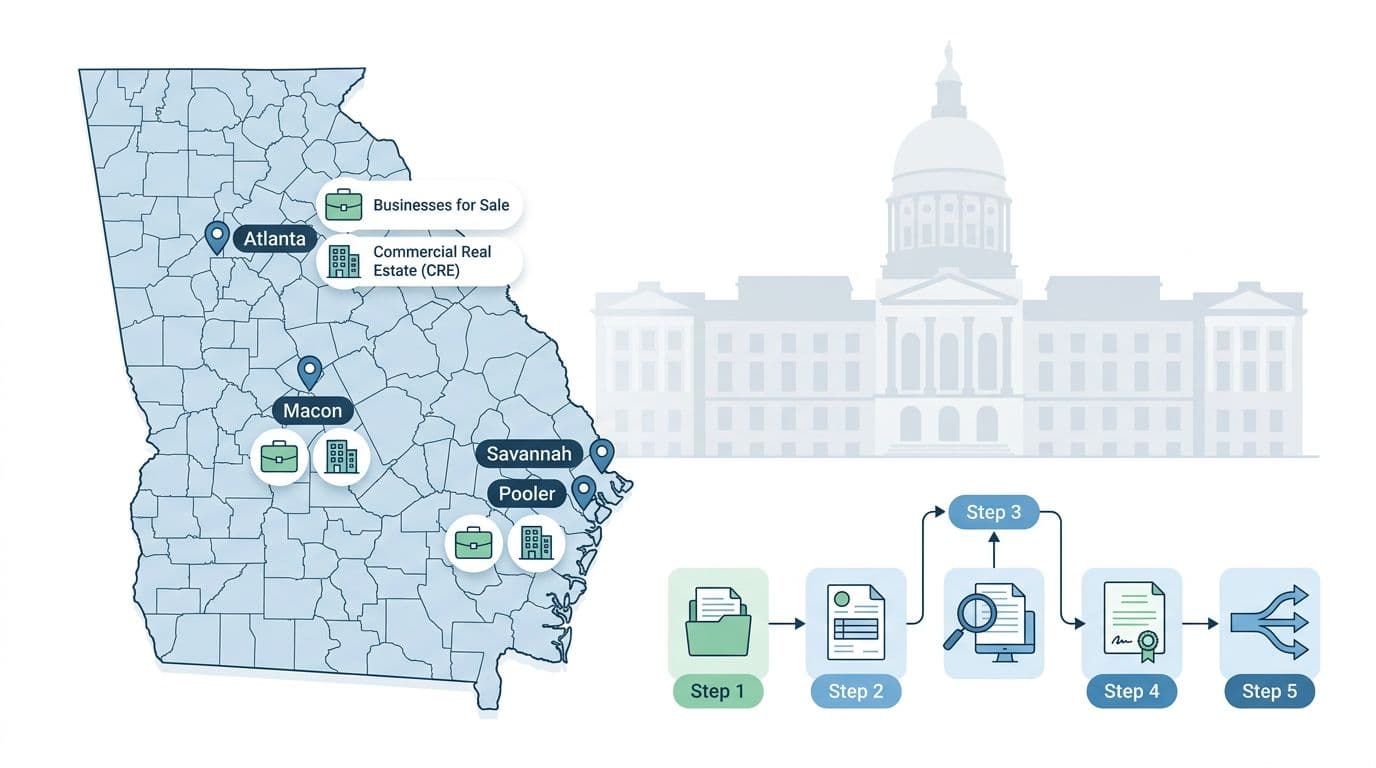
An AI-created infographic showing a simple Georgia clearance flow and common business sale hubs.
Most clearance problems aren’t “big tax fraud” problems. They’re small gaps that turn into big delays. A missing period, a payment posted to the wrong account, an old location still open in the system, that kind of thing.
Before you request the letter, get these items straight to clear any outstanding tax liabilities:
- All sales and use tax returns filed through the most recent period that’s due. If you’re unsure what applies, this Georgia sales and use tax guide is a helpful refresher on how sales tax works in practice.
- All balances paid, including penalties and interest if they exist, as well as withholding taxes and unemployment tax. A $43 balance can block clearance just as fast as a $43,000 one.
- Business details match across filings, bank records, and the purchase agreement (legal name, EIN, address, account numbers).
- Tangible personal property verified, including exemption certificates such as the ST-5 Certificate of Exemption and resale certificate. Documentation is critical here for inventory verification, especially in cases involving nonprofit organizations or a manufacturing exemption.
- Final return timing planned if the business is closing or changing hands mid-period. Don’t wait until the day before closing to think about final filings.
- Supporting proof saved for audit compliance, like confirmation pages, payment receipts, and any DOR messages.
One quick way to keep everybody aligned is to decide who owns what task early. This table sets expectations without turning the deal into a blame game:
| Item to verify | Seller provides | Buyer/CPA verifies | Why it matters at closing |
|---|---|---|---|
| Filed sales tax returns | Yes | Yes | Missing periods often trigger denial |
| Payment confirmations | Yes | Yes | Prevents “paid, but not posted” surprises |
| Open tax accounts/locations | Yes | Yes | Old locations can block clearance |
| Deal structure (asset vs equity) | Yes | Yes | Drives risk, reps, and holdbacks |
| Inventory and taxable assets | Yes | Yes | Helps model sales tax and exemptions |
If your business includes vehicles or equipment, the asset list gets more complex fast. That’s common in logistics-heavy markets like Pooler, Savannah, Macon, and Brunswick. This related guide on selling a business with a fleet explains how buyers think about transfer risk when a lot of “stuff” moves with the sale.
Also, if your transaction includes Commercial Real Estate for Lease, talk about assignment terms early. A buyer who feels squeezed by a lease will push harder on tax protection too. It’s all connected.
How to Submit a Tax Clearance Request in Georgia Tax Center (plus the backup option)
As of March 2026, most sellers submit a tax clearance request online through the Georgia Tax Center (GTC). The process is simple, but timing still matters because the clearance letter (also known as a letter of good standing or certificate of tax standing) is typically available the next business day, not instantly.
Here’s the practical path most closings use:
- Log into Georgia Tax Center (GTC) for the business, which includes sales tax ID verification.
- Choose More, then find Request Tax Clearance Letter.
- Submit the request and save the confirmation.
- Check back the next business day with the Georgia Department of Revenue to view and print the letter, and expect a mailed copy as well.
Two important points: the request has no fee, and the review by the Department of Taxation checks for missing filings and balances across the accounts tied to the taxpayer. So even if you’re focused on sales tax, other open issues can still block the letter.
Sometimes a deal team asks about older, form-based options. The Georgia Department of Revenue still publishes an application form used for requesting a clearance certificate in certain situations (note that while tax clearance comes from the DOR, corporate status is handled by the Secretary of State), which you can see here: Georgia DOR TSD-10 tax clearance application. Even if you request online, that PDF is a useful reference for what information DOR expects and how clearance hinges on filed returns and paid balances.
Plan for clearance like you plan for wiring funds: you don’t want “next day” to land on the morning of closing.
Finally, buyers should build this into their due diligence checklist. When you’re reviewing Businesses for Sale, a seller who can produce clearance quickly often signals something bigger: organized records and a clean operating habit. If you’re actively looking, start with Businesses for Sale in Georgia and ask early what the seller can provide for tax and licensing.
Conclusion
A Georgia sales tax clearance letter isn’t just paperwork, it’s peace of mind for both sides. When you file missing returns, clear your sales and use tax liability, and request the letter early, you keep momentum and protect the value you worked for. If your deal also includes CRE considerations, like Commercial Real Estate for sale or a location under Commercial Real Estate for Lease, tight documentation matters even more. Handle clearance before emotions run hot at the closing table, and you’ll walk away with a cleaner, calmer finish.
We are Members of the Georgia Association of Business Brokers and Realtors, Commercial Alliance, Georgia Association of Realtors, and National Association of Realtors