
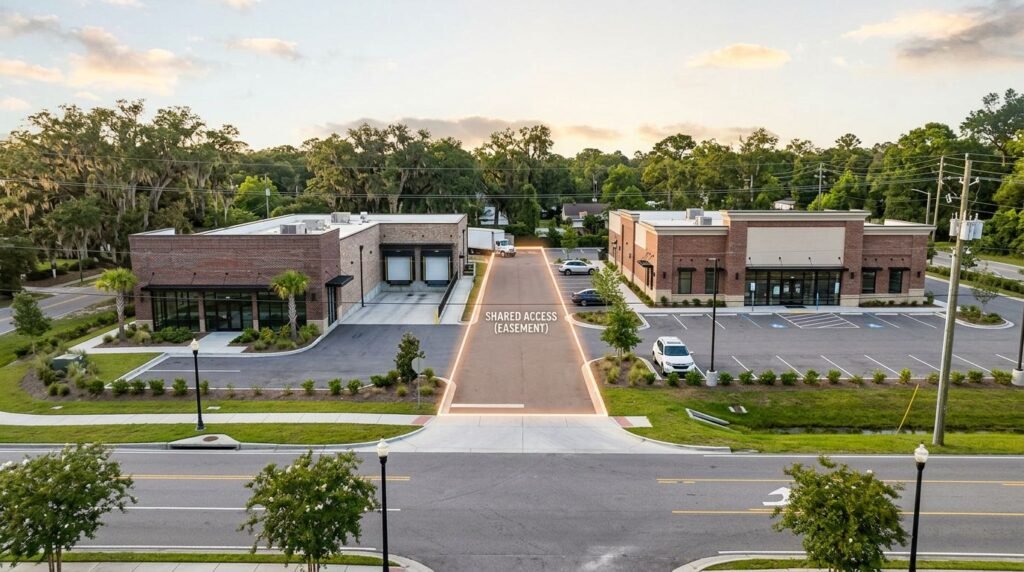
Purchasing commercial real estate in the City of Savannah can look like a clean deal right up until you discover the loading entrance or access route belongs to a neighboring property owner. That is not a small footnote. It can change parking, delivery flow, expansion plans, financing, and the property’s resale story.
When reviewing commercial property easements Savannah buyers should treat the title work and survey like the blueprint for the deal. The building matters, of course. So does every strip of land that somebody else has a legal right to use.
Before you fall in love with the location, make sure you understand who has rights on the ground beneath it.
Key Takeaways
- An easement gives a non-owner a legal right to use part of a real property for a defined purpose.
- Access, utility, drainage, parking, and shared-drive easements can all affect the value of commercial properties.
- Recorded documents, the title commitment, and a current survey must tell the same story.
- A deal can still work with an easement, but the terms must fit your intended use.
- In Savannah and Chatham County, city documents and county land records may both matter.
Commercial Property Easements Savannah Buyers Should Review First
An easement is not ownership. It is a right to use real property that belongs to another property owner. Think of it as a lane across your land that may look ordinary today, but carries legal weight long after closing.
For a buyer of retail space, a warehouse, an office building, or land for redevelopment, that lane can become the whole deal. Can tenants reach the front door? Can trucks turn safely? Can you add parking? Can a utility provider dig through the back portion of the site when repairs are needed?
Georgia easements can arise through a written grant, a reservation in a deed, a recorded plat, long-term use, or court action. The details vary, which is why a vague reference in a title commitment deserves a real answer. A helpful overview of how Georgia easements work is a good starting point, but your purchase needs property-specific legal review.
The language to watch is plain but important:
- Dominant property is the parcel that benefits from the easement.
- Servient property is the parcel burdened by it.
- Non-exclusive means the owner may retain use of the area, subject to the easement.
- Perpetual means the right does not have a scheduled expiration date.
- Ingress and egress covers entering and leaving the property, usually by vehicle or foot.
A shared drive is not automatically a problem. A shared drive without clear maintenance duties, turning rights, and uninterrupted access can be.
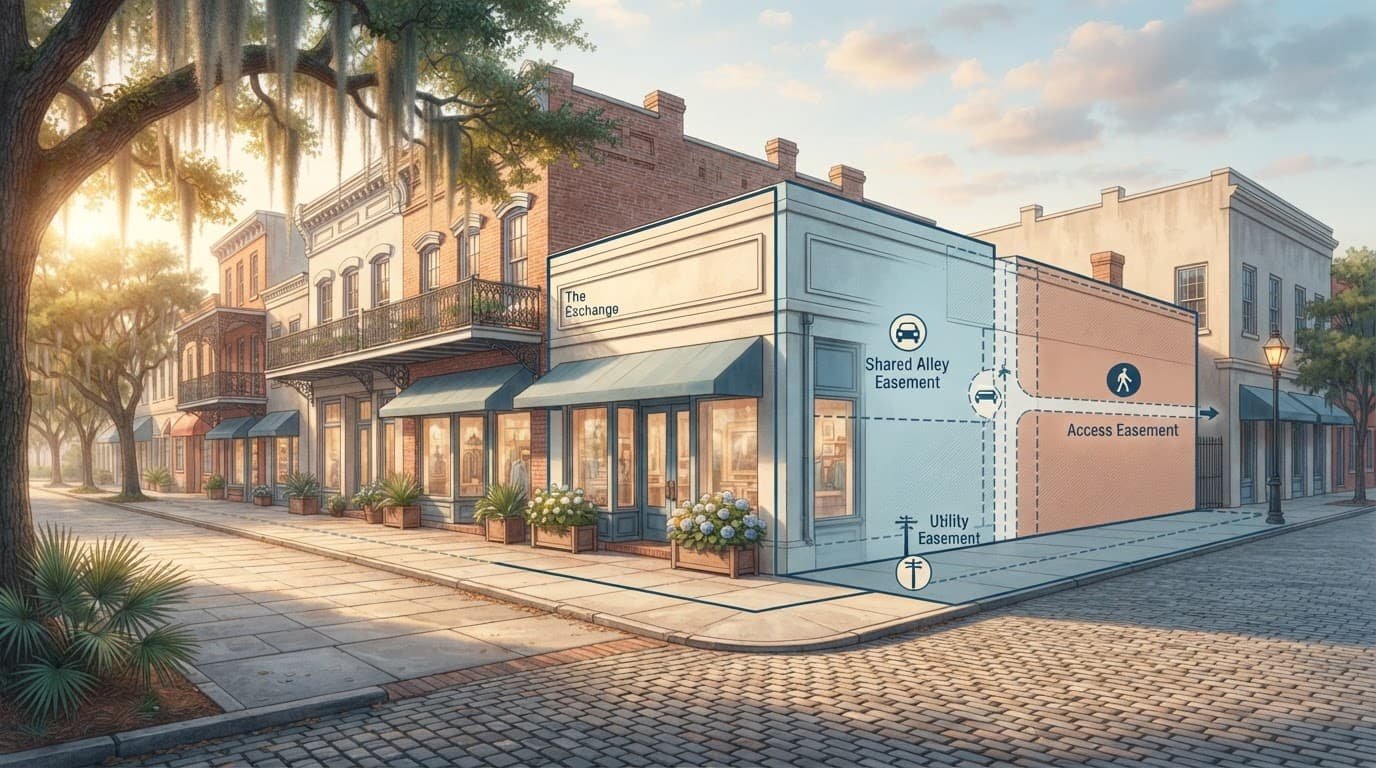
A Savannah deal may involve a downtown service alley, a shared drive near Dean Forest Road, a utility corridor along an industrial site, a historic district carriage path, or a public right of way managed by the City of Savannah. Each one has a different impact. Don’t let the word “easement” get treated like boilerplate.
The Easements That Affect Commercial Operations
Access and ingress-egress rights
Access easements are often the first issue to review because they affect daily business. A parcel may rely on a neighboring tract for a driveway, a curb cut, an internal road, or truck access. If that right is too narrow, limited to passenger vehicles, or limited to one direction, an industrial buyer in our active regional industrial market may have a major problem.
Savannah’s City of Savannah agenda materials include a Dean Forest Road agreement granting a non-exclusive, perpetual easement for vehicular ingress only. That phrase, “vehicular ingress only,” matters. It may not include egress, utility rights, parking, pedestrian movement, or the right to widen the route.
For a buyer considering Commercial Real Estate for sale near the Port of Savannah, rail, or surrounding logistics infrastructure, ask practical questions. Is the route wide enough for the vehicles you need? Who can block it during construction? Is there a gate? Does the easement allow signage, lighting, or repairs?
Georgia law also provides a route for a landlocked owner to seek a private way in Superior Court. Under O.C.G.A. Section 44-9-40, a private way may not exceed 20 feet in width. That statutory remedy is not a substitute for buying a site with documented, workable access.
Utility and drainage easements
Utility easements are common, especially around larger commercial parcels. Georgia Power, telecom providers, water, sewer, and gas companies may have the right to access a defined strip of land. You may still use the area, but not in a way that blocks their rights.
That can rule out a building addition, a permanent dumpster enclosure, mature landscaping, or certain drainage improvements. On a tight site, a 15-foot utility strip can eat up more usable land than buyers expect.
Drainage easements deserve the same attention. Coastal weather does not care about your site plan. If water must flow across the parcel, you need to know where it goes, who maintains the system, and whether your planned improvements change that flow.
A City of Savannah document for property on Coffee Bluff Road granted Georgia Power easement rights over city-owned land. Sometimes, crossing a public right of way requires an encroachment agreement to keep utility lines or signs compliant. It is a local reminder that utility rights can be written broadly and tied to a particular corridor. Pull the actual exhibit. Don’t rely on a title exception that says only “easement recorded in Deed Book X.”
Parking and reciprocal easements
A retail center can depend on parking that sits across several parcels. A medical office may share entrances, lighting, stormwater facilities, and private roads. These arrangements are often governed by a reciprocal easement agreement, commonly called an REA.
The REA may set rules for parking, delivery times, building setbacks, sign locations, costs, insurance, and future changes. If you are buying an outparcel, a former bank branch, or a freestanding restaurant, you need to know whether the deal comes with the parking and access your use requires.
This is also where commercial real estate leasing can get complicated across multi-tenant commercial properties. A tenant may assume the storefront comes with convenient parking or delivery access. The lease must line up with the owner’s actual property rights. You cannot promise what an easement does not permit.
Read the Survey, Not Just the Deed
The legal description in a deed tells you what you bought, but the survey shows where the real-world pressure points sit. Both are needed to protect your real property and ensure a sound investment in commercial real estate.
Order a current ALTA/NSPS land title survey when the transaction calls for one, and make sure the surveyor has the title commitment and all listed easement documents. Then compare the survey to your intended use. A title exception that seems harmless on paper may cut through the only spot where a future loading dock would fit.
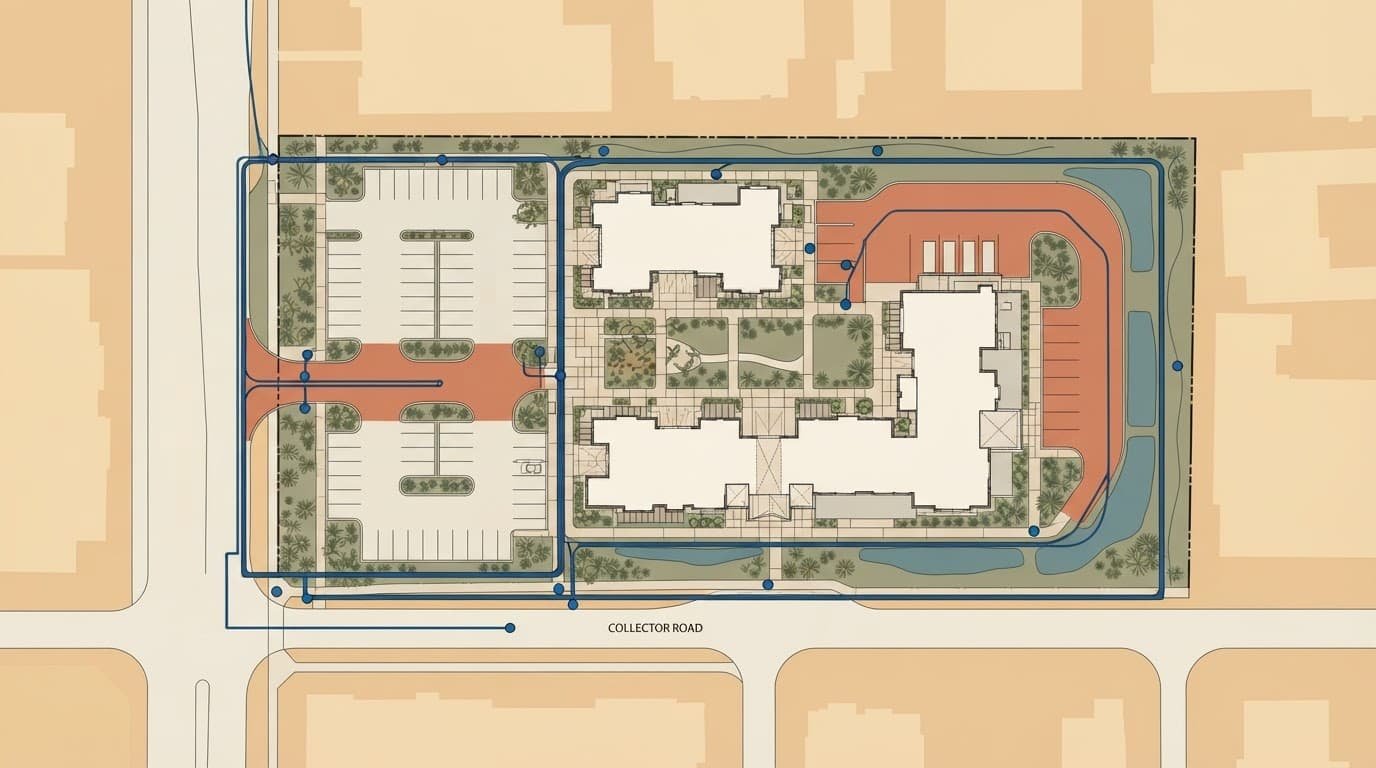
Bring your broker, attorney, surveyor, lender, and civil engineer into the conversation early because expert real estate services and multidisciplinary analysis reveal hidden risks. Your lender cares about marketable collateral. Your engineer sees grade, drainage, and buildable area. Your operations team sees a truck that cannot make the turn.
For properties located in Savannah, also look beyond the usual title file. Historic Savannah Foundation explains preservation easements and historic preservation guidelines that can restrict exterior changes or future development. These preservation easements are common throughout the historic district and surrounding historic neighborhoods. A beautiful building on a prime block can come with obligations that deserve respect before you price the project.
Questions to Ask Before You Remove Due Diligence
You don’t need to panic over every recorded easement. You do need straight answers before the inspection period ends.
Ask for the granting document, every amendment, a legible exhibit, and proof of any recorded release. Then review these points with counsel:
- What uses are allowed, and what uses are prohibited?
- Is the easement exclusive, non-exclusive, perpetual, or temporary?
- Who pays for paving, lighting, drainage, landscaping, gates, and repairs?
- Can the easement holder relocate the route or install new facilities?
- Does it permit the vehicle size, hours, and access pattern your business needs?
- Will a new building, fence, sign, or expansion interfere with it, and does a commercial encroachment require a formal encroachment agreement, council approval, or specific zoning ordinance compliance from the City of Savannah before a property owner proceeds?
- Is there a default process or a dispute procedure?
Don’t assume an old easement has disappeared because nobody has used it lately. Georgia law recognizes that abandonment or nonuse can end an easement in some circumstances, but the facts must support it. The statute on abandonment and nonuse is not permission to ignore a recorded right.
A tax sale does not automatically wipe away valid easement rights either. If an express easement was recorded before the tax execution filing, Georgia law protects it in that setting. Old paperwork has a long memory, y’all.
Match the Property to the Business Plan
A buyer looking at a Business For Sale may focus on revenue, equipment, staff, and lease terms. If the business includes real estate, the property rights deserve equal attention. A successful operation can still suffer if the delivery lane is restricted or the parking agreement is shaky. Navigating these complexities successfully often requires reliable market intelligence and skilled investment sales advice.
The same thinking applies when reviewing Businesses for Sale that operate from leased commercial space. Confirm the landlord’s rights under any master easement agreement, especially since effective tenant representation and ongoing property management depend on clear access terms. A tenant’s use may be limited even when the suite itself looks perfect.
For investors assessing Commercial Real Estate for Lease, map the proposed tenant’s actual use before signing. This careful approach is particularly vital in the industrial market, where logistics and heavy vehicles dictate daily site utility. Good commercial deals leave room for daily operations, not only for a clean closing file.
Frequently Asked Questions
What is the difference between dominant and servient properties in a commercial easement?
The dominant property is the parcel that holds the legal right to use the easement, while the servient property is the parcel that is burdened by it. Understanding this distinction helps buyers determine whether they are gaining or restricting operational control.
Can an old commercial easement in Savannah expire due to non-use?
In Georgia, non-use alone rarely terminates an easement automatically. Proving legal abandonment requires meeting strict statutory standards, so buyers should never assume an unused easement has disappeared without proper legal review.
How do historic preservation easements impact commercial properties in Savannah?
Historic preservation easements often restrict exterior alterations, structural changes, or redevelopment plans. These agreements are common in Savannah’s historic districts and require careful review alongside standard title and survey documents.
A Clear Easement Review Protects the Deal
The right easement can make a property more useful. It can secure a second entrance, support shared parking, or bring utilities to a site that needs them. The wrong one can turn a promising purchase into a costly compromise.
When reviewing commercial property easements Savannah buyers should look past the building and study the rights attached to the land. Evaluating access, utility rights, and preservation easements for historic preservation secures long-term value in commercial real estate. When you rely on professional real estate services, any property owner navigating real property in the City of Savannah can move forward with confidence and expert real estate services that leave no surprises waiting at the driveway.
We are Members of the Georgia Association of Business Brokers and Realtors, Commercial Alliance, Georgia Association of Realtors, and National Association of Realtors