

Buying a business without checking the certificate of occupancy is like buying a truck without opening the hood first. Issued by the local building department, this critical legal hurdle may look fine from the curb, but one missed issue can stall your opening, your financing, or both.
If you’re reviewing a georgia certificate occupancy checklist before closing, you’re already thinking like a smart buyer. That matters whether you’re buying a retail shop in Savannah, a restaurant in Pooler, or office space in Atlanta. Let’s get into what needs a close look before you sign.
Key Takeaways
- A Georgia Certificate of Occupancy (CO) confirms zoning compliance and legal use for your business type—always verify if a new one is needed for changes in tenant, owner, business name, or use, as local rules vary by city or county.
- Request the current CO, permit history, and as-built plans from the seller; check for open permits, code mismatches, or unapproved work to avoid deal-stalling surprises.
- Build time into your deal for inspections (fire, life safety, etc.) and extras like health department approval for restaurants—contact the local building department early and tie CO approval to your contract.
- Don’t assume the prior tenant’s CO carries over; even without remodels, new ownership often triggers review, especially in places like Atlanta, Savannah, or DeKalb County.
Why a Certificate of Occupancy Can Make or Break the Deal
A certificate of occupancy, often called a CO, confirms zoning compliance and that the space can legally be used for a specific business type. In Georgia, that usually matters for new construction, major remodels, changes in use, and often a change in tenant, owner, or business name.

Here’s the catch: state code sets the floor, but cities and counties run their own process. That means a clean deal in Macon may still need different paperwork in Savannah or Atlanta. For example, DeKalb County’s certificate of occupancy page says even an existing commercial space can need building permit review and a life safety inspection to ensure Georgia fire safety law compliance, even when no work is planned.
That surprises buyers all the time. They assume the last tenant’s approval carries over. Often, it doesn’t, and building code violations can surface to stall the entire deal.
Don’t confuse “the old tenant operated there” with “your business can open there tomorrow.”
A few common triggers show why this matters:
| Deal situation | CO risk to check |
|---|---|
| Buying an existing retail store | New owner or business name may trigger a new CO |
| Taking over a former boutique for a café | Change of use may require plans, inspections, and health review |
| Leasing office space with no remodel | Local office may still require a new CO review |
| Buying a building with the business | Old permits or finals may still be open |
The bottom line is simple. A certificate of occupancy isn’t clerical fluff. It’s part of due diligence, right beside rent, taxes, and cash flow.
A Practical Georgia Certificate Occupancy Checklist for Buyers
When buyers scan Businesses for Sale, they often focus on revenue first. Fair enough. Still, the space itself can be the hidden problem, especially with occupancy permit requirements. This short checklist helps you navigate the permit application process and find trouble early, before it turns into lost weeks.
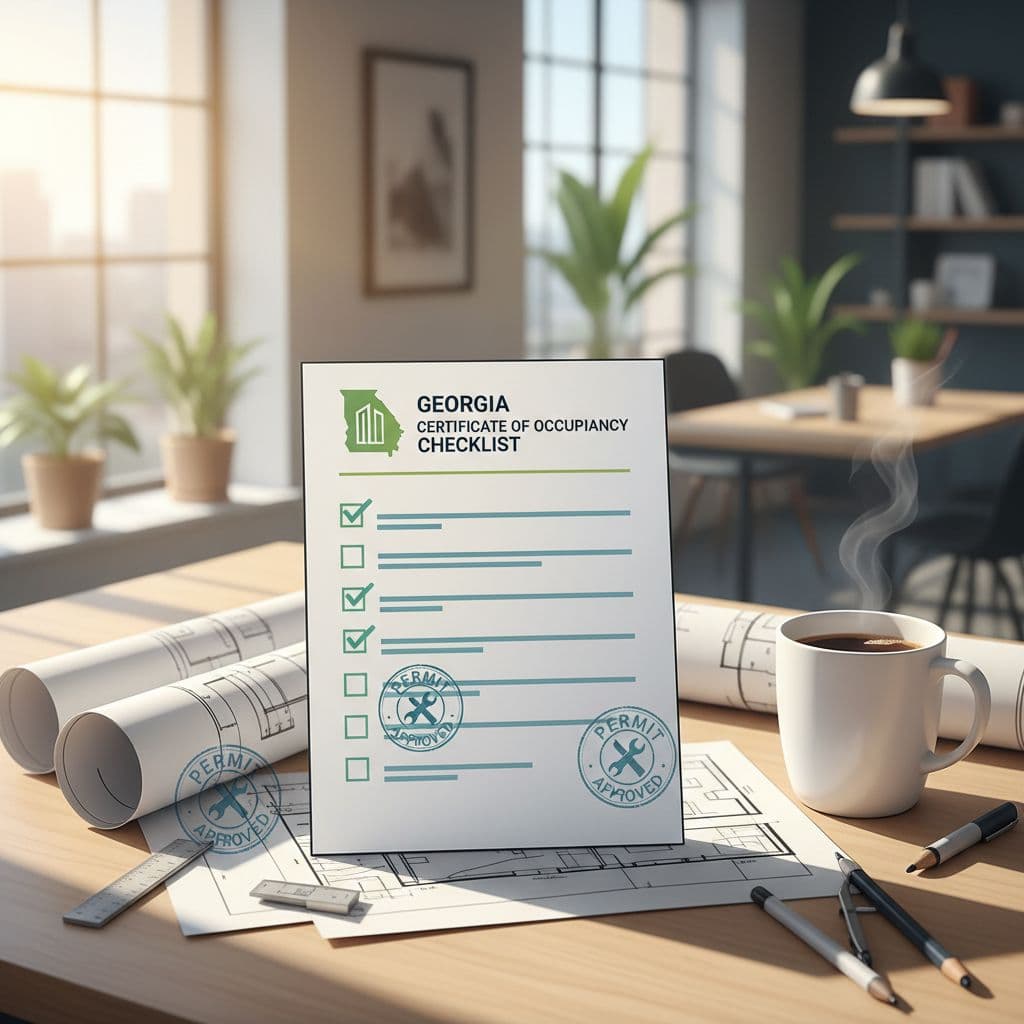
Many local offices ask for similar basics. The Columbus commercial CO checklist is a good example, because it highlights documents buyers often forget, such as a lease, photo ID, and proof that the signer has authority to apply.
- Confirm the exact use of the space for the certificate of occupancy. Retail, office, restaurant, assembly, and storage uses don’t get treated the same. A former clothing shop may not be approved for food service.
- Ask whether a new certificate of occupancy is required for your deal. In many Georgia jurisdictions, a new tenant, new owner, or new business name can trigger a fresh review.
- Request the current certificate of occupancy and permit history from the seller or landlord. Look for old open permits, failed final inspections, or work done without approval.
- Match the floor plan to reality and verify energy code compliance. If walls moved, exits changed, occupancy loads shifted, or the building footprint changed requiring as-built surveys, the paperwork may no longer match the space.
- Check for extra approvals tied to your industry. Restaurants often need health department approval, backflow preventer test, grease review, fire clearance, and compliance with accessibility requirements ADA. If you’re buying food and beverage space, a certificate of occupancy and alcohol license are separate tracks. This guide on Savannah beer and wine license for restaurant buyers explains why that matters.
- Verify site control before you apply. Cities usually want a deed, signed lease, or lease assignment. If you’re reviewing CRE for Lease or other Commercial Real Estate for Lease options, don’t wait until after closing to sort that out.
- Build time into the deal. The final inspection, which culminates several sub-inspections including the structural final inspection, electrical final inspection, plumbing final inspection, and mechanical inspection, along with corrections and re-inspections can drag. Write your LOI and purchase agreement with room for certificate of occupancy approval, especially if you plan to open fast.
Some buyers also need sealed plans. Smaller offices or retail spaces may qualify for an affidavit in certain areas, while larger spaces and restaurants often need full plan review. That’s why calling the local building office early saves money.
Frequently Asked Questions
Does buying a business in Georgia always require a new Certificate of Occupancy?
No, but it’s common for new owners, tenants, or business names—even without changes to the space. Local building departments like those in DeKalb or Cobb Counties often require review for zoning, fire safety, and use compliance. Always call ahead to confirm and avoid assuming the old CO transfers.
What should be on a Georgia CO checklist before buying?
Key items include confirming the space’s approved use matches your business, requesting current CO and permit records, verifying floor plans against reality, and checking site control like a lease or deed. For restaurants, add health and grease trap approvals. Industry extras like ADA compliance or fire marshal sign-off are musts.
How long does it take to get a Certificate of Occupancy in Georgia?
It varies by jurisdiction and project scope, but expect weeks for inspections (electrical, plumbing, fire) and corrections—longer for changes in use or remodels. A temporary CO might bridge minor issues, but build 30-60 days into your LOI. Check open permits first to speed things up.
What if there are open building permits on the property?
Open permits can block a new CO until closed via inspections or corrections. Review the seller’s permit history early; unpermitted work might need as-builts or re-inspections. This is due diligence gold—tie resolution to your purchase agreement.
Can I skip the CO check if the business is already operating?
No—the prior operation doesn’t guarantee your setup passes muster, especially with use changes or local updates. Cities like Savannah or Atlanta enforce fresh reviews. A quick call to the building department protects your opening timeline and financing.
Where Business Buyers Get Tripped Up Most Often
The biggest mistake is treating the building like a backdrop. It isn’t. Whether you’re buying a Business For Sale, hunting for Commercial Real Estate for sale, or comparing CRE with a leased option, the use of the space has to fit your plan. Commercial building inspections are a key part of due diligence here.
A glossy listing doesn’t change that. If you’re reviewing a Savannah business for sale including commercial building, the certificate of occupancy file deserves the same attention as the tax returns. The same goes for standalone Commercial Real Estate for sale that used to house a different kind of tenant.
Location adds another layer. In Savannah and Pooler, turnover in retail and restaurant sites can tempt buyers to move fast. Atlanta buyers often deal with older mixed-use buildings, which can bring added permit questions and a need to contrast commercial needs with residential occupancy standards. In Macon, Brunswick, Dublin, and Waycross, the local process may be simpler, but it still isn’t automatic. Call the local building department or code enforcement officer before you promise an opening date.
Fire marshal approval is another snag point. Cobb County’s certificate of occupancy guidance is a good reminder that fire marshal approval is often part of the final inspection at the end of construction, not a side note, to meet Georgia state minimum standard codes.
Some deals can move with a temporary certificate of occupancy if life-safety items pass the final inspection and only minor work remains. Check open building permit records first. Still, don’t count on that unless the local building department says yes in writing.
A clean close feels good. A clean close with legal certificate of occupancy feels better.
The smartest next move is simple: before you buy, call the local building department, ask what triggers a new certificate of occupancy, and tie that answer to your contract. Coordinate with the business license department to ensure zoning compliance is fully verified, and review past building permit records. That’s how you protect your timeline, your cash, and your peace of mind.
We are Members of the Georgia Association of Business Brokers and Realtors, Commercial Alliance, Georgia Association of Realtors, and National Association of Realtors