
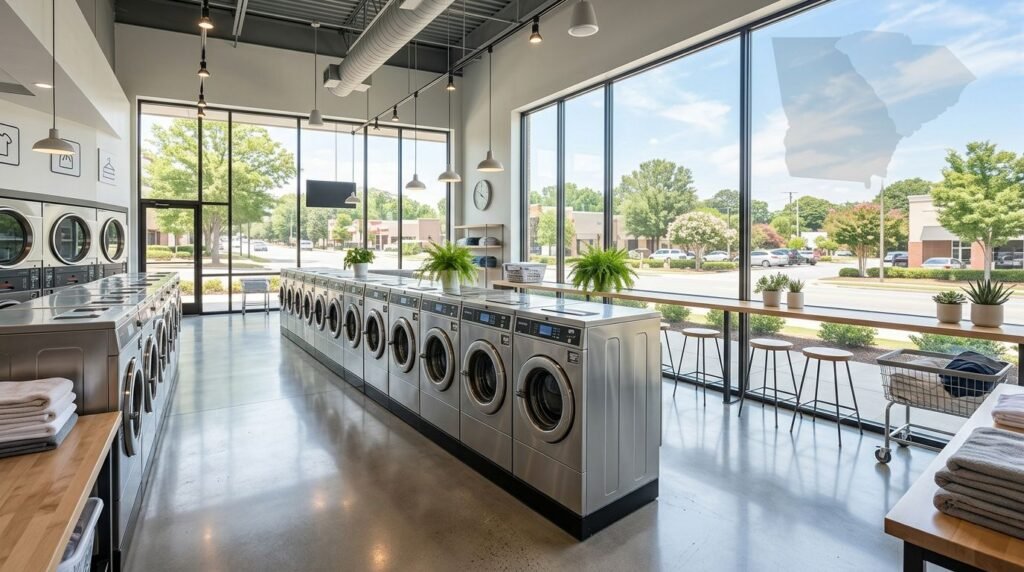
Steady cash flow sounds great, but a laundromat can fool buyers fast. Clean floors and shiny machines don’t tell you much about rent, repairs, or real profit.
If you’re looking at ways to buy laundromat Georgia or expand into South Carolina, start with the deal underneath the listing. These are dependable businesses when the numbers, lease, and location all work together.
Why Georgia and South Carolina attract laundromat buyers
Georgia gives buyers more room to shop. In April 2026, public listing sites showed about 28 laundromats for sale in Georgia, versus about 8 in South Carolina. That means more Businesses for Sale around Atlanta, Savannah, Macon, and nearby growth corridors.
Prices vary, but the public market gives a useful snapshot. Georgia listings often sit between about $400,000 and $600,000 for mid-sized stores, with some lower and some much higher. South Carolina has fewer options, yet the range is still wide, from startup-style opportunities around $59,500 to established stores near $595,000. You can watch the current market on Georgia laundromat listings.
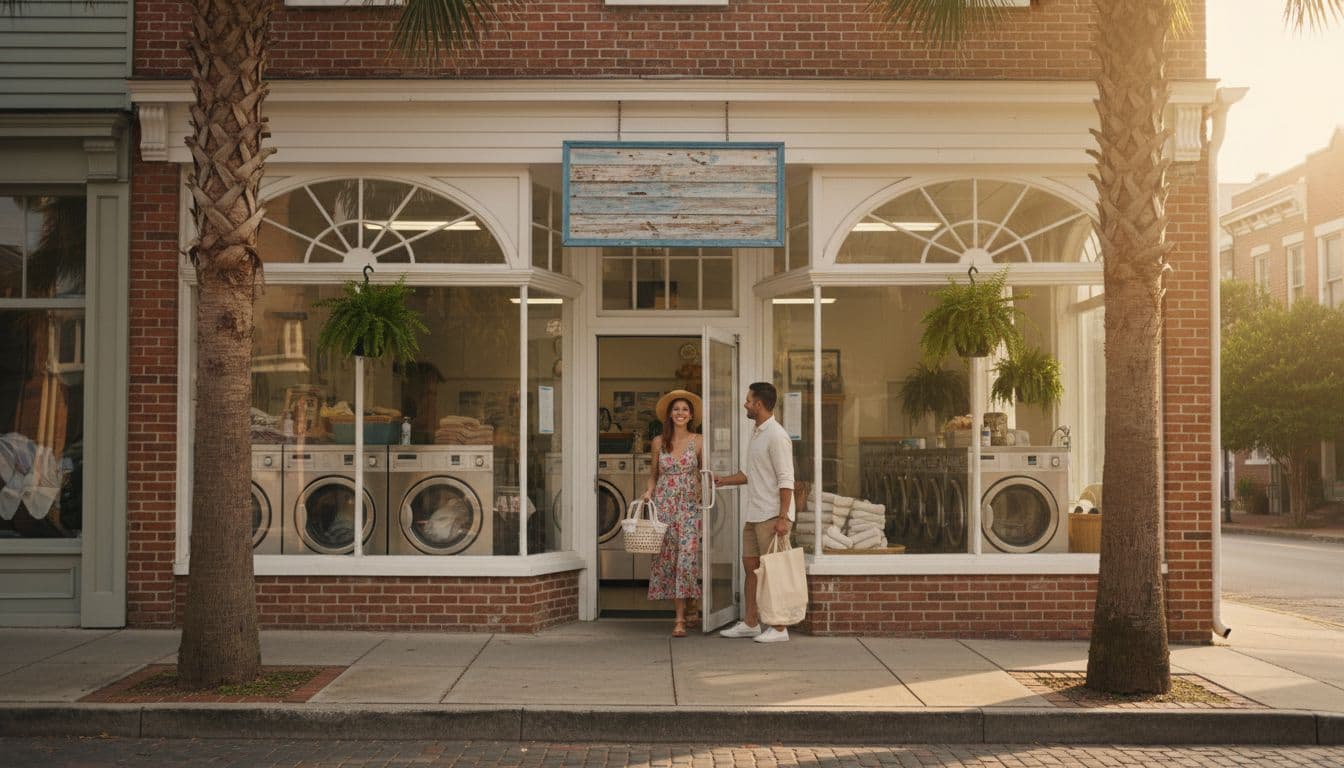
Location matters more here than many first-time buyers expect. A strong store in Pooler may ride rooftop growth from Savannah. A neighborhood laundromat in Warner Robins or Macon may benefit from steady local demand and less flashy competition. Meanwhile, Brunswick, Dublin, and Waycross can offer lower entry costs, though buyer traffic is thinner and resale may take longer.
South Carolina is tighter, but that can be a plus. Areas near Hilton Head and Charleston attract buyers who want strong income demographics, tourism spillover, or dense rental housing. A listing may look like a simple Business For Sale, yet the value often comes from the lease, parking, and visibility, not only from last year’s sales.
Due diligence is where a good laundromat deal holds up, or falls apart
A laundromat is a machine business wrapped inside a utility bill. Because of that, your review has to go past the profit and loss statement.

Start with four checks, and don’t rush them:
- Review gross sales against bank deposits, card reports, and utility use. If turns per day don’t fit the water and gas bills, something is off.
- Inspect the equipment. Ask for machine ages, repair logs, parts history, and recent upgrades. Newer card systems can help value, but neglected plumbing can wipe that out.
- Read the lease line by line. If the seller does not own the site, you’re buying a business that sits on CRE for Lease. That means rent bumps, renewal options, and assignment rules can shape the whole deal.
- Study the trade area. Apartments, student housing, military families, and older homes without washers all matter more than broad population counts.
If the lease has only a short term left, the “great deal” may stop being great on day one.
This is where CRE becomes a real factor. Some stores come with Commercial Real Estate for sale, while others are in strip centers with Commercial Real Estate for Lease terms that deserve close review. A long, assignable lease can work well. So can owner-occupied property. What hurts buyers is paying a premium without understanding which one they’re getting.
You can see that difference in listings such as an established Georgia laundromat on Crexi. When real estate is part of the package, check roof age, parking, drainage, zoning, and deferred building work, not only the washers and dryers.
Financing, negotiation, and closing without overpaying
Most buyers use SBA lending, seller financing, cash, or a mix of all three. Lenders usually want tax returns, a clean lease, equipment lists, and proof that the business can support debt. Therefore, weak books limit your options fast.
Price is only one piece of the deal. You should also negotiate training time, parts inventory, repair credits, security deposits, and whether the seller will stay available after closing. In Atlanta, a long lease in a busy center may justify a higher price. In Pooler or Hilton Head, high traffic helps, but high rent can quietly eat the upside.

Closing also has local wrinkles. In both Georgia and South Carolina, confirm that the lease can transfer, tax filings are current, equipment liens are cleared, and utility accounts can move smoothly. If the seller owns the property, confirm whether you’re buying only the laundry operation or both business and building. That split changes everything.
Y’all don’t need a flashy listing. You need a store with honest books, durable machines, and a lease that still makes sense three years from now. If you’re comparing markets, keep an eye on South Carolina laundromat listings beside Georgia inventory so you can judge pricing in context, not in isolation.
A smart laundromat purchase is rarely won on emotion. It’s won in the lease, the utility history, and the condition of the equipment.
That is the heart of a strong deal in Georgia or South Carolina. Buy the cash flow, but verify the real estate story behind it.
We are Members of the Georgia Association of Business Brokers and Realtors, Commercial Alliance, Georgia Association of Realtors, and National Association of Realtors