
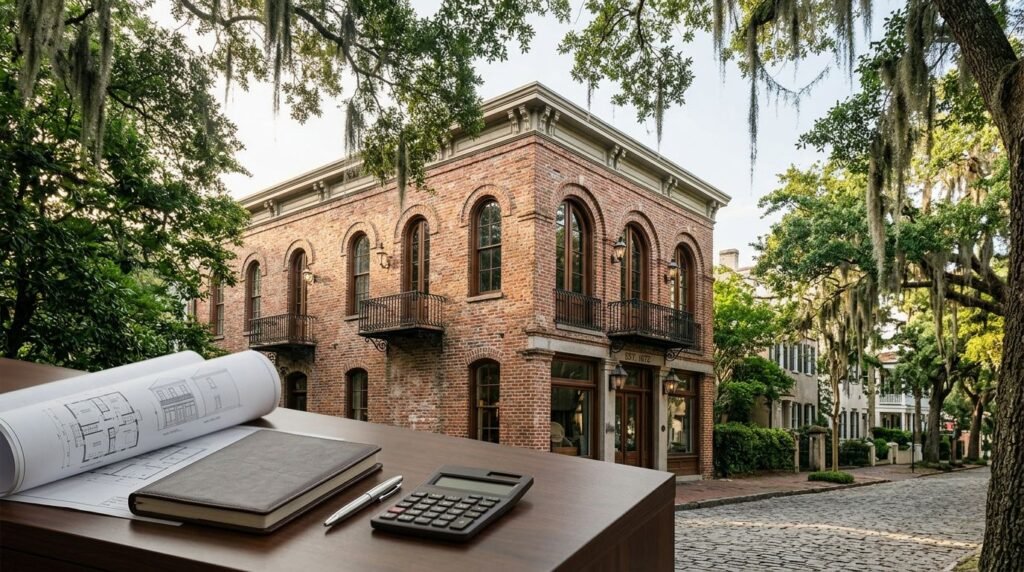
A commercial purchase can look like a sure thing until the appraisal comes back lower than the contract price. Then the financing math changes, the seller gets nervous, and everybody has to decide whether the deal still holds water.
For those navigating the Savannah market, Georgia commercial property appraisals are more than just a routine bank requirement. They serve as the lender’s independent answer to one vital question: Is this property truly worth the capital being borrowed against it? While the scale of the market in Atlanta Georgia is significantly larger, local buyers often find that they need highly specialized commercial real estate appraisal services to navigate the unique complexities and historic nuances of the Savannah area.
Get the appraisal process right early, and you protect your cash, your timeline, and your bargaining position.
Key Takeaways
- A property valuation, rather than the purchase contract, drives the final loan-to-value calculation during Georgia commercial property appraisals.
- Most federally related commercial real estate transactions exceeding $500,000 require a professional appraisal, though individual lenders may set stricter internal requirements.
- Factors such as current income, comparable sales data, and replacement costs significantly affect the overall commercial value of the asset.
- Organizing clean leases, rent rolls, operating statements, and detailed property records helps keep the underwriting process moving efficiently for Savannah buyers.
- A low appraisal result does not have to end a purchase agreement, provided the buyer has a clear and strategic response ready.
Why the Lender’s Appraisal Carries So Much Weight
You and the seller can agree on a price, but the lender does not have to agree with either of you.
When financing a warehouse near the Port of Savannah, a downtown mixed-use building, or a Pooler retail center, the lender orders an independent report during underwriting. The buyer usually pays for the report, but the lender is the client and intended user. This independence is a cornerstone of professional valuation management. An appraiser cannot have a financial stake in the sale or a seat at the loan approval table, ensuring that the process remains objective.
For federally related commercial real estate transactions above $500,000, an appraisal is generally required to maintain regulatory compliance. Lower-dollar deals may qualify for a written evaluation, but you should verify this before speaking with your lender. Different financial institutions have their own credit policies, property-type rules, and internal risk limits regarding the commercial real estate appraisal services they require.
Georgia appraisers work under standards set by the Georgia Real Estate Commission and Appraisers Board. The state’s appraisal standards set the professional guardrails for the work, ensuring consistency across the industry.
The contract price is a negotiation. The appraised value is the lender’s collateral decision.
That difference can feel frustrating, especially when a seller has a strong reason for their number. Still, a solid appraisal gives you a reality check before you put more money, time, and trust into the deal.
How Commercial Appraisers Reach a Value

A commercial appraisal is not a quick glance at a building or a simple guess. Instead, the appraiser performs a detailed property valuation by studying the asset, reviewing market evidence, and selecting specific analytical approaches that fit the property type.
The income approach often carries the most weight for leased property and is a fundamental component of investment analysis. It starts with gross revenue, subtracts operating expenses, and arrives at net operating income. The appraiser then applies a market-supported capitalization rate. A building with weak leases or rising expenses may appraise lower, even if its exterior looks sharp.
The sales comparison approach looks at recent transactions of similar properties. For example, a Savannah industrial property should be compared with relevant warehouse and port facility sales, not office buildings across town. Factors such as location, loading docks, clear height, parking availability, building condition, tenant strength, and the date of the sale all influence the final figure.
The cost approach estimates what it would cost to replace the improvements, then accounts for depreciation and current land value. This method can be particularly useful for newer assets and special-purpose buildings where there are few comparable market sales.
Appraisers also look beyond four walls to get the full picture. Flood zones, zoning regulations, site access, deferred maintenance, environmental concerns, and lease rollover dates can all change the valuation story. While a property near major logistics routes may command attention, it still requires solid income performance and market support to justify the purchase price.
Give the Appraiser a Complete Property File
The best appraisal file is organized well before the appraiser asks for it. Missing documents slow down the report, create unanswered questions, and can lead to conservative assumptions. Nobody wants that when a closing date is already on the calendar. Beyond just the appraisal process, keeping clean and accurate records is essential for meeting your ongoing financial reporting requirements.
For an income-producing property, gather these items early:
- Three years of operating statements and property tax returns, when available.
- Current rent roll, signed leases, amendments, renewal options, and tenant deposit details.
- Expense records for insurance, taxes, repairs, utilities, management, and capital improvements.
- Surveys, site plans, zoning information, environmental reports, and flood documentation.
- A list of recent upgrades, including dates, costs, permits, and warranties.
Keep the numbers honest. If a tenant receives free rent, pays below market, or plans to leave within a year, put it on the table. The appraiser will likely find it anyway.
Organizing these documents early also makes your subsequent work with advisory services or tax consulting professionals much smoother. When your financial data is already structured, it is easier to pivot from property acquisition to long-term tax planning.
A buyer’s personal financial statements and tax returns are usually for the lender, not the appraiser. Still, both tracks move at the same time. Your broker, lender, attorney, seller, and accountant need to stay in step. That is how we do business in Georgia, with clear communication and no last-minute surprises.
Timing, Cost, and the Financing Process
Most Georgia commercial appraisals take about two to four weeks to complete after the property inspection and the receipt of all necessary records. Complex assets often require more time for commercial appraisers to finalize their findings. This category includes properties like hotels, medical facilities, owner-occupied manufacturing sites, marinas, or any building with a complicated lease history.
Fees vary based on the property size, location, and overall complexity. A straightforward small commercial property typically costs less than a specialized industrial appraisal, which requires more exhaustive research and a broader market search. Always ask your lender about the expected fee and the appraisal ordering timeline when you submit your initial loan application.
Never order your own report and assume the bank will accept it. Most lenders must engage the appraiser through their own internal process to maintain independence. A report prepared for another party often fails to meet the specific scope, client, or independence requirements mandated by the institution.
Loan type also plays a significant role in the process. SBA financing comes with its own set of technical rules. For larger SBA real estate transactions, lenders generally require a report that adheres to the USPAP Standard Rule rather than a restricted report. These requirements serve as a form of institutional advisory, ensuring the valuation meets strict federal guidelines. If owner-occupied property is part of your purchase, the SBA 504 appraisal requirements are essential to review.
If you are weighing different loan structures, compare the differences between SBA 7(a) and 504 financing before writing your offer. The property value, business cash flow, working capital needs, and your down payment should all be discussed as part of a cohesive financial strategy.
What to Do When the Value Comes in Low
A low appraisal can feel like a brick wall, but most of the time, it is simply a fork in the road.
If the appraised value is below the contract price, the lender may reduce the loan amount. You may need to bring more cash to closing, renegotiate the price, revise the loan structure, or walk away under a properly written appraisal contingency.
Start by reading the report carefully. Are the square footage, lease terms, expenses, condition, or comparable sales accurate? If you identify factual errors, initiating formal appraisal reviews is a standard and effective next step. When challenging a report, you should rely on expert valuations to provide the documented evidence necessary to support your position. It is helpful to remember that many professionals in this field also manage complex Right of Way or Eminent Domain cases, demonstrating that their expertise extends far beyond standard commercial purchases. Keep in mind that a seller’s disappointment is not a valid reason for a reconsideration of value.
Buyers should also ask whether the gap comes from a temporary issue or a permanent one. A vacant suite with a signed lease about to begin may call for further discussion with the lender. Conversely, a declining rent roll, major roof replacement, or weak market comparables point to a harder truth.
Credit union requirements can differ from bank requirements. The NCUA commercial appraisal threshold update is one reminder that the lending institution and loan structure directly affect the valuation process.
Keep your head. Overpaying to save a deal can turn a proud purchase into an expensive lesson.
Match the Property Value to the Business Plan
A building and a business may change hands together, but they are not valued the same way. The real estate appraisal measures the physical property. In contrast, a business valuation focuses on earnings, assets, customer concentration, cash flow, and goodwill. These distinct valuation methods often intersect when dealing with Ad Valorem tax appeals or litigation support, where the precise separation of business operations from physical assets is vital for an accurate financial picture.
A listing labeled Business For Sale may include real estate, equipment, inventory, or only the operating company. Read the offering details closely. The same applies to searches that mix leasehold operations with owner-occupied properties. Buyers reviewing commercial real estate for sale should carefully compare long-term ownership costs against nearby CRE for lease options.
Understanding the broader commercial property market is essential before making a commitment. A property purchase builds equity, but it also ties up capital and places the burden of repairs, taxes, and occupancy risk squarely on your shoulders. Conversely, choosing commercial real estate for lease may preserve more cash for inventory, payroll, or business expansion.
The right choice depends entirely on your specific goals. A manufacturer might require total control over a facility, while a retailer testing a new Savannah location may prioritize flexibility. Before signing any binding documents, ensure you separate the value of the business from the value of the bricks, land, and lease rights. Trust me, making that distinction early can save your deal and provide clarity for your future operations.
Frequently Asked Questions
Can I hire my own appraiser for the bank to use?
Typically, no. Most lenders require that they engage the appraiser directly to ensure independence and compliance with federal regulations. Using a report prepared by a third party often fails to meet the specific scope, client, or internal requirements of your lending institution.
How long does a commercial appraisal typically take in Georgia?
Most commercial appraisals are completed within two to four weeks after the site inspection and the submission of all required property documentation. Complex assets like specialized industrial facilities or medical buildings may require additional time for the appraiser to conduct thorough market research.
What happens if my property appraises for less than the purchase price?
A low appraisal does not automatically kill a deal, but it does change the financing math. You may need to negotiate a lower price with the seller, bring additional cash to the closing to cover the gap, or utilize an appraisal contingency to walk away if the deal no longer makes financial sense.
Is an appraisal always required for a commercial purchase?
While many transactions exceeding $500,000 require a professional appraisal, smaller deals may qualify for a written evaluation depending on the lender’s internal risk policy. Always verify the specific requirements with your bank before proceeding with your loan application to avoid unnecessary delays.
A Clear Value Makes for a Stronger Purchase
The appraisal is not there to spoil a good commercial purchase. Instead, it serves to test whether the price, property income, and financing terms align with current market conditions.
By providing complete records, allowing sufficient time, and viewing the results objectively, you gain clarity during the high pressure of a closing. Reliable Georgia commercial property appraisals provide the factual foundation necessary to navigate these complex transactions. Ultimately, the best deals are built on a precise property valuation that holds up after the initial excitement wears off. By relying on expert valuations, you ensure that your investment is supported by data that creates a stronger, more secure purchase.
We are Members of the Georgia Association of Business Brokers and Realtors, Commercial Alliance, Georgia Association of Realtors, and National Association of Realtors