

A self-storage property can look almost too simple. Rows of doors, a gate, a small office, maybe a clean sign out front. But if you want to buy self-storage business well, the real story is in the numbers, the neighborhood, and the little details most buyers miss.
That’s why this asset class rewards patience. In Georgia and South Carolina, a strong storage deal offers recession resilience and can produce steady cash flow for years, but only if you buy the right self-storage facility, in the right pocket, at the right price. Let’s talk about how to do that without getting seduced by shiny pavement and fresh paint.
Key Takeaways
- Focus on secondary markets like Macon, Waycross, or Dublin in Georgia and South Carolina for hidden value—owner-run facilities with weak marketing and stale rents often beat glamorous primary-market deals.
- Underwrite like you’ll own it for ten years: demand three years of financials, verify NOI against deposits, target 80-90% occupancy with rent upside, and spot red flags in expenses or delinquencies.
- Choose the market first within a 3-5 mile radius, prioritizing local demand from apartments, businesses, or boats/RVs over proximity to your home; check competing supply and visibility.
- Inspect the dirt, doors, and documents thoroughly—roofs, flood risk, zoning, liens—while building a team of broker, attorney, lender, and inspector to avoid emotional mistakes.
- Make steady offers with proof of funds and clear terms; the best deals are boring, with clean records and steady cash flow that reward patience over flash.
Why Georgia and South Carolina keep attracting storage buyers
These two states make sense for storage investors because the self-storage industry thrives when people keep moving, downsizing, relocating for work, and starting small businesses. Storage unit businesses tend to do well anywhere life gets messy, and life gets messy everywhere. Moves. Divorce. Renovations. New apartments. Growing contractors. Boats. RVs. Overflow inventory.
What changes is the demand mix. Around Atlanta, you may see stronger demand tied to apartments, dense neighborhoods, and business inventory. Near Savannah and Pooler, you might find a blend of household storage, port-related business use, and steady residential growth. Along the coast, Brunswick and Hilton Head can bring more interest in vehicle, boat, or seasonal storage. In middle Georgia, places like Macon, Dublin, Waycross, and Warner Robins can produce quieter, less flashy opportunities with solid local demand.
That matters because your best deal may not be the one with the prettiest brochure. While real estate investment trusts (REITs) often target primary markets, it may be the owner-run facility in a secondary market like Macon or Waycross, the one with weak marketing, low online visibility, and rents that haven’t been touched in years. Through market analysis, investors should evaluate these areas to uncover such hidden value.
That’s the first mindset shift. You aren’t looking for glamour. You’re looking for a business that solves a local problem, day after day, with room to tighten operations and grow income.
Know what you’re buying before you chase listings
A lot of first-time buyers start with a broad Business For Sale search. Nothing wrong with that. But self-storage doesn’t fit neatly into the same box as a retail shop or a service route. To stay focused, define your buy box upfront, the key criteria like location, size, revenue, and risk that match your investor goals.
You’re buying three things at once: an operating business, a piece of commercial real estate, and a management system. If one of those pieces is weak, the whole deal changes. That is why broader Businesses for Sale marketplaces are useful for comparison, but not enough for decision-making.
If you’re still sorting through the field, take a look at businesses for sale in Georgia. It’s a helpful way to compare risk, cash flow, and pricing across industries before you narrow in on storage.
Also, don’t search in only one lane. An existing storage facility is marketed as a going concern. Others show up under Commercial Real Estate for sale. If you only use one filter, you’ll miss deals. The same goes for surrounding market research. Nearby CRE for Lease and Commercial Real Estate for Lease listings can tell you where contractors, e-commerce operators, and service businesses are clustering. Those tenants often become storage customers.
Then ask the bigger question: what kind of storage are you buying?
Drive-up units are simple and familiar. Climate-controlled units can lift rents, but they bring more mechanical risk. RV and boat storage may work well in coastal or highway-oriented markets. Fully remote operations can be profitable too, but only if the software, gate access, collections, and customer support are already in place.
Put plainly, you’re not buying a row of metal doors. You’re buying a local operating machine at a self-storage facility.
Choose the market first, then the facility
Think in three to five miles
Self-storage is a three-to-five-mile business. Most tenants rent close to home, close to work, or close to a route they already drive. That’s why a property with a Savannah mailing address can perform nothing like another facility a few exits away in Pooler. Same county, different customer habits. Same story in Atlanta, Macon, or Brunswick.
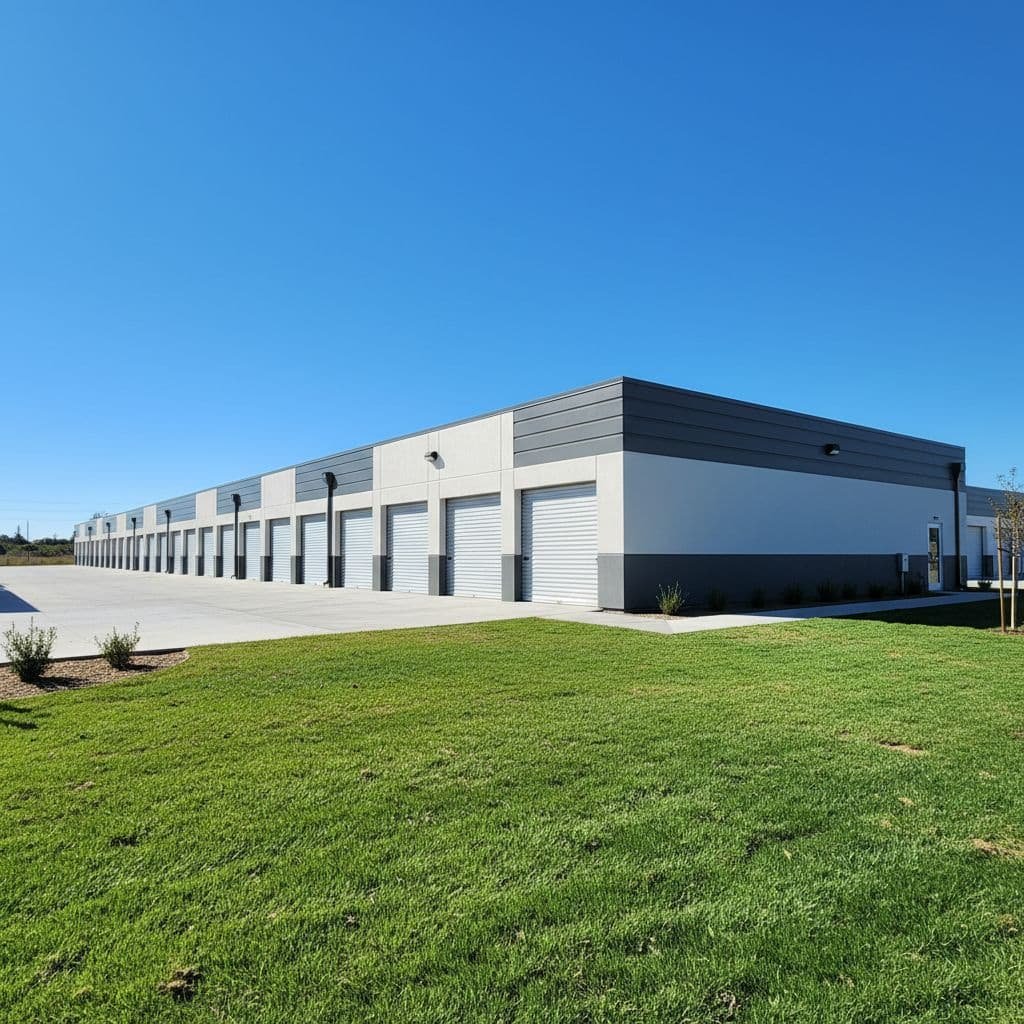
This image depicts a clean, modern self-storage facility that exemplifies strong visibility and curb appeal.
When you conduct market research, start small. Look at nearby population density, apartment counts, moving patterns, household income, and business activity. Then look at competing storage supply. How many self-storage facilities are within a short drive? Are they full? Are they offering deep discounts? Are new sites under construction?
A lot of self-storage investors make the same mistake. They shop by distance from home instead of strength of market. Storable’s advice on widening your search radius is smart for this reason. A great deal in Waycross or Dublin may beat a mediocre one closer to your house every time.
Inside Self-Storage’s buying guidance makes a similar point: know a few markets well, then move fast when the right property shows up.
Visibility still matters, too. Good frontage, easy turns, solid lighting, and simple gate access help more than buyers think. If customers struggle to find the entrance, or the property feels tucked behind older industrial buildings, lease-up gets harder. Storage is part convenience, part trust. People want a place that feels easy and safe.
Underwrite it like you’ll own it for ten years
The fastest way to overpay is to underwrite a storage deal like a tourist. The seller hands you a clean summary sheet with strong occupancy and an implied cap rate that looks attractive, and you start picturing passive income by Friday. Slow down and engage in a thorough valuation process.
Ask for at least three years of financials, plus tax returns, a current rent roll, delinquency reports, and expense detail. Then line those up against bank deposits and operating statements. These reviews help determine the net operating income (NOI). If the seller runs the business on sticky notes and memory, that isn’t charming. It’s risk.
Many buyers like to see stabilized occupancy rates in the 80% to 90% range. Lower can mean weak demand or bad management. Higher isn’t always better. A facility running at 97% may have rents that are too low, which means upside for you, but only if the market can absorb increases without heavy move-outs.
This quick table keeps the review focused:
| What to review | Healthy sign | Red flag |
|---|---|---|
| Occupancy rates | Consistent, with room to raise rents | Full, but underpriced, or weak with no recovery trend |
| Rent roll | Balanced unit mix, low delinquency | Heavy discounts, odd gaps, unpaid accounts |
| Operating expenses | Supported by records and invoices | Personal costs mixed into the P&L |
| Capex | Roof, gates, and pavement still have life | Big repairs waiting right after closing |
The takeaway is simple: a full-looking property can still be underperforming.
A packed facility isn’t automatically a great business. If rents are stale, expenses are messy, or collections are weak, you’ll be the one doing the cleanup.
I also like to ask how the owner handles rent increases, collections, auctions, and online marketing. If the answer is “we’ve always done it this way,” that’s either hidden upside or a warning sign. Sometimes it’s both.
For a practical overview of how investors frame these numbers, this storage buying guide from BuySellEdge is a useful reference. The point isn’t to copy a formula. It’s to think like an operator before you think like a proud new owner.
Inspect the dirt, the doors, and the documents
Financial due diligence tells you what the business earned. Property due diligence tells you what it may cost next.
Walk the site. Look at roofs, roll-up doors, concrete, drainage, fencing, gates, keypads, security cameras, lighting, and office condition. Open units. Check for water intrusion, pest issues, soft pavement, worn hinges, and old HVAC equipment in climate-controlled buildings. If the property offers boat or RV storage, study the layout. Tight turns and awkward access can limit demand.
In Georgia and South Carolina, location risk can shift by region. Near Savannah, Brunswick, and Hilton Head, flood exposure deserves extra attention. Inland, drainage, visibility, and deferred maintenance may matter more. Either way, don’t skip the basics because the seller says “it’s always been fine.”
Paperwork matters just as much. As part of your risk assessment, confirm zoning. Review title. Check for liens, easements, boundary issues, and any local restrictions on signage, hours, or expansion. If the site is older, or the surrounding area has industrial history, ask your attorney whether environmental review makes sense.
This is where storage buyers sometimes forget they’re doing a real estate deal, too. You may be acquiring a business, but you’re also buying dirt, access, and future use rights. That’s why the legal side needs the same attention as the rent roll.
A clean property tour means nothing if the records are messy. If the site walk reveals operational issues that require specialized oversight, factor in property management considerations. And messy records can turn a promising acquisition into an expensive lesson.
Structure financing and make an offer sellers will take seriously
Price matters, of course. Terms matter just as much.
Before you submit an offer, know how you’re financing the deal. Buyers use conventional bank debt, local lenders, partner equity (such as through syndication), seller financing, and, in some cases, SBA financing if the structure qualifies. These creative financing paths suit different scenarios. Value-add deals sometimes need bridge capital. Stabilized deals usually fit better with long-term financing.
Whatever your path, show up prepared. Sellers and brokers want to know you can close. That means proof of funds, lender conversations, a realistic timeline, and a clear operating plan after closing. If the property is remotely managed, explain how you’ll handle software, collections, maintenance, and customer service from day one.
In competitive situations, this article on closing the deal as a better buyer gets to the heart of it. Being easy to work with can matter almost as much as being the highest bidder.
Your offer should spell out the purchase price, earnest money, financing terms, inspection period, closing date, and what stays with the self-storage facility. Clarify software transfers, cameras, gate systems, tenant files, branding assets, and any pending delinquencies or auction activity.
If you want a broad financing snapshot, this 2026 self-storage financing overview lays out common funding paths. But no article can replace clean underwriting and a lender who understands income property.
The best offers feel steady. Not flashy. Not vague. Sellers want confidence that you won’t retrade the deal every week or fall apart two days before closing.
Build the right team and skip the mistakes that burn buyers
You can run a storage facility from another city. You can’t buy one well with guesswork.
Bring in a broker who knows business sales and commercial property, a real estate attorney, a lender, a CPA, an inspector, and, if you’re not self-managing, a third-party property management operator or local manager. That’s not overkill. That’s how you keep emotion from driving the deal.
Before you chase every new listing, it helps to browse quality businesses for sale and get a feel for how solid opportunities are packaged. Better listings won’t make the decision for you, but they do show what clean deal prep looks like.
A few buyer mistakes show up again and again:
- Falling in love with occupancy before checking rents and delinquencies.
- Believing seller spreadsheets without matching them to tax returns and deposits.
- Ignoring flood, zoning, or title issues because the property “looks good.”
- Assuming remote management will be easy without strong management software and local help.
That’s where deals go sideways, y’all. Not in the brochure. In the blind spots that due diligence reveals.
The buyer who wins over time is usually the least dramatic person in the room. Calm. Prepared. Curious. Willing to walk away when the facts stop making sense.
Frequently Asked Questions
Why are Georgia and South Carolina good for buying a self-storage business?
These states attract storage buyers due to high population growth, frequent moves, downsizing, and business activity around Atlanta, Savannah, and coastal areas. Demand mixes vary—household in dense neighborhoods, boats/RVs on the coast, inventory for contractors inland—creating opportunities in both primary and secondary markets like Macon or Waycross.
How do I choose the right self-storage market and facility?
Start with a 3-5 mile radius analysis of population density, apartments, income, and competing facilities’ occupancy and discounts. Prioritize local demand drivers like ports or highways over glamour, and favor sites with good visibility, easy access, and room for operational improvements.
What should I review in the financial underwriting?
Request three years of financials, rent rolls, delinquencies, and tax returns; verify against bank deposits for true NOI. Look for consistent 80-90% occupancy with rent upside, supported expenses, and no big capex looming—avoid deals with stale rents or messy records.
What are common mistakes when buying self-storage?
Buyers often chase high occupancy without checking low rents or delinquencies, skip title/flood checks because it “looks good,” or assume remote management is easy without software and local help. Falling for seller spreadsheets without verification or ignoring market strength beyond home proximity burns deals.
How do I structure a strong offer and financing?
Show proof of funds, lender pre-approval, and a clear post-close plan; use bank debt, seller financing, or SBA as fits. Spell out price, earnest money, inspections, and asset transfers in steady terms—sellers favor prepared buyers who close smoothly over highest bids.
The right storage deal is boring in the best way
The best self-storage acquisitions in Georgia and South Carolina usually aren’t the loudest ones. They have clean records, fair market rents, manageable repairs, and a self-storage facility that keeps producing demand.
If you’re patient with market research, honest with the numbers, and disciplined through due diligence, you’ll give yourself a far better shot at buying well and securing strong cash flow as the ultimate goal. That’s the whole game of market research. Not chasing shiny doors, but buying a business that keeps doing its job long after the excitement of closing wears off.
We are Members of the Georgia Association of Business Brokers and Realtors, Commercial Alliance, Georgia Association of Realtors, and National Association of Realtors