

A government contract can look like a golden ticket, but not every ticket transfers to a new owner. If you’re buying a company in Georgia or South Carolina, the real value is not the contract name on a spreadsheet. It’s the people, systems, approvals, and customer trust behind that revenue.
That matters because a solid contract business can produce steady cash flow, while a weak one can crack right after closing. The smart buyer checks transfer risk first, then price.
Why government contract businesses draw serious buyers
Government work attracts buyers for a simple reason: agencies still need services when consumer spending gets shaky. A contractor with clean books, repeat work, and a strong renewal history can feel steadier than many private-market companies. That’s why buying government contract business targets has become more appealing to investors who want predictable revenue.
Georgia and South Carolina add another layer of appeal. You have ports, military activity, major highways, growing metros, and plenty of public infrastructure work. Those factors can support companies in maintenance, staffing, security, logistics, light industrial services, and specialty construction.

Still, these deals are rarely obvious. A plain Business For Sale listing may hide contract revenue in one short sentence. Most public marketplaces are full of Businesses for Sale, yet few clearly say whether the income comes from a county agency, a school district, a state department, or a federal buyer. As of April 2026, public listing sites across the region still show broad activity, but only a small share clearly label contract-heavy companies. Broad Georgia small business listings show the market is active, while guidance on buying a GovCon business highlights why transfer rules matter so much.
If you’re still sorting through the market, this guide on how to identify the right Georgia business opportunity can help you screen targets before you chase a contract-heavy deal.
Due diligence matters more than the sales pitch
Seller presentations often focus on awards, backlog, and relationships. You need the files behind the story. Start with the contract list. Then ask which agreements need consent before closing, which ones can transfer, and which ones may require a fresh bid. A buyer who skips that step is guessing, and guessing gets expensive.
Use this quick screen before you go deeper.
| Area | Why it matters | Common red flag |
|---|---|---|
| Contract transfer rights | Revenue may not survive closing | Agency approval is unclear |
| Past performance and option years | Renewal value drives price | One large contract ends soon |
| Key staff and certifications | Some work follows people, not owners | A lead manager plans to leave |
| Billing cycle and working capital | Slow pay can strain cash | The buyer inherits a cash squeeze |
The table won’t replace legal review, but it will save you from chasing pretty numbers.
A contract tied to the owner is not the same as a contract tied to the company.
Also study concentration. If one agency makes up half the revenue, price that risk into the deal. Ask how often the company rebids, how it scores, and whether margins slipped over the last two years. Many targets work in service lines similar to those described under federal government contract services, such as maintenance, staffing, janitorial work, and specialty support. Stable demand helps, but thin margins can still ruin a good-looking acquisition.
Equipment matters too. If the company depends on trucks, vans, or field crews, inspect maintenance records and title status early. Route-based operators can look strong on paper while hiding costly fleet issues. This is why businesses with fleets and government routes for sale deserve an extra level of review.
Then there is CRE. Many contractors need a yard, secure storage, office space, or a light-industrial shop. If the seller owns the site, ask whether the Commercial Real Estate for sale comes with the company or sits in a separate entity. If the business rents space, inspect the CRE for Lease terms, rent bumps, renewal rights, and assignment language. Commercial Real Estate for Lease may look harmless until a lender sees only a short term left. In other cases, the seller may package Commercial Real Estate for sale with the operating business, which can improve long-term control. Either way, a weak site plan or bad lease can wreck a good-looking deal, and y’all know landlords rarely fix that at the last minute.
Where opportunities show up in Georgia and South Carolina, and how to structure the deal
Location shapes value because contracts follow response time, labor pools, and facility access. Savannah and Pooler often fit port-linked service companies. Atlanta can support IT, staffing, security, and facility vendors. Warner Robins gets attention from buyers tracking defense-adjacent work, while Macon and Dublin can offer lower overhead and solid reach. Brunswick and Waycross make sense for transport, field service, and industrial support. Over in Hilton Head and nearby South Carolina markets, buyers often like maintenance, marine, and local agency contractors.
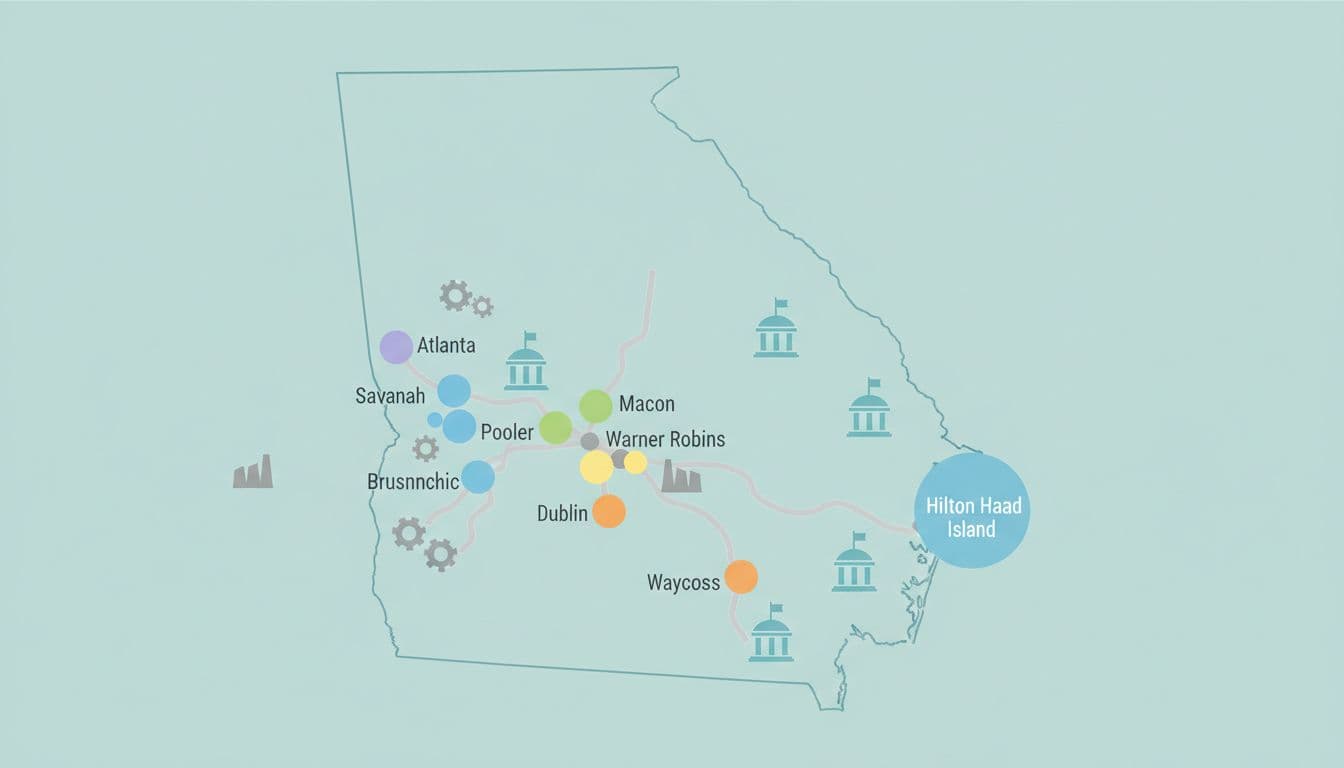
Some companies won’t advertise themselves as government contractors at all. They may appear as industrial service firms with a mix of private and public customers. This government-contract industrial services in SE Georgia example shows how those opportunities can sit inside broader service categories.
The deal structure matters as much as geography. Buyers often prefer asset purchases, because they can leave old liabilities behind. Yet stock purchases may help preserve licenses, approvals, or contract history. Holdbacks and earnouts can protect you when a big renewal is near. Seller transition support also matters. Ask the owner to stay through introductions, rebids, and key agency handoffs. Paying full price for shaky renewals is like buying a building before checking the foundation.
Government revenue can look safe from a distance, but the safe deal is the one you can verify. In Georgia and South Carolina, the best acquisitions pair contract history with clean books, steady people, and real estate that supports the work.
When the contracts transfer cleanly and the location fits the business, you’re not buying noise. You’re buying staying power.
We are Members of the Georgia Association of Business Brokers and Realtors, Commercial Alliance, Georgia Association of Realtors, and National Association of Realtors