
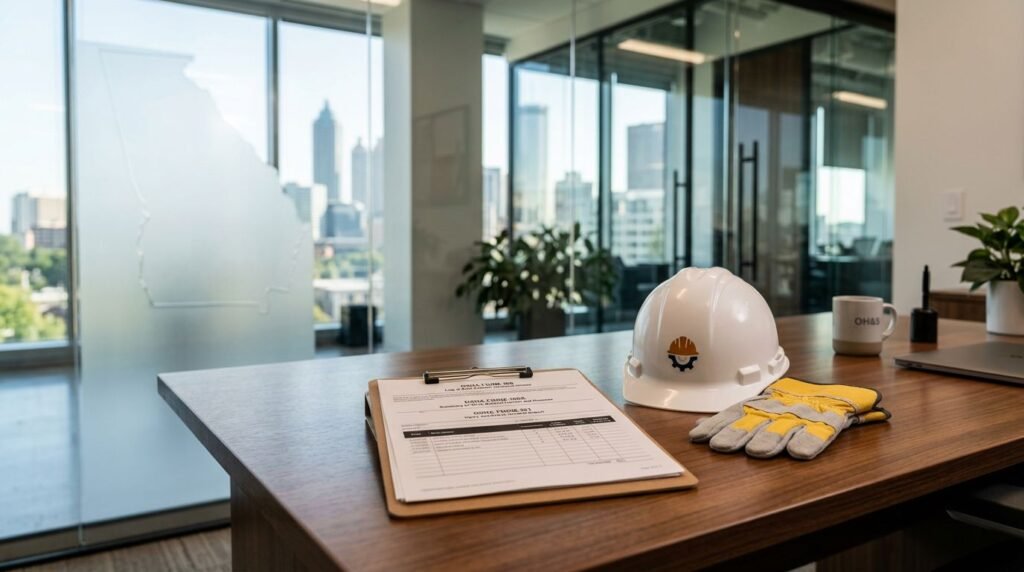
An OSHA log can tell you more about a company than a polished seller memo ever will.
If injuries keep showing up in the same part of the operation, something is off, and you may inherit that problem on day one. That’s why good OSHA log due diligence matters when you’re buying a Georgia business, whether you’re looking in Savannah, Atlanta, Macon, or Pooler.
Before you get swept up by revenue, customer lists, and equipment, look at the safety record.
What the OSHA records are really showing you
Most buyers hear “OSHA log” and think paperwork. Fair enough. But Form 300, Form 300A, and Form 301 are not dead paper. They’re a running story about how a business operates when no one’s giving a pitch.
Form 300 is the year-long log of recordable injuries and illnesses. Form 300A is the annual summary. Form 301 gives incident-level detail. Together, they show frequency, severity, and patterns. A single strain may be bad luck. Six similar strains in the same job category usually mean something else.
Think about what you’re trying to buy. You’re not only buying earnings. You’re buying habits, maintenance standards, training quality, supervisor follow-through, and the chance of future claims. That’s why OSHA records belong in the same conversation as tax returns and lease terms.
A strong buyer doesn’t stop at “Are there any safety issues?” A strong buyer asks, “What do the records show, and what do they suggest about next year?” That’s the heart of safety due diligence.
Not every company has to keep routine OSHA logs. Some very small employers, and some low-hazard industries, may be exempt from regular recordkeeping. That doesn’t mean you’re out of the woods. If a seller says no logs exist, ask why, and then ask for workers’ comp loss runs, incident reports, insurance claims, and internal safety notes instead.
This is where broader deal review matters. If you want a bigger framework for asking sharper questions, B3’s guide on how to evaluate a business opportunity pairs well with an OSHA records review.
What to request before you get comfortable
Ask for five years of OSHA records. That’s the retention period that gives you enough history to spot repeat problems without getting buried.

Start with the basics: OSHA 300 logs, 300A summaries, and 301 incident reports. Then go further. Ask for prior OSHA citations, settlement agreements, open inspections, workers’ compensation loss runs, safety manuals, training records, and any third-party audit reports. The legal side of this gets missed more often than it should. Seyfarth’s piece on OSHA liabilities during M&A transactions is a good reminder that unresolved inspections and citations don’t disappear because ownership changes.
You also want context. A warehouse in Pooler will not look like an accounting office in Atlanta. A machine shop in Macon will not have the same risk profile as a salon in Savannah. Logs only make sense when you compare them to the type of work, headcount, shifts, and production levels.
A short request list usually works best:
- Five years of OSHA 300, 300A, and 301 records.
- Any OSHA citations, open inspections, and settlements.
- Workers’ comp loss runs for the same period.
- Safety training records, written programs, and equipment inspection logs.
- Details on any major injury, fatality, amputation, hospitalization, or repeat claim.
If the seller stalls, take that seriously. Missing logs can mean poor recordkeeping, but they can also mean a culture that cuts corners. TRC’s overview of health and safety reviews in the due diligence process makes the point well: document review only works when you pull the full picture, not one or two clean-looking files.
A tidy conference room doesn’t prove a safe operation. The records usually tell the truth faster than the tour.
How to read the logs like a buyer, not a spectator
Once you have the records, don’t stop at total incident count. Look for trends. That’s where the money is, and where the risk is too.
First, compare year to year. Are incidents rising while sales or staffing stayed flat? Second, look at injury type. Repeated back strains may point to bad lifting practices. Hand lacerations may mean weak guarding or rushed production. Slips and falls may point to housekeeping, drainage, or poor site maintenance.
This quick table helps sort signal from noise.
| What you see | What it may mean | Why a buyer should care |
|---|---|---|
| Same injury repeated | Training or process gaps | Higher future claims and downtime |
| Many “days away” cases | More severe incidents | Bigger labor and insurance costs |
| Injuries clustered by department | Local supervisor or equipment issue | Targeted capital spending may be needed |
| Long gaps, then sudden spikes | Underreporting or operational change | Management reliability comes into question |
Now tie the logs back to operations. If a distribution business in Warner Robins shows repeated dock injuries, go inspect the dock. If a restaurant in Brunswick has frequent burns and cuts, ask about staffing, turnover, and kitchen training. If a trucking or service business in Waycross shows strains and vehicle-related incidents, check fleet condition and driver procedures.
You should also read the descriptions. The codes matter, but the plain-language notes matter more. They tell you whether incidents happened during overtime, cleaning, loading, maintenance, or basic daily work. A pattern during cleanup time often points to rushed end-of-shift habits. A pattern during maintenance may point to older equipment.
Don’t ignore what isn’t there, either. A supposedly high-activity operation with zero recordables for years deserves a second look. Maybe it’s excellent. Maybe it’s underreporting. The piece on hidden EHS costs in M&A gets right to that problem, because clean logs can hide messy realities when claims, turnover, and equipment issues tell a different story.
If you’re newer to acquisitions, B3’s step-by-step business buying tutorial is a helpful way to keep this review in the right order.
When OSHA findings should change the deal
This is where buyers either protect themselves or talk themselves into trouble.
If the logs show a few isolated, well-documented issues followed by clear corrective action, that’s not always a deal killer. But repeat injuries, open inspections, missing records, or severe claims should change the way you structure the purchase. That may mean a lower price, a holdback, stronger reps and warranties, a repair credit, or a required safety fix before closing.
The logs should also shape your first 100 days plan. If you’re buying a metal fab shop in Dublin, a logistics company in Pooler, or a multi-location service business near Atlanta, you may need new training, machine guards, floor repairs, or outside safety help right away. Those costs belong in your model before you close, not after.
This matters even more when the property is part of the deal. A glossy Business For Sale package can distract you from the fact that unsafe stairs, poor lighting, broken pavement, or bad dock design may be tied to the site itself. If you’re reviewing Businesses for Sale that include CRE, ask whether the incident pattern points to a people problem, a process problem, or a property problem.
That question gets sharper when the listing includes Commercial Real Estate for sale with the operating business. The same issue comes up if the seller wants you to take over space under Commercial Real Estate for Lease terms. Buyers comparing ownership with CRE for Lease options need to know who is responsible for repairs, common areas, exterior surfaces, and code-related upgrades. If the business stays in leased space, read the lease and the injury records side by side.
If you’re still early in the hunt, B3’s page on buying an existing business is a solid starting point. It helps frame the bigger purchase process, so details like OSHA review don’t get pushed to the bottom of the pile.
Final Thoughts
A business can look strong on paper and still carry safety problems that drain cash, distract managers, and spook employees. That’s why OSHA records matter so much. They show what daily operations feel like when the seller isn’t in the room.
The smartest buyers in Georgia don’t treat safety logs as an afterthought. They treat them like a flashlight. Shine it early, read what it reveals, and you’ll make a better deal, or avoid the wrong one.
We are Members of the Georgia Association of Business Brokers and Realtors, Commercial Alliance, Georgia Association of Realtors, and National Association of Realtors