

One empty suite can change the math on a retail business. If the landlord fills it with a near-copy of your store, sales can fall before you react.
That is why an exclusive use clause deserves attention before a commercial lease is signed. In Savannah, Atlanta, or any Georgia shopping center, the right clause protects a defined piece of your customer base while still giving the property room to operate. A radius clause addresses where you may open another location, while this language addresses the landlord’s leasing decisions.
A competitor’s arrival doesn’t automatically justify withholding rent. Review the lease before taking action.
Key Takeaways
- An exclusive use clause protects a retailer from defined competing businesses in the same shopping center, while a permitted use clause governs the tenant’s own activities and a radius clause limits where the tenant may open another location.
- The clause should clearly define the protected business, competing uses, retail property boundaries, measurable sales or product thresholds, carve-outs, and any existing tenants or anchor stores.
- Georgia courts generally apply the language the parties signed, so vague terms such as “similar” or “substantially similar” can create avoidable disputes.
- A suspected breach does not automatically allow a tenant to withhold rent. Follow the lease’s notice and cure requirements, preserve evidence, and review available remedies with Georgia lease counsel.
- Exclusive-use rights can affect a business sale, assignment, and valuation, making the signed lease, amendments, site plan, and landlord consents important parts of due diligence.
How an exclusive use clause protects Georgia retailers
An exclusive use provision is a commercial lease promise giving the tenant a contractual right against the landlord. It bars leasing another space to a defined competing business that creates direct competition.
The protected business must have edges
Think of a smoothie bar. A vague ban on “health food” leaves too much room for argument. A better clause identifies the protected business category, says whether it is the co-tenant’s primary business, and sets a measurable product or gross sales threshold.
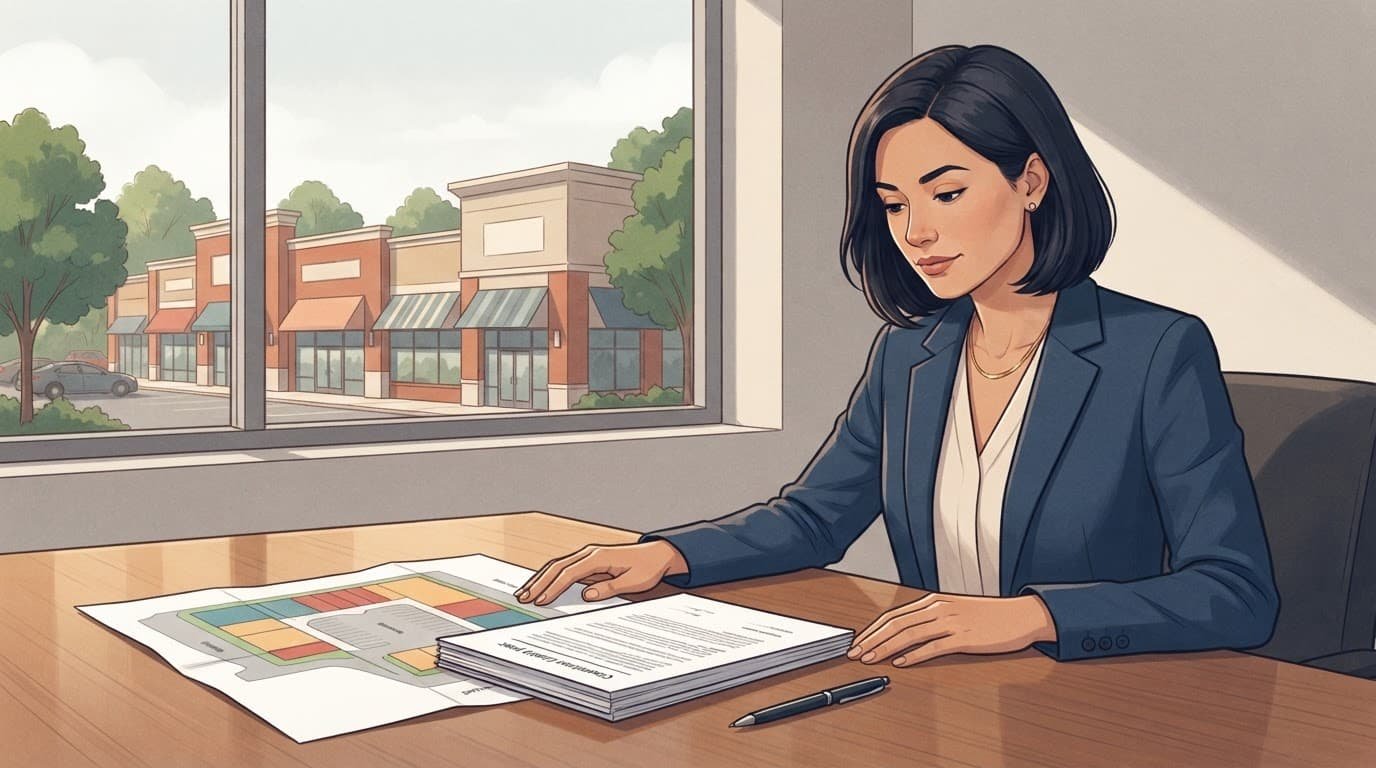
Also name the retail property and define its boundary. It may sit within a mixed use development, including outparcels, a later phase, or affiliated land across the access drive. Put the boundary on an exhibit to preserve reasonable leasing flexibility and clarify landlord obligations when managing the tenant mix.
Georgia courts read the lease you signed
In Office Depot v. District at Howell Mill, the legal dispute over exclusive use involved school supplies. It also asked whether the other tenant’s primary business fit the lease’s defined restriction. The case wasn’t about a broad promise to avoid all competition. It turned on the wording the parties chose.
That is the heart of an exclusive use clause: protect what makes the business viable, then describe it so a judge, buyer, and leasing agent can reach the same answer. A contractual right doesn’t, by itself, authorize withholding rent.
Don’t confuse exclusivity with permitted use or a radius clause
Three clauses may sit beside each other in a Georgia retail lease, but each points in a different direction. In a commercial lease for a shopping center, an exclusive use clause can protect a retailer from a nearby competing concept.
A permitted use clause governs your front door
A permitted use clause states what the tenant may do in its suite. It may allow a full-service bakery, require a fitness concept, or bar outside alcohol sales. It protects the landlord’s tenant mix and can limit how the tenant expands.
An exclusive use provision controls the landlord’s next lease. A bakery might have permission to sell cakes and coffee, yet no exclusivity if the landlord can rent nearby space to another bakery. Read the two clauses as a pair. A narrow permitted use can accidentally shrink the protection you thought you bought. Neither clause, by itself, authorizes withholding rent.
A radius clause governs your next location
A radius clause generally restricts the tenant from opening a similar business within a stated area and time period. It protects the center from a tenant setting up a second shop down the road. It does not stop the landlord from bringing in your competitor.
Before accepting one, match the distance to real customer behavior. Five miles across metro Atlanta isn’t five miles in coastal Chatham County. The activity, map, term, and any exception for acquisitions or temporary pop-ups should be plain.
Draft exclusive use clauses that can survive a dispute
Strong language is not the longest language.

Define direct competition with facts
A well-defined exclusive use clause identifies the protected business category and its operational boundaries. Define those boundaries by the main service, a defined product list, or an incidental sales ceiling.
A salon does not need to block every competing business that sells shampoo. A pet supply shop may tolerate a grocery store’s small pet aisle. If gross sales are the measuring stick, state the percentage, reporting period, calculation method, and audit rights.
Words like “similar,” “specialty,” and “substantially similar” may fit a conversation, but they rarely finish an argument. Put examples in the lease, then say whether the examples limit the definition.
Carve-outs should be priced, not buried
Landlords often need room for existing tenants, anchor stores, pharmacies, national chains, temporary retailers, and incidental sales. Those carve-outs can be fair when they reflect the tenant mix and the deal’s economics. They should be disclosed during negotiation, narrow enough to understand, and preserve reasonable leasing flexibility.
Ask whether the exception follows a tenant after an assignment, franchise change, expansion, or relocation. Ask whether the landlord may amend another lease to broaden a competing use. Little details, big dollars.
A clause that bans a ‘competing retailer’ but never defines the retailer, the center, or the remedy is not protection. It is a future argument.
If the landlord breaches, don’t start by withholding rent
A tenant should not treat an alleged breach of an exclusive use clause as automatic permission to stop paying rent. A radius clause is different because it regulates the tenant’s expansion, not the landlord’s response to a competing tenant.
Give notice and preserve the proof
Follow the notice address and delivery method in the lease agreement. Before escalating a legal dispute, document landlord obligations, the relevant clause, the new tenant’s marketing, product evidence, and communications. Make a direct demand to cure, and keep copies of every message.
Then look for the lease’s cure framework and stated cure period. In the Office Depot lease, the landlord had six months to begin and diligently pursue a judicial action contesting the claimed violation. That cure period controlled when the tenant could terminate, because the parties wrote that right into the lease.
Choose a remedy before the damage occurs
Commercial remedies can include a temporary rent abatement, a switch to percentage rent, an injunction, or damages. Lease termination may follow after the written cure requirements are satisfied, and an exclusive use provision should state the remedy structure clearly.
A percentage-rent formula may be more workable than a vague promise to “make the tenant whole.” Say when the reduction starts, whether CAM and taxes are included, and when full rent resumes.
Withholding rent on your own can create a separate default. Georgia calls an eviction lawsuit a dispossessory proceeding, and O.C.G.A. Section 44-7-50 identifies nonpayment of rent as a basis for that process. Get Georgia lease counsel involved before using any remedy.
A retail lease can change the value of a business sale
For an owner preparing a business for sale, exclusivity is not legal fine print in a commercial lease. It can support revenue, protect a location’s story, and serve as a material inducement for a purchaser weighing the lease term.
Buyers reviewing businesses for sale should request the signed lease agreement, every amendment, a site plan, the permitted use clause, and written landlord consents, then review notices or correspondence involving withholding rent. A listing marked “Business For Sale” may look strong on a profit and loss statement, but the buyer must confirm that the exclusive use clause transfers with an assignment. The buyer should also confirm that the protected exclusive use provision survives a change in ownership or operating company.
Separate the building from the operating company
CRE is its own part of the transaction. Commercial real estate for sale gives a buyer a different kind of control than a location described as CRE for Lease or Commercial Real Estate for Lease. Where the company rents, the assignment clause, renewal rights, permitted use, and exclusive-use clause all affect what the buyer is actually acquiring.
That is why evaluating lease terms in a business purchase belongs near the start of due diligence, not the last week before closing. If a landlord’s consent is needed, get the conversation moving early.
A Savannah negotiation framework that keeps both sides honest
A good commercial lease protects the tenant mix and preserves leasing flexibility without locking every door in a shopping center. It protects the tenant’s core trade and gives the landlord enough flexibility to keep vacancies from sitting too long. Here’s the conversation to have before signing the letter of intent.
- Attach a current site plan for the retail property and mark every suite, outparcel, and parcel subject to the restriction. If a parcel is excluded, say so.
- Pair the exclusive use clause with the permitted use clause, then describe the protected business category in ordinary terms. Add measurable boundaries for primary use, products, services, or gross sales.
- Use the site plan to list every carve-out, including existing tenants and anchor tenants. Identify each possible competing business instead of allowing a blanket exception for any tenant the landlord later finds useful.
- State the landlord obligations, written notice requirements, and existing cure period. Define the lease termination trigger and remedy in the exclusive use provision. Don’t assume withholding rent is available unless the lease clearly says so.
- Match the clause to your growth plan. Online sales, delivery, a second location, or a future franchise plan can affect whether a radius clause fits the business.
Have a broker and a Georgia attorney compare the clause to the site plan and the complete lease agreement. That extra hour can save months of back-and-forth. That’s how we do business in Georgia, y’all.
Frequently Asked Questions
What is an exclusive use clause in a Georgia retail lease?
An exclusive use clause gives a tenant a contractual right against the landlord by restricting the leasing of nearby space to defined competing businesses. The protection depends on the exact language in the signed lease.
Is an exclusive use clause the same as a permitted use clause?
No. A permitted use clause controls what the tenant may do in its own suite, while an exclusive use clause controls what businesses the landlord may lease into other spaces. The two provisions should be reviewed together because a narrow permitted use can limit the protection a tenant expects.
Can a tenant stop paying rent if the landlord violates exclusivity?
Not automatically. Withholding rent may create a separate default and could lead to a dispossessory proceeding, so the tenant should follow the lease’s notice and cure provisions before pursuing a remedy.
What should an exclusive use clause define?
It should identify the protected business, the competing activities covered, the property boundary, measurable product or sales thresholds, permitted carve-outs, and the available remedy. Clear definitions make the provision easier for the landlord, tenant, and a court to apply.
Does exclusivity matter when selling a business?
Yes. A buyer should confirm that the exclusive-use right transfers with an assignment and survives a change in ownership or operating company. The buyer should also review the complete lease, amendments, site plan, and landlord consents during due diligence.
Final thoughts
Retail space can be the stage for a business’s best work, or the place where a copycat opens two doors down. Clear exclusivity protects the first outcome without pretending a landlord can freeze a center in place.
Define the property, the competition, the exceptions, and the remedy. When those pieces align, the lease is easier to operate, easier to sell, and less likely to become a fight.
We are Members of the Georgia Association of Business Brokers and Realtors, Commercial Alliance, Georgia Association of Realtors, and National Association of Realtors