
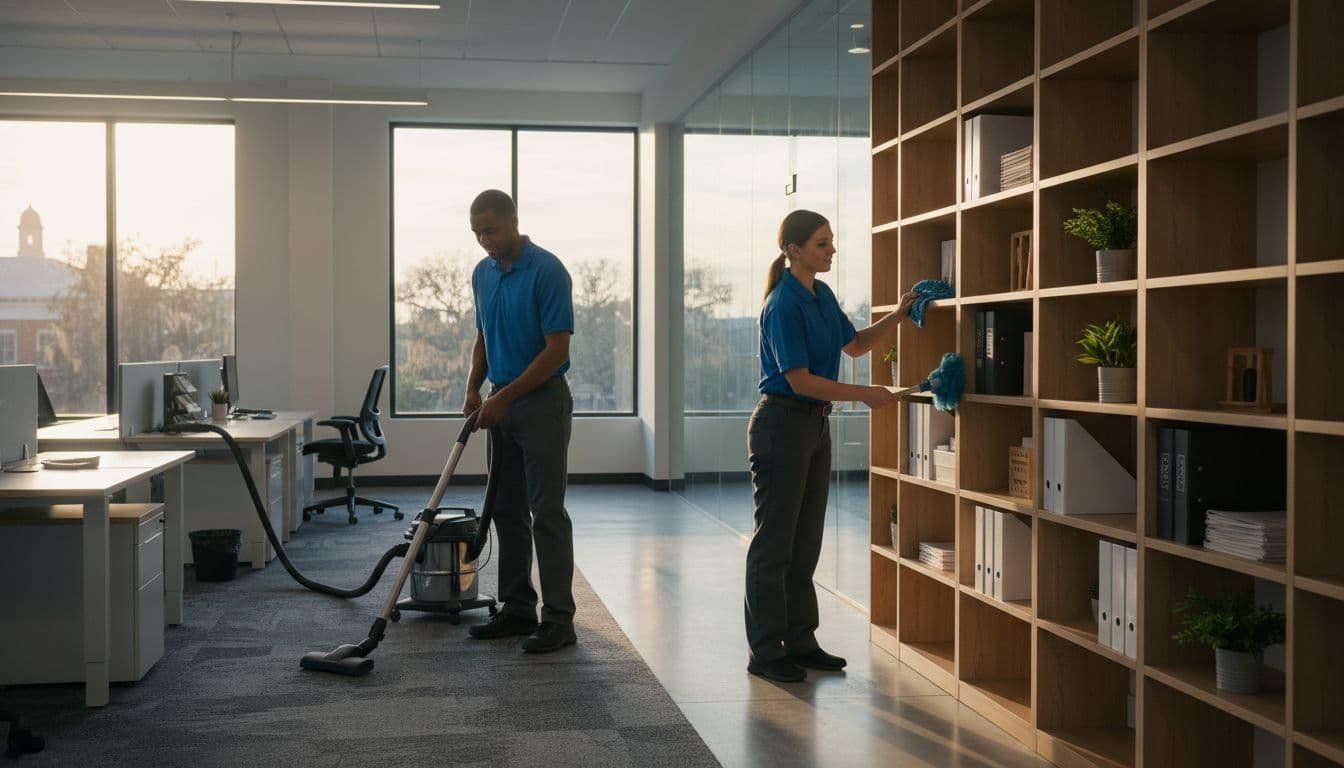
A janitorial company can look simple from the outside. Mops, crews, vans, invoices. But when you buy one, you’re not buying supplies. You’re buying contracts, trust, and a routine that has to work before sunrise and after dark.
That is why a smart purchase starts with the details most buyers skip. If you want to buy a janitorial business in Georgia or South Carolina, you need to know what keeps revenue steady, what can break margins fast, and where local demand is strongest.
Start with the contracts, not the mop closet
The best janitorial businesses are built on recurring work. Nightly office cleaning, medical facilities, schools, industrial accounts, and multi-site contracts beat one-off jobs every time. A company with sticky monthly clients is usually worth more than one chasing random work.
In 2026, the U.S. janitorial market sits near $112 billion, and commercial cleaning makes up most of that revenue. That’s good news for buyers in growing markets like Atlanta, Savannah, Pooler, Hilton Head, Macon, Warner Robbins, Brunswick, Dublin, and Waycross. New offices, medical space, and mixed-use projects create steady demand.
Most buyers begin with a broad current Businesses for Sale search, or browse Georgia cleaning business listings and South Carolina cleaning listings. That’s a fine starting point. But a “Business For Sale” ad is only the front porch, not the house.
Ask better questions early. How many accounts make up 60 percent of revenue? Are contracts written, renewable, and transferable? Does the owner still handle scheduling, sales, and problem accounts personally? If so, you’re not buying a stable machine yet. You’re buying a business that still leans on one person.
A smaller operator can still be a strong buy. Some of the best deals are route-dense, owner-managed companies with room to grow. But you want clean books, low customer churn, and crews who are likely to stay through the handoff. That’s how you separate a real opportunity from a headache with a logo.
Due diligence is where the deal gets honest
This is the part that protects your money. Trust me, a cheap janitorial company with weak records isn’t a bargain. It’s a repair project.
Start with earnings, but don’t stop there. Janitorial businesses often trade on seller’s discretionary earnings for smaller deals, or EBITDA for larger ones. Either way, the add-backs need to be real. Personal auto expenses, one-time legal fees, and excess owner salary may be fair. “Miscellaneous” isn’t.

Look hard at labor. Wages take a big bite out of revenue in this industry, and rising payroll can squeeze margins fast. A company may show healthy sales while quietly bleeding cash through overtime, turnover, or weak crew supervision. Insurance claims, workers’ comp history, and hiring practices matter more here than in many other service businesses.
Before closing, review these basics:
- Customer concentration by account, term, renewal date, and cancellation rights.
- Payroll records, tax returns, bank statements, and month-by-month profit trends.
- Crew structure, manager roles, training systems, and who handles complaints.
- Equipment condition, vehicle titles, supply costs, and any deferred maintenance.
If one customer makes the whole deal work, you don’t have a strong company yet. You have a dependency.
It also helps to compare the target with similar operators. A Georgia cleaning business example from GABB shows how small service firms are often sold on process, route density, and owner involvement, not flashy branding. In janitorial acquisitions, boring is good. Predictable is better.
Real estate and deal structure can change the whole purchase
Some sellers offer the company and the building together. That’s a business purchase plus CRE, and the package may include Commercial Real Estate for sale. Other deals come with a lease, and that paperwork deserves real attention. The current Commercial Real Estate for Lease terms, assignment rights, renewal options, and rent increases can shape your cash flow for years.
Bad lease language can sink an otherwise solid operation. If the company relies on storage, laundry space, or a small dispatch office, review the full CRE for Lease file before signing. A short remaining term, personal guarantee, or steep annual bump can change the value of the whole transaction.

Financing matters too. Many first-time buyers look at janitorial companies because entry costs can be lower than other service sectors. If bank financing feels tight, seller carry may help bridge the gap. These owner-financed business options in Georgia show how flexible terms can open doors, though the numbers still have to work.
One more thing, don’t ignore adjacency. Carpet cleaning, floor care, post-construction cleanup, and specialty disinfection can expand revenue fast when they fit the customer base. In places like Savannah, Pooler, or Atlanta, that cross-sell can be gold. In Hilton Head or Brunswick, relationship-driven accounts may matter even more. Local fit always wins over a generic growth story.
Final Thoughts
A good janitorial acquisition is built on retention. Retained clients, retained crews, retained profit. If those three pieces hold, the rest gets much easier.
When you buy carefully, you’re not stepping into chaos. You’re stepping into a rhythm, a route, and a reputation that can keep paying long after closing day. That’s the kind of deal worth chasing, y’all.
We are Members of the Georgia Association of Business Brokers and Realtors, Commercial Alliance, Georgia Association of Realtors, and National Association of Realtors