

Buying a business can feel like buying the dream and the building at the same time. Yet if the property use is wrong, that dream can turn into a stop-work notice, a lease fight, or a lender problem fast.
That’s why zoning use verification belongs near the top of your due diligence list. Whether you’re reviewing a small shop in Savannah, a warehouse in Pooler, or a service company near Hilton Head, the same rule applies: never assume the current use is legal just because the doors are open.
Why zoning can change the whole deal
A lot of buyers start with the numbers. That makes sense. Still, a strong P&L won’t save a bad location match. If your intended use is not allowed, or only allowed with conditions, you may need hearings, site changes, or a new address.
The biggest mistake is simple. Buyers see an operating business and think the use is approved. Sometimes it is. Sometimes it’s a legal nonconforming use, a use tied to old approvals, or a use that drifted over time. A good overview of zoning due diligence in a commercial real estate purchase makes that point clearly.
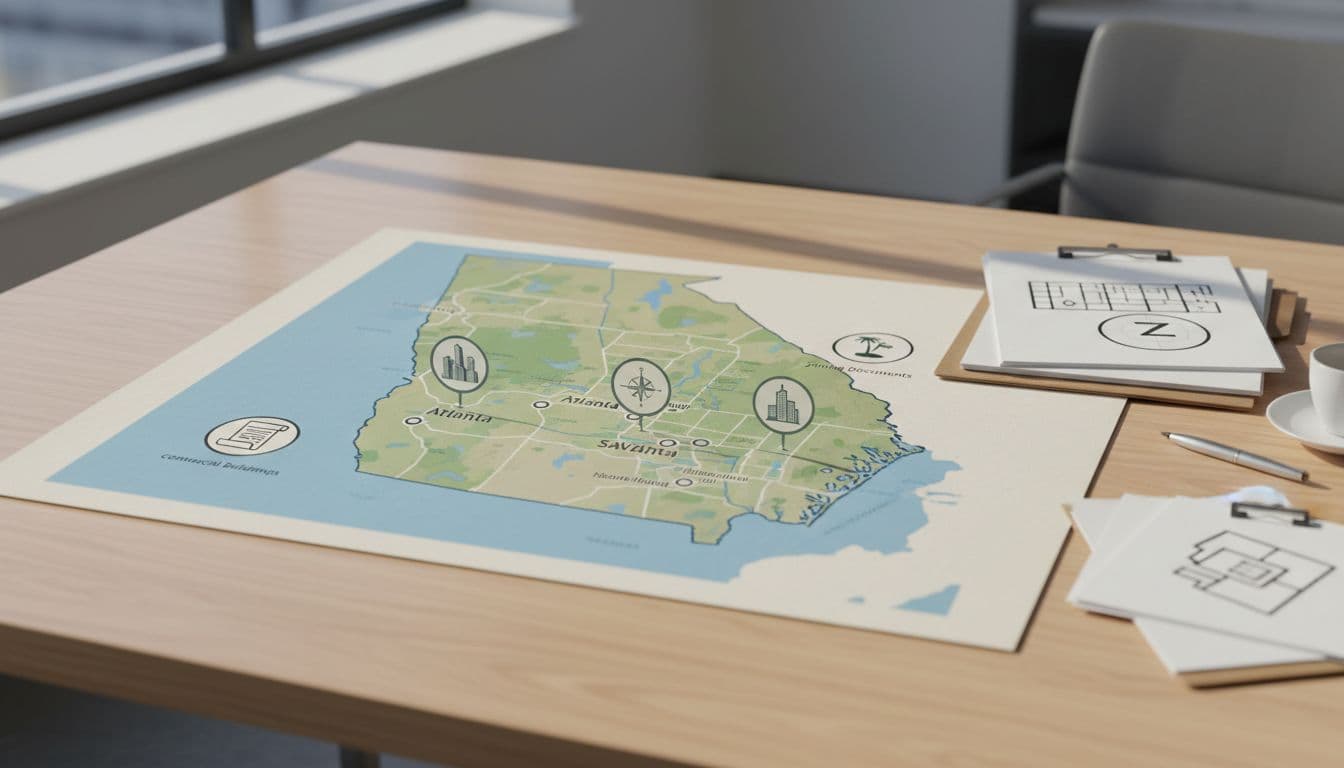
In Georgia and South Carolina, local rules carry real weight. Savannah, Atlanta, Macon, Brunswick, and Waycross all have their own zoning structure and review habits. Hilton Head and nearby coastal markets often add design or site limits that matter just as much as use classification.
As of March 2026, Georgia has seen a few state-level changes. House Bill 1315 limits most local development moratoria to 180 days and requires notice before a new pause. House Bill 1166 deals with very small dwellings, not most business sites, but it still shows how fast state rules can shift. By contrast, the available March 2026 sources did not surface a similar statewide South Carolina commercial zoning change, so buyers should stay focused on city and county review. For broader state-by-state context, these guides to commercial purchase due diligence in Georgia and South Carolina commercial due diligence are a useful starting point.
A practical zoning use verification process before you close
Think of zoning review like checking the foundation before you admire the paint. It’s not flashy, but it protects everything that comes after.
When buyers look at a Business For Sale, they should compare the intended use, not just the current use, against the local zoning code. That matters even more when a deal includes CRE, extra land, outdoor storage, or a change in hours, signage, parking, or truck traffic. If you’re screening listings first, it helps to read business-for-sale listings like a pro so you can spot where property questions hide behind good marketing.
Here’s a quick way to frame the review:
| Deal type | Main zoning question | Common snag |
|---|---|---|
| Business For Sale | Is the current and future use allowed? | Seller operated under an old approval |
| Commercial Real Estate for sale | Does the parcel fit parking, access, and site needs? | Use allowed, site plan does not |
| CRE for Lease | Does the lease use clause match zoning? | Landlord allows it, city does not |
| Commercial Real Estate for Lease | Are signage, storage, and delivery rules workable? | Operational limits kill margins |
The takeaway is simple. Approval is never one thing. You need the zoning district, the permitted use, and the site details to line up.

Before closing, ask for the zoning classification, certificate of occupancy, site plan, any special-use permits, and any old variance paperwork. Then call the planning office yourself. Ask direct questions. Can you keep the same use? Can you add alcohol sales, outdoor seating, fleet parking, or light assembly? If the deal involves Commercial Real Estate for Lease or CRE for Lease, also review assignment rights and use restrictions in the lease. A lender may approve the business, yet still hesitate if the property use is shaky.
The same business can get different answers in different cities
This is where buyers get tripped up. A business model that works in one city may hit friction in the next town over.
Savannah and Pooler buyers often face questions tied to traffic flow, truck access, parking counts, and outdoor storage, especially near industrial and port-driven corridors. In Atlanta, overlays, mixed-use districts, and neighborhood review can add another layer. Meanwhile, Hilton Head buyers often need to think harder about appearance standards, signage, and visitor-facing uses.
Macon, Warner Robins, Dublin, Brunswick, and Waycross may offer more space and lower occupancy cost. Still, more land does not mean fewer rules. A service yard may need screening. A retail use may need more parking than the building has. A warehouse may operate fine until a buyer adds fleet parking or late-night deliveries.
If a seller says, “We’ve always used it this way,” treat that as a lead, not proof.
That matters across all Businesses for Sale, whether the deal is a storefront, plant, warehouse, or mixed asset purchase. In coastal Georgia, many buyers first focus on market opportunity, especially while reviewing businesses for sale in Savannah GA. That’s smart. Still, the market story and the property story have to agree.
Conclusion
A good deal is not just profitable, it’s usable on day one. Zoning use verification helps you confirm that the business, the property, and your future plan all fit together. Before you fall in love with the cash flow, get the city or county answers in writing, because clear use rights are worth more than a pretty listing.
We are Members of the Georgia Association of Business Brokers and Realtors, Commercial Alliance, Georgia Association of Realtors, and National Association of Realtors